Timing of Abdominal Bloating
When your stomach feels fine in the morning but bloats every evening: What to check before gas
If you feel comfortable in the morning but your belt feels tight from the afternoon, rather than endlessly eliminating a specific food, you should treat the location where the bloating begins, bowel movements, and post-meal recovery together.
Evening abdominal bloatingThis does not simply mean that gas has been continuously building up throughout the day. The difference between morning and evening can be significant due to a combination of the amount eaten, intestinal transit, constipation, abdominal sensation, and the movement of the diaphragm and abdominal wall.
| Types of Evening Bloating | Primary Symptoms | Related Pathways to Review |
|---|---|---|
| upper meal-backlog | Feeling of blockage in the epigastric area after a few spoonfuls, accompanied by burping and prolonged post-meal stagnation. | Differences in the meaning of 'gas' among abdominal bloating, SIBO, and food intolerance. |
| lower bowel accumulation | Increased evening waist circumference accompanied by a heavy feeling in the lower abdomen, constipation, or a sensation of incomplete evacuation. | Distinguished by abdominal pain between chronic constipation and constipation-predominant irritable bowel syndrome. |
| sensory-abdominal-wall amplification | The feeling of pressure is more pronounced than the actual appearance, and the abdominal wall becomes firmer on stressful days. | If you are continuously reducing your food intake due to gas and abdominal bloating, |
A protruding stomach in the evening does not always mean that a large amount of gas is being produced
Abdominal bloating is the feeling of the stomach being full, Abdominal distensionwhile abdominal distension is when the actual circumference increases. The two can occur together, but you may feel significant bloating without much change in appearance, or you may experience little pain but find your clothes tightening every evening as your stomach swells.
In functional gastrointestinal symptoms, the speed at which the intestines move gas, the sensitivity of abdominal sensations, and the reactions of the diaphragm and anterior abdominal muscles can play a larger role than the absolute amount of gas. If you conclude it is simply because you have a lot of flatulence, it is easy to miss the actual axis that needs treatment.
The difference between morning and evening grows from the repeated meals and bowel movements throughout the day
If you feel comfortable on an empty stomach in the morning, but feel a blockage in the solar plexus after lunch and bloating down to the lower abdomen by evening, it may be a pattern of post-meal stagnation starting in the stomach followed by intestinal transit. Conversely, if your food intake is not high but your stool is hard tenesmusand remains in the bowel, the axis of slow evacuation must be addressed first.
Eating lunch hurriedly after a long fast, sitting all afternoon, and habits that involve swallowing a lot of air, such as carbonated drinks and chewing gum, also increase evening discomfort. If the cause is a result of multiple burdens overlapping throughout the day rather than a single food item, blindly expanding your restrictive diet will only reduce the variety of foods you can eat.
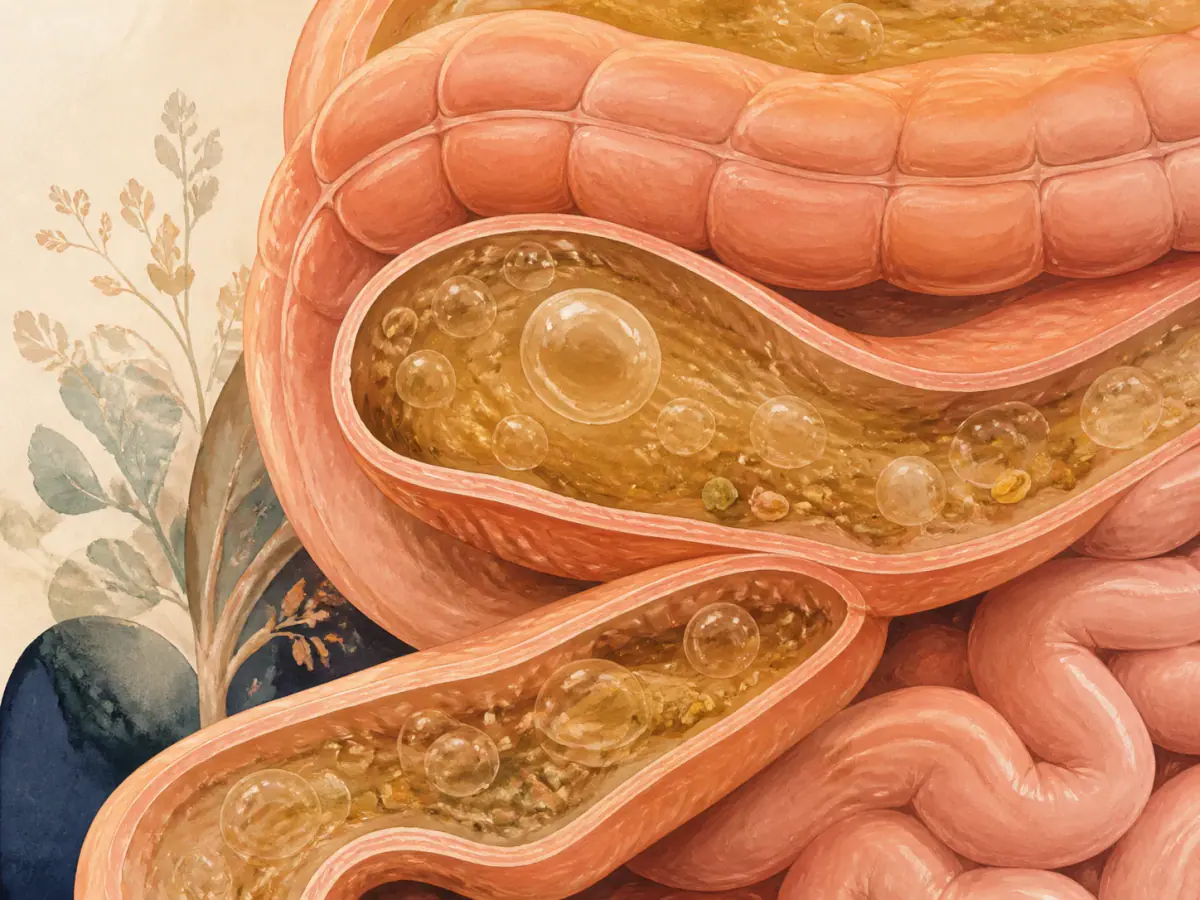
Not only the amount of gas, but also intestinal motility, constipation, food reactions, and sensory sensitivity can contribute to the perceived sensation of bloating.
Whether it starts in the solar plexus or the lower abdomen determines the treatment approach
If you feel tightness in the solar plexus and continuous burping after a few spoonfuls, the focus is on the process of the stomach accepting and moving the meal downward. If the area below the navel becomes heavy constipationaccompanied by a feeling of incomplete evacuation, then colonic transit and evacuation must be addressed together.
There are three primary branches to distinguish on this page. First, the 'upper meal-backlog,' where the solar plexus blocks first after a few spoonfuls burpingand persists; second, the 'lower bowel accumulation,' where the lower abdomen and beltline feel heavy toward the evening, accompanied by constipation and a feeling of incomplete evacuation; and third, 'sensory-abdominal-wall amplification,' where the abdominal wall hardens on stressful days and the feeling of tightness is exaggerated even without significant outward protrusion. Even for the same evening bloating, the existing articles to read next and the treatment goals differ depending on where it starts.
A pattern where abdominal pain occurs along with bloating and is relieved after a bowel movement Irritable Bowel Syndromemay be close to a specific flow. We narrow down food intolerances only when the same pattern repeats after specific dairy products, wheat, or fruits; we do not prohibit all food groups at once.
There are also days when the stomach does not protrude much, but the feeling of tightness is exaggerated. In such cases, abdominal sensation and abdominal wall tension can play a larger role than the amount of gas. It is necessary to distinguish whether it is solar plexus stagnation starting at lunch, actual increase in evening circumference with delayed bowel movements, or predominant sensory hypersensitivity, as this will change the subsequent consultation questions.
Korean medicine changes the flow that causes bloating rather than just treating the swollen stomach
Baekrokdam determines the Korean herbal medicine prescription by distinguishing whether solar plexus stagnation and burping come first, whether lower abdominal gas and constipation come first, or whether abdominal sensations become more sensitive on stressful days. In cases centered on food stagnationQi stagnationversus cases where the spleen and stomach are weak, leading to a drop in energy after meals, the weight of the prescription differs even for the same bloating.
Acupuncture treatment is used in conjunction to regulate the tension of the hardened upper abdomen and abdominal wall, as well as intestinal motility Autonomic nervous system and reactions. Instead of continuously switching probiotics or digestive aids, the pattern that repeats every evening can be reduced by narrowing down and treating the actual blocked sections in the stomach and intestines.
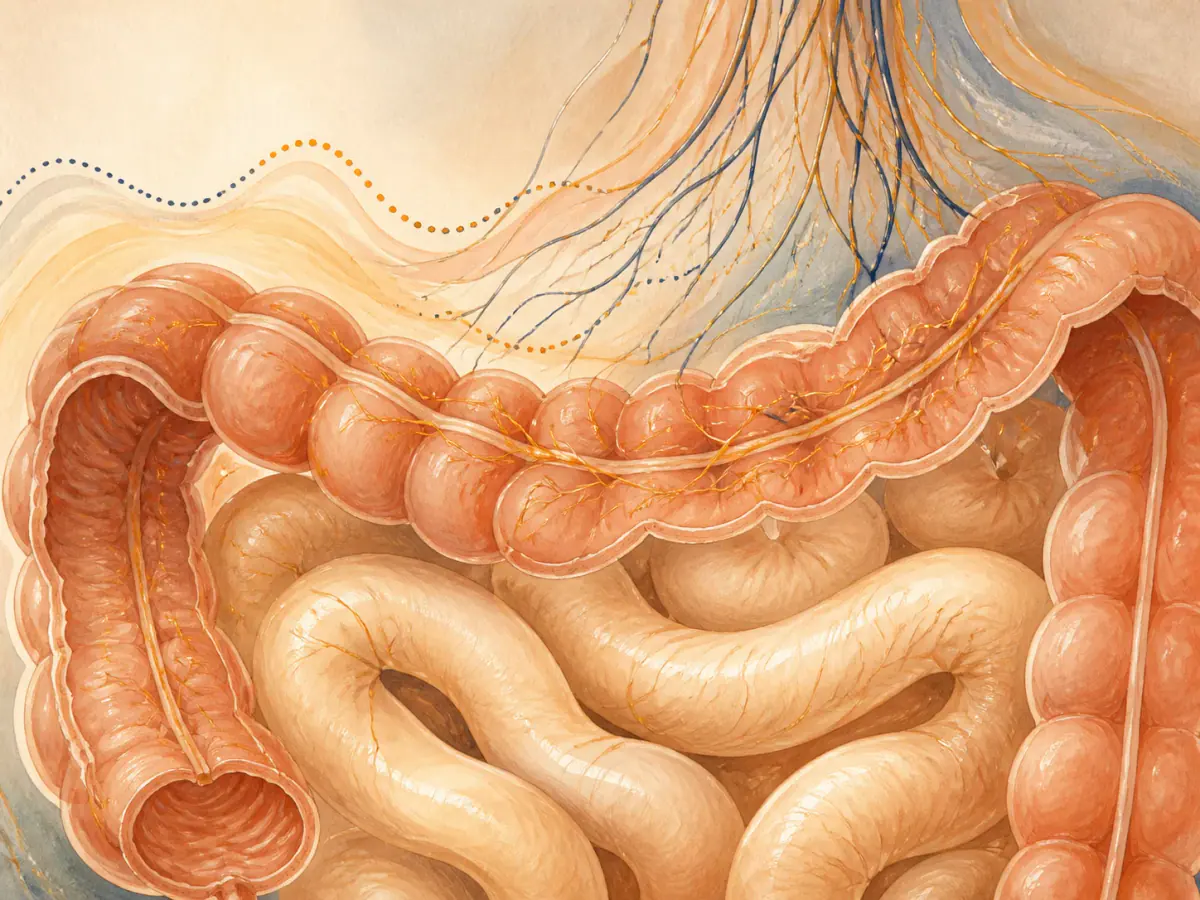
Even without structural damage, if the interaction between intestinal motility and sensation changes, abdominal pain, diarrhea, and constipation may recur.
Instead of skipping dinner, distribute the burdens that accumulate in the afternoon
If you skip dinner entirely because you bloat every evening, it can lead to a cycle of long fasting and hurried eating the next day. It is better to lower the burden of a single dinner by eating lunch a bit more slowly, taking a short walk after meals, and avoiding the combination of afternoon snacks and carbonated drinks.
Low FODMAP dietEven when restrictions are necessary, there must be a set duration and a reintroduction plan. Do not continuously expand the list of restricted foods simply because they caused discomfort; instead, maintain a variety of meals by adjusting only the relationship between already identified foods and their quantities.
The goal of treatment is not to maintain a morning belly, but to reclaim your evening routine
If you aim only for the waist circumference to be perfectly identical, you will become anxious over small changes. A more realistic recovery is when pain and pressure after dinner decrease, you no longer need to loosen your clothes or cancel appointments, and bowel movements and meals the next day proceed naturally.
After Korean herbal medicine treatment, we adjust the next prescription by observing whether bloating that started at the epigastrium (pit of the stomach) has been delayed, whether the spread to the lower abdomen has decreased, and whether constipation and post-meal fatigue are relieved together. We maintain the axes that have improved first and concentrate treatment on the remaining areas.
Evening abdominal bloating cannot be explained by the amount of gas alone. We identify where the burden accumulates throughout the day, among epigastric stagnation, intestinal transit, constipation, or abdominal sensation, and align Korean herbal medicine, acupuncture, and dietary adjustments into a single flow.
Evidence and Update Information
This content was organized by Korean medicine doctor Choi Yeon-seung based on the materials below and was updated on 2026-09-02.
- European consensus on functional bloating and abdominal distensionDistinction between abdominal bloating and actual abdominal distension, including multi-factor explanations involving sensation, movement, and abdominal wall reactions
- AGA Clinical Practice Update on belching, bloating and distentionClinical approach including evaluation of constipation, food intolerance, pelvic floor, and restrictive diets
- Review article: bloating in functional bowel disordersTypical temporal pattern where abdominal bloating worsens in the latter part of the day rather than in the morning
- NIDDK: Gas in the digestive tract