Differential Diagnosis of Gas and Bloating
Abdominal Bloating, SIBO, and Food Intolerance: Understanding the Differences in 'Feeling Gassy'
Before continuously switching probiotics and restrictive diets, we distinguish between functional bloating, SIBO, food intolerance, and Irritable Bowel Syndrome (IBS). We then use acupuncture and Korean herbal medicine tailored to patterns such as phlegm-dampness, food stagnation, qi stagnation, and spleen-stomach deficiency to restore your ability to eat comfortably.
The feeling of a bloated stomach cannot be explained by the amount of intestinal gas alone. Intestinal sensation, abdominal wall movement, constipation, Small Intestinal Bacterial Overgrowth (SIBO)(SIBO), the ability to absorb specific sugars can cause postprandial bloating in different ways.
| Category | Key Clues | What to Check |
|---|---|---|
| Functional Bloating | Postprandial bloating, sensory hypersensitivity | Timing, abdominal circumference, bowel movements |
| Suspected SIBO | Bloating with changes in bowel movements, risk factors | Test indications and other causes |
| Food Intolerance | Consistent symptoms following specific ingredients | Amount, recurrence, and nutritional restrictions |
| IBS | Connection between abdominal pain and changes in bowel movements | Stool shape, urgency, and pain before/after bowel movements |
Distinguishing between the sensation of bloating and actual distension
Even if there is not much gas, if you feel significant intestinal expansion, your abdomen may feel tight and oppressive. Conversely, your abdomen may visibly bloat by evening, yet the pain may not be severe. In functional bloating, intestinal sensation and abdominal wall movement, constipationas well as post-meal rhythms, collectively exert an influence.
If you feel comfortable in the morning but your clothes feel tight from the afternoon and the pressure decreases after a bowel movement, the proportion of intestinal transit and abdominal wall reaction is high. Bloating can be severe even if there is not much flatulence, and pain may persist if the intestines are sensitive even if gas is expelled well; therefore, treatment response is not judged by the frequency of gas alone.
SIBO is not a name for a symptom, but a category that considers tests and risk backgrounds together
Small Intestinal Bacterial Overgrowth (SIBO) may overlap with bloating, gas, and abdominal pain,diarrheabut it is not confirmed by symptoms alone. Suspicion increases when there is a background such as a history of gastrointestinal surgery, diseases or medications that reduce intestinal motility, or nutrient absorption issues; the timing for using a breath test is also determined within that context.
The interpretation of a breath test can vary depending on the collection time, preparation, and the types of sugars used in the test. We do not attribute all bloating to SIBO simply because of a positive result, nor do we dismiss intestinal sensation and bowel movement issues simply because of a negative result. Only by re-evaluating which symptoms remain after treatment can we reduce the repetition of unnecessary antibiotics and restrictive diets.
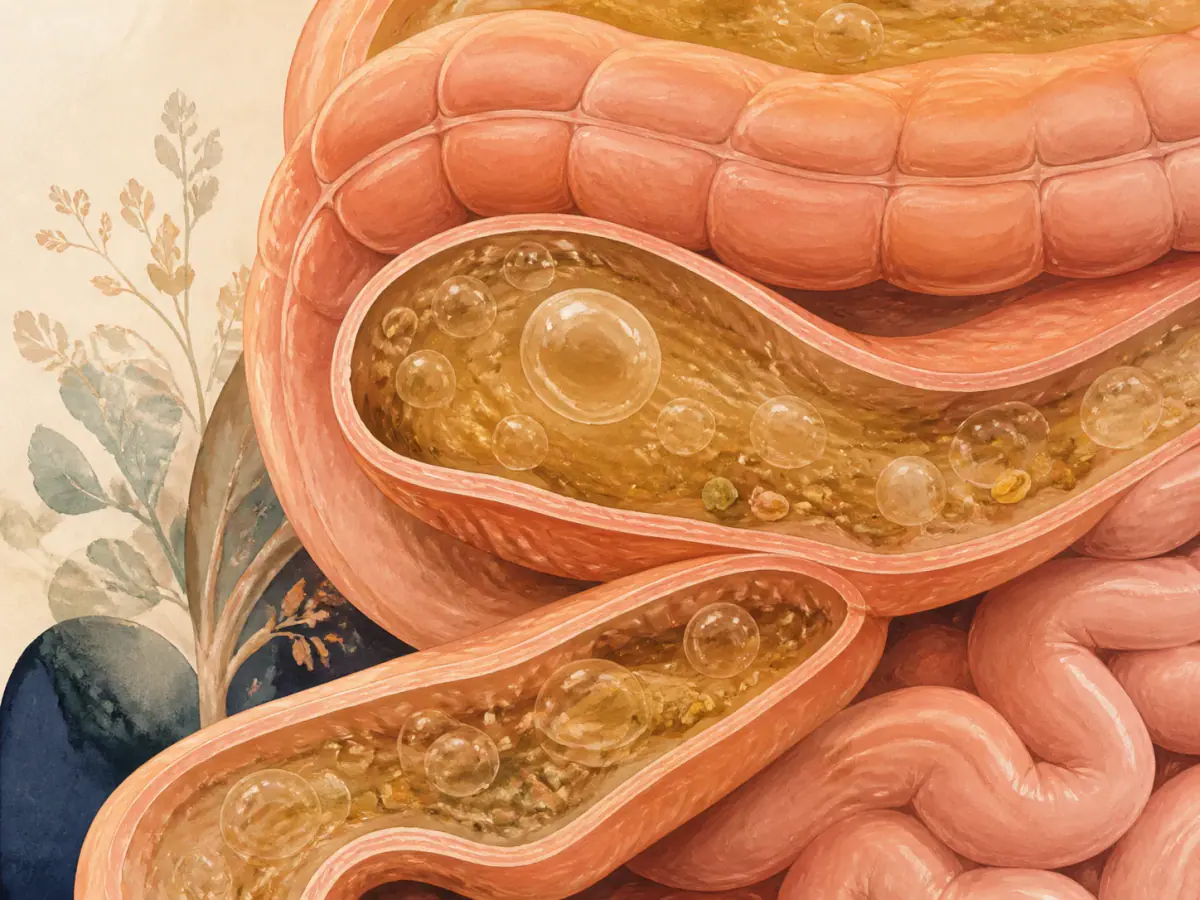
Not only the amount of gas, but also intestinal motility, constipation, food reactions, and sensory sensitivity can contribute to the perceived sensation of bloating.
Food intolerance is often a matter of quantity and digestive capacity rather than an allergy
Components that are not sufficiently absorbed, such as lactose or fructose, ferment in the intestines and can cause gas, abdominal pain, and diarrhea. Whether these recur at similar quantities when eating the same food, and whether small amounts are fine while larger amounts cause discomfort, Food intoleranceis important for understanding the condition. The verification method also differs from food allergies, which are centered on immune responses.
If you cut out all foods that overlapped with symptoms, it may seem comfortable at first, but the variety of meals, nutrition, and the intestine's ability to accept food may decrease. You should adjust for the necessary period, find the tolerable amount, and then gradually expand your diet. A state that is maintained only by continuously avoiding eating out and family meals is not a full recovery.
Korean herbal medicine treatment distinguishes between dampness-phlegm, food stagnation, qi stagnation, and spleen-stomach deficiency
If food does not move down after overeating and burping and bloating persist, we treat it as food stagnation; if the abdomen tightens and gas does not move as tension increases, we treat it as qi stagnation. Cases where the body feels heavy and overlaps with nausea and loose stools, Damsup (phlegm-dampness)and spleen-stomach deficiency, where one feels exhausted after eating very little and suffers from prolonged diarrhea, are not grouped under the same prescription.
Acupuncture treatment regulates abdominal tension and intestinal movement, and Korean herbal medicine treatment is used in parallel so that diet, bowel movements, and fatigue are recovered together. Improvement is judged not by the frequency of flatulence, but by the amount of food one can eat comfortably, evening abdominal pressure, and the range of outdoor activities.
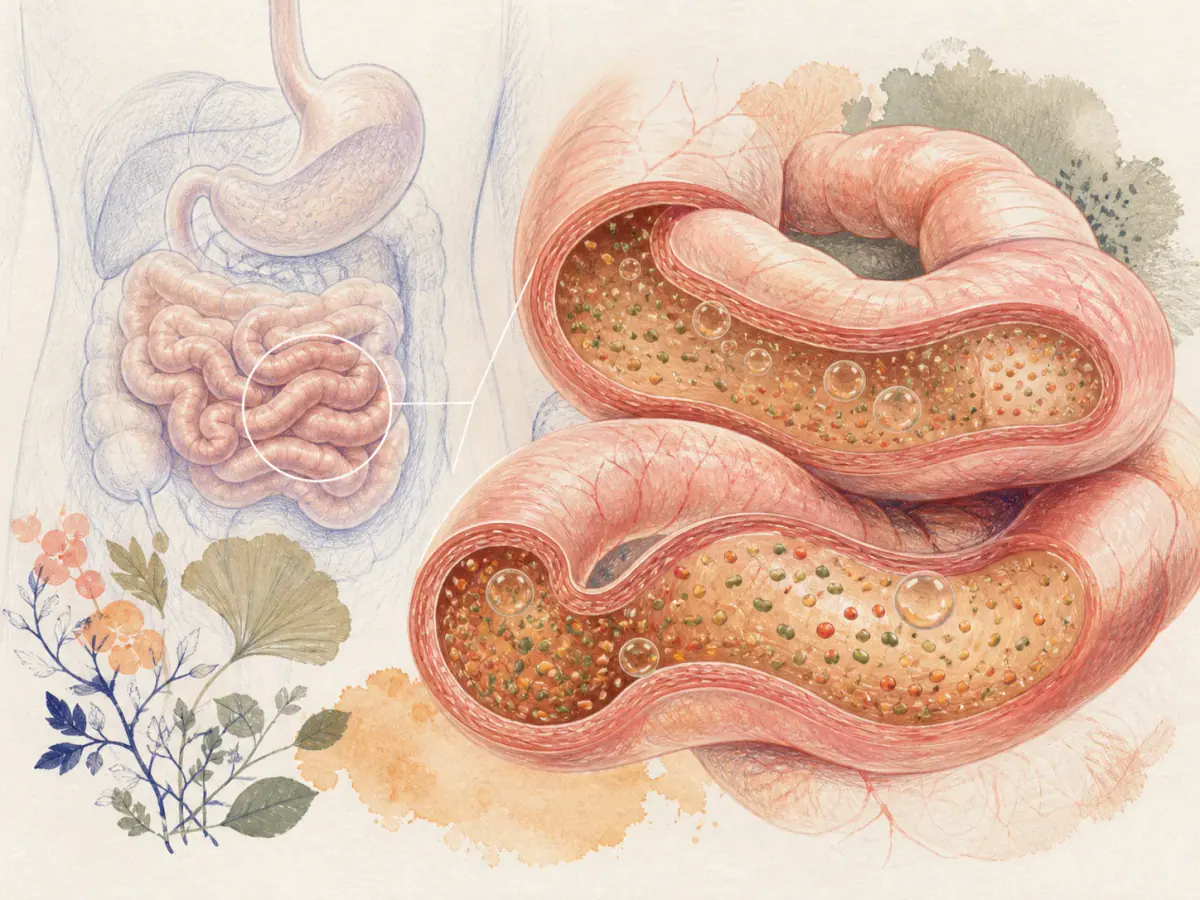
After examining risk factors and the limitations of testing alongside bloating, we interpret the SIBO test results.
For recurrent bloating, the most severely blocked function is treated before increasing restrictive diets
If the area from the solar plexus feels blocked immediately after eating, we first address the stomach's function of receiving and emptying meals; if the lower abdomen bloats several hours later and overlaps with constipation, we first address intestinal transit. If symptoms worsen sharply only on stressful days and pressure remains even after a bowel movement, the proportion of intestinal sensation and abdominal wall tension is high.
For those who are comfortable in the morning but bloat every evening, do not confirm SIBO or a specific food based on this page alone. Instead, look at the owner column and compare whether it blocks first at the solar plexus, whether the lower abdomen fills up several hours later, or whether the feeling of pressure is greater than the change in circumference. The priority for restrictive diets, bowel movement regulation, and sensory hypersensitivity management changes depending on which of these three categories applies.
Continuous weight loss, fear of eating, or recurrence of these symptoms vomiting·If bleeding or nighttime pain occurs, we re-evaluate rather than further increasing dietary restrictions. Other recurring bloating can be managed by expanding the range of acceptable foods through Korean medicine treatment.
The goal of treatment is a day where you no longer have to constantly check your abdomen
The goal of bloating treatment is not simply to measure abdominal circumference every time or to anticipate symptoms whenever you eat. It is to be able to continue working in the afternoon after lunch, feel less tightness in your clothes in the evening, and eat your next meal as usual even after dining out.
Bowels may become comfortable first, while bloating may take longer to subside. By maintaining the factors that responded to treatment and shifting the focus of the prescription toward remaining intestinal sensation and postprandial stagnation, you can expand your quality of life without increasing dietary restrictions.
Abdominal bloating cannot be explained solely by SIBO or a single food item. We analyze actual swelling, intestinal sensation, food intake, and bowel flow separately, and restore the range of foods you can eat and evening comfort through Korean medicine treatment.
Evidence and Update Information
This content was organized by Korean medicine doctor Choi Yeon-seung based on the materials below and was updated on 2026-09-02.
- NIDDK: Gas in the Digestive Tract
- NIDDK: Irritable Bowel Syndrome
- NIDDK: Symptoms & Causes of Gas in the Digestive TractNormal ranges for flatulence, abdominal bloating, and burping, and symptoms requiring medical evaluation
- ACG Clinical Guideline: Small Intestinal Bacterial OvergrowthAmerican Gastroenterological Association clinical guidelines covering SIBO risk factors, breath tests, and treatment
- NIDDK: Lactose IntoleranceBasic principles of dietary control and gas, bloating, and diarrhea resulting from impaired lactose absorption