
Functional Dyspepsia: Read in the order of your curiosity
Before using the term 'functional' lightly
Early satiation and epigastric pain are not the same type of indigestion
The core of functional dyspepsia is postprandial fullness (feeling full for a long time even after eating little), early satiation (difficulty finishing a normal meal), and pain or burning localized in the epigastric region. It is divided into Postprandial Distress Syndrome (PDS), centered on postprandial fullness and early satiation, and Epigastric Pain Syndrome (EPS), centered on epigastric pain and burning, though these two patterns can overlap. Bloating, nausea, and belching may also accompany these; if heartburn or reflux behind the sternum is the primary symptom, GERD is examined separately. Gastroparesis or Peptic ulcerConditions that cause similar symptoms should first be distinguished through necessary tests. Do not dismiss vomiting blood, black stools, difficulty swallowing, frequent or persistent vomiting, unintentional weight loss, jaundice, or persistent severe pain as functional disorders. If chest pain spreads to the jaw, neck, or arm, or if you experience shortness of breath, a cardiac emergency evaluation is the priority.
Symptom patterns and next steps
Distinguishing between postprandial distress, epigastric pain, and symptoms that should not be ignored
The amount eaten, relationship to meals, location, and functional impairment, rather than the name of the symptom, determine the next evaluation.
| Current scenario | Clues for interpretation | Next action |
|---|---|---|
| Feeling full for a long time after eating a small amount and difficulty finishing a meal | PDS pattern centered on postprandial fullness or early satiety | Medical evaluation after recording the amount eaten and recovery time |
| Pain or burning sensation in the epigastric area (upper center of the abdomen) that varies in relation to meals | EPS pattern, may overlap with PDS | Record the location, intensity, and timing relative to meals |
| Centered on burning sensation behind the sternum or acid reflux | Accompanied by GERD or a separate condition | Evaluate by distinguishing the reflux scenarios |
| Pain in the upper right abdomen, jaundice, or persistent severe abdominal pain | Possible other causes such as biliary tract or pancreas | Prompt gastrointestinal evaluation |
| Hematemesis, melena, difficulty swallowing, weight loss, or chest pain spreading to the jaw or arms | Possible bleeding, obstruction, or cardiac emergency | Immediate emergency or gastroenterological evaluation |
When to seek medical attention first
Symptoms that should not be dismissed as functional dyspepsia
The following symptoms require a priority evaluation for acute bleeding, obstruction, biliary/pancreatic, or cardiac causes.
- Hematemesis, coffee-ground vomiting, or black and sticky stools
- Difficulty or pain when swallowing, or frequent or persistent vomiting
- Unintentional weight loss, loss of appetite, or jaundice
- New and persistent severe pain in the epigastrium or upper abdomen
- Chest pain spreading to the jaw, neck, or arms, or accompanied by shortness of breath
Indigestion where endoscopy results are normal, but food intake continues to decrease
Fullness after a few spoonfuls: between gastric motility and sensation
Functional Dyspepsiais not a condition where there is nothing to treat simply because the gastric mucosa is clear. We categorize herbal medicine prescriptions by analyzing the stomach's adaptation to food after meals, emptying rhythm, epigastric hypersensitivity, and factors such as sleep, tension, and body heat through pattern identification.
Fullness and pain are not grouped as a single symptom
Prescriptions differ depending on whether the patient experiences early satiety (feeling full from the first spoonful), prolonged postprandial stagnation, or the onset timing of fasting epigastric burning.
Analyzing why digestive aids were ineffective, categorized by function
We distinguish whether the cause is slow gastric motility, hypersensitivity, significant heat and reflux, or the stomach stopping during times of tension.
Changes to monitor during treatment: edible amount and post-meal recovery
We look beyond pain scores to monitor the amount per meal, the time it takes to feel comfortable, and the recovery of dining out and sleep patterns.
Treatment GoalsThe goal is to recover the amount one can eat without strain, reduce the time it takes for post-meal stagnation and epigastric pain to subside, and increase the intervals between comfortable meals.
Consult regarding food intake amount and post-meal recovery time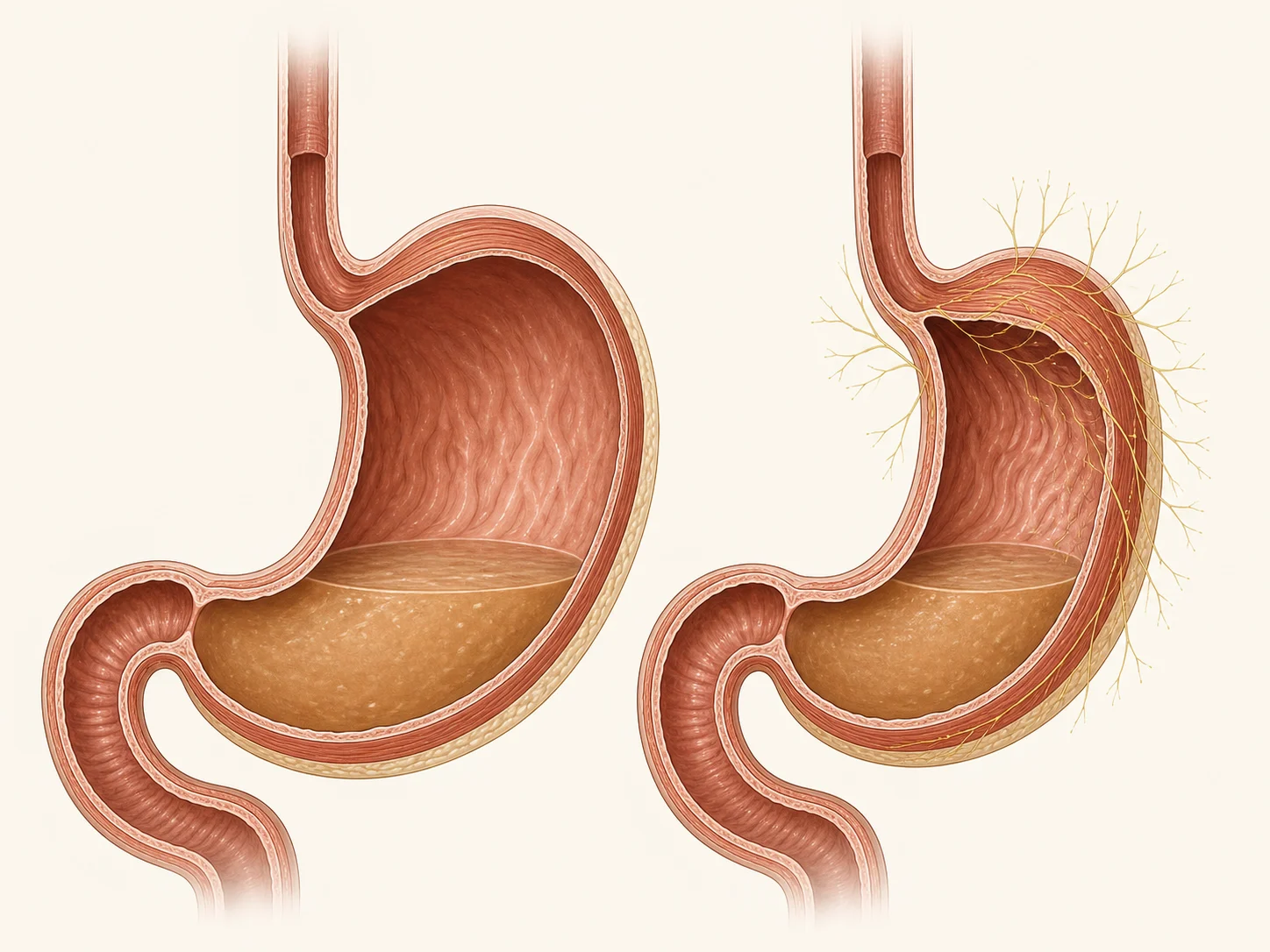
In functional dyspepsia, even without mucosal damage, differences in how the upper stomach adapts to and senses food after a meal can lead to early satiety and epigastric pressure.
The illustrations showing the processes occurring in the body are simplified explanations to help understand the location and changes of symptoms; they do not represent an individual's test results or treatment outcomes.The moment a meal stops
Putting down the utensils after a few spoonfuls despite being hungry
Some people stop not because they lack appetite, but because they know that eating more will lead to prolonged stagnation and pain. When food intake decreases, social appointments, physical strength, and the rhythm of subsequent meals are also disrupted.
Days when you cannot eat even half of a usual meal
Please record specifically after how many spoonfuls satiety began and how long the feeling of stuffiness remained after finishing the meal.
Epigastric blockage that lasts until the next meal
If you skipped the next meal or further reduced the amount due to post-meal stagnation, actual intake and recovery time are more important indicators than the pain score.
A lifestyle of avoiding dining out and company dinners first
If you have reduced social appointments due to worry over "what if I can't finish the meal" rather than the menu itself, the recovery of dining out and work-related meals is included in the treatment goals.
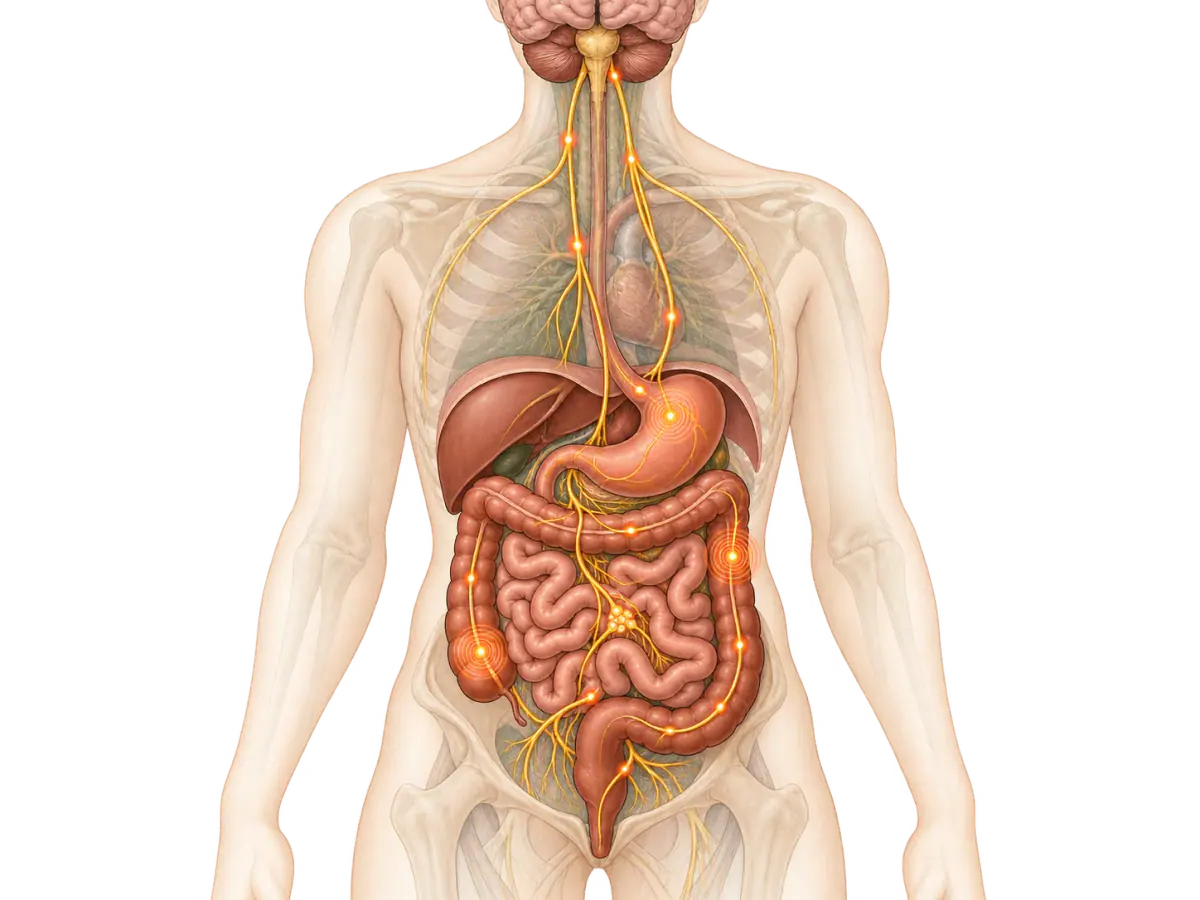
Even if tests show no significant structural abnormalities, the regulation of the autonomic and enteric nervous systems, sensory sensitivity, and motility rhythms can vary depending on meals, sleep, and stress.
Conceptual reference · NIDDK: Disorders of Gut-Brain InteractionRe-evaluating the symptoms
Different timelines for early satiety, post-meal stagnation, and epigastric pain
Functional dyspepsia cannot be explained by a single gastric dysfunction alone. Postprandial distress and epigastric pain types may overlap, and symptoms that should not be ignored or other underlying causes must be ruled out first.
Early satiety: feeling full too quickly during a meal
We observe at what point you stop eating compared to your usual portion. We consider both the stomach's adaptation to receiving food and sensory issues.
Postprandial fullness: food remaining in the stomach for a long time after eating
We check if this is accompanied by burping, bloating, or nausea, and whether it lasts until the next meal. Gastric emptying Along with these changes, the sensory sensitivity of the stomach must also be examined.
Epigastric pain and burning sensation
We distinguish whether it occurs after eating or on an empty stomach, and whether it differs from a feeling of reflux behind the sternum. Bleeding, weight loss, persistence, vomitingdysphagia (difficulty swallowing), or jaundice are not treated as functional issues while waiting.
Functions not visible on tests
A 'clean' stomach does not necessarily mean eating comfortably
Endoscopy is an important test for checking the mucosa and structural diseases. However, it is not a test that shows everything, such as how the stomach expands and moves food downward after a meal, the sensation of expansion, or hypersensitivity of the gut-brain signals.
Gastric accommodation to receiving food
If the upper part of the stomach does not relax comfortably when food enters, you may feel pressure and early satiety even with small amounts.
Discrepancy between gastric emptying and epigastric sensation
While some patients have slow emptying, the test values may not correspond one-to-one with the level of discomfort. We examine both motility and sensation.
Gut-brain signals interacting with tension and sleep
Stress is not the patient's fault. However, if it is a recurring pattern where digestion is more obstructed on tense days or the stomach becomes more sensitive the day after poor sleep, that schedule is also reflected in the treatment plan.
A typical meal to bring for your medical evaluation
Please record the amount eaten and recovery time rather than just a list of foods
If you only write down what you ate, it is easy to miss the functional aspect of the meal. Record the time you started eating, the point where you stopped, the first sign of discomfort, and the time you felt comfortable again on a single line.
Actual amount per meal and the point of early satiety
Use units that can be compared to your usual intake, such as a few spoonfuls of rice or half a bowl, and indicate whether you forced yourself to finish the meal.
Sequence of onset for epigastric blockage, pain, and belching
By recording whether these started before, during, or after the meal and how long it took to feel comfortable, PDSit is easier to distinguish the core characteristics of PDS and EPS.
Tests, medications, and weight changes
Gathering endoscopy and H. pylori results, medication names and responses, and new changes such as weight fluctuations or persistent vomiting into one list reduces unnecessary repetition and dangerous delays.
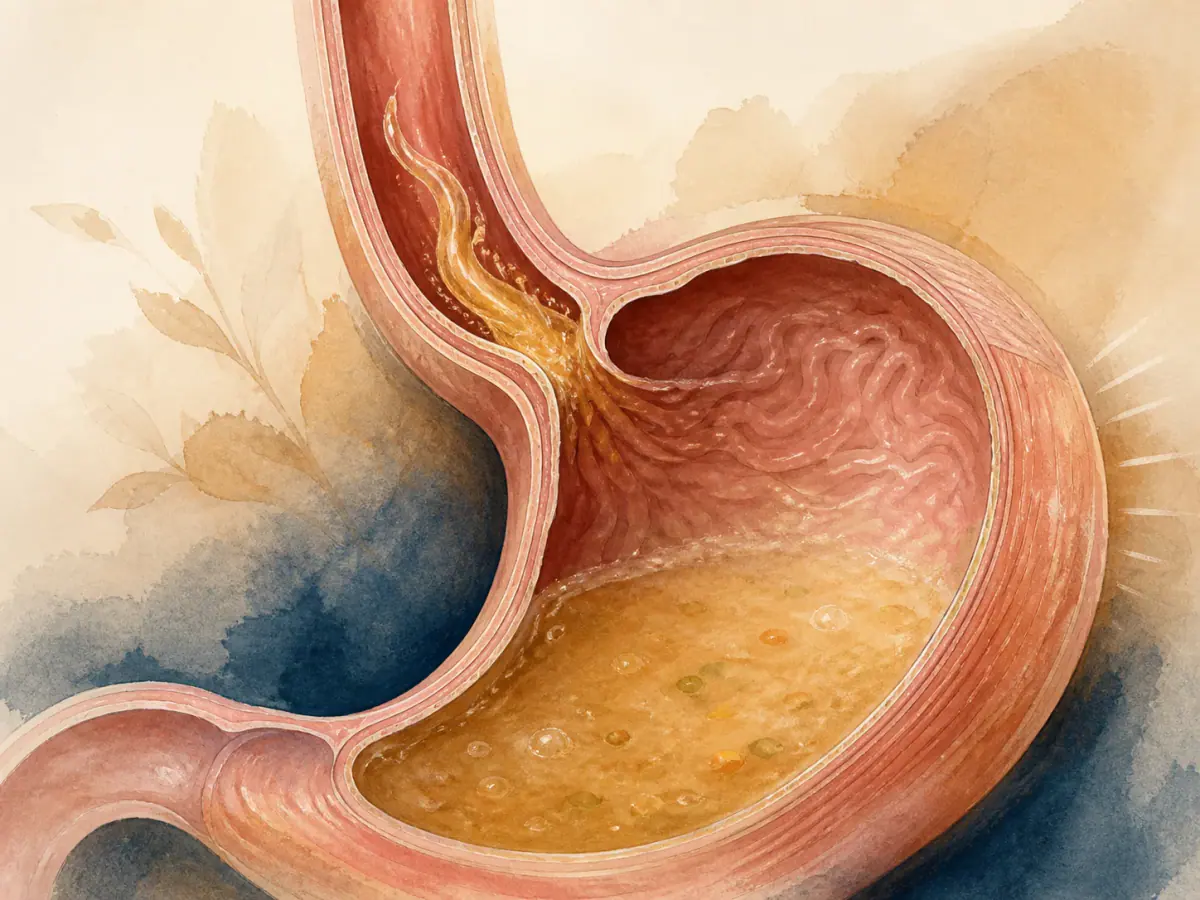
For early satiety and epigastric discomfort, we examine the amount eaten, the start time, and how long it lasted after the meal together.
Conceptual reference · NIDDK: IndigestionPattern identification (Byeon-jeung) of dyspepsia
Prescriptions differ for days when the stomach is weak, blocked, or overheating
We do not fix a single prescription based solely on the statement "I have indigestion." We look at the symptom that first limited your meal, among early satiety, postprandial stagnation, heartburn, or tension-induced reflux, along with systemic clues.
When you feel exhausted after eating only a little and the stomach takes a long time to empty
Loss of appetite,loose stoolsand postprandial drowsiness or coldness in the hands and feet, we reinforce the stomach's power to receive and move food downward, as well as the energy of the spleen and stomach.
When the solar plexus feels blocked after eating and you only feel comfortable after burping
If irregular eating habits, eating too quickly, or constipation are accompanied by chest tightness Sik-jeokWe focus on releasing gas to reduce the time of stagnation.
When burning sensations, dry mouth, or nausea following tension are the primary symptoms
We determine the proportion of heat-clearing and stomach-harmonizing versus liver-soothing and stomach-harmonizing treatments by assessing whether upper body heat and fasting burning sensations are prominent, or if the stomach stops functioning after throbbing, sighing, or insomnia.
Dietary goals for treatment
The strength to comfortably reach the next meal, rather than just finishing the current one
We do not force a normal-sized meal from the start. By monitoring the amount you can eat and the recovery time after meals, we reduce unnecessary avoidance and gradually expand your dietary range.
What to check first: The primary symptom among fullness, stagnation, pain, or burning
The symptom that appears first and causes you to stop eating is selected as the primary goal.
When starting treatment: Body conditions that change on the same day as gastric discomfort
Rather than including every instance of coldness, fatigue, heat, or tension, we only reflect clues in the prescription that have moved in the same direction multiple times.
During treatment: Meal portion size and the time it takes to feel comfortable
We adjust the proportions of the next prescription by comparing the amount eaten, days when the next meal was not skipped, dining out, business meals, and sleep recovery.
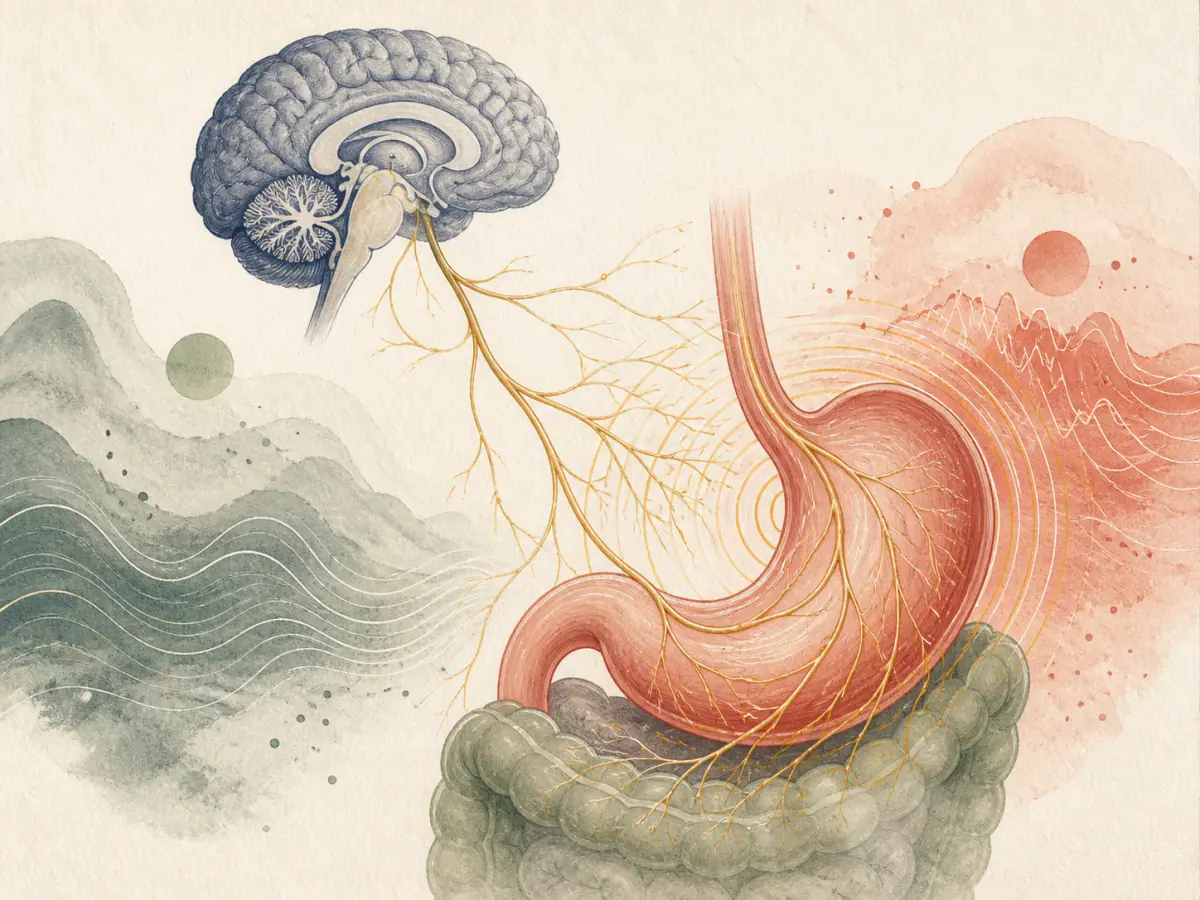
While stress can change symptoms, we do not attribute them solely to the mind; instead, we evaluate them alongside diet, sleep, and test results.
Conceptual reference · NIDDK: IndigestionBetween gastric motility, sensation, and tension responses
Even for the same indigestion, days when the stomach is weak differ from days when it is blocked
Within the phrase 'indigestion,' we distinguish between early satiety, postprandial stagnation, solar plexus pain, and burning sensations, and prescribe based on how these actually connect with coldness in the hands and feet, fatigue, upper body heat, or throbbing.
Pattern identification is not about arbitrarily adding a disease name to test results. A single person may experience a combination of decreased gastric motility, hypersensitivity, body heat, cold sensations, and tension; if the primary symptoms change based on diet, bowel movements, or sleep, the proportions of the prescription are adjusted accordingly.
When you feel exhausted even after eating a small amount and the stomach takes a long time to empty
- Changes to observe in digestive symptoms
- We check if you experience prolonged fullness after small meals, poor appetite, and loose stools.
- Changes to observe in the rest of the body
- We ask about decreased energy, drowsiness after meals, cold hands and feet, and slow weight recovery.
- Prescription priority
- We strengthen the stomach's ability to receive and move food, as well as the energy of the spleen and stomach.
When the solar plexus feels blocked after eating and you feel better only after burping
- Changes to observe in digestive symptoms
- We check if pressure, burping, and abdominal bloating persist after meals, even without overeating.
- Changes to observe in the rest of the body
- We check for irregular eating habits, eating too quickly, constipation, and a feeling of chest tightness.
- Prescription priority
- We first regulate gastric emptying and bloating by resolving the stagnation of food and the flow of Qi.
When the solar plexus burns and the mouth feels dry on an empty stomach or at night
- Changes to observe in digestive symptoms
- We check if burning, heat, nausea, and a sensation of reflux are the primary symptoms.
- Changes to observe in the rest of the body
- We ask about thirst, dry mouth, heat in the upper body, poor sleep, and worsening symptoms after eating irritating foods.
- Prescription priority
- We lower the heat and sensitivity of the stomach without making it excessively cold, which could further impair digestion.
When the stomach feels stiff under tension, accompanied by palpitations and shortness of breath
- Changes to observe in digestive symptoms
- We check if fullness and pain in the solar plexus increase immediately after meetings, going out, or lack of sleep.
- Changes to observe in the rest of the body
- We check if palpitations, a foreign body sensation in the throat, dizziness, and insomnia coincide with the timing of the symptoms.
- Prescription priority
- We focus on soothing the liver and harmonizing the stomach to reduce tension-induced autonomic responses and restore stomach relaxation and motility.
Order of prescription adjustment
- Identify the primary symptom among fullness, stagnation, pain, and burning
The symptom that appears first and limits food intake is set as the primary goal of the prescription.
- Connect stomach motility and sensation with systemic clues
Among coldness, fatigue, heat, and tension, we reflect only the parts that change alongside the days when stomach discomfort is severe into the prescription.
- Adjust based on the amount of a single meal and the recovery time after eating
We compare the amount you can eat and the time it takes to feel comfortable with your recovery from sleep and dining out.
Why consider Korean herbal medicine treatment now?
- When early satiety or epigastric pain has recurred for several months despite no significant abnormalities found during an endoscopy
- When postprandial fullness and belching are not sufficiently reduced even after using digestive aids or gastrointestinal medications
- When gastrointestinal discomfort fluctuates alongside tension, insomnia, and fatigue
What is evaluated in herbal medicine treatment for this condition
- The amount of a single meal and the point at which satiety begins
- The timing of epigastric pain, burning sensations, and belching, and when these ease
- Response to medications, and patterns of sleep, tension, and coldness in the hands and feet
We first check for bleeding, difficulty swallowing, or weight loss
If you have black stools, vomiting blood, a feeling of food getting stuck, repeated vomiting, unexplained weight loss, or jaundice, please undergo the necessary medical examinations first.
Postprandial fullness and epigastric pain are evaluated separately
We check how many spoonfuls it took to feel full, and exactly when postprandial fullness and epigastric pain or burning sensations begin.
Why we monitor both food intake and the recovery of daily activities
Rather than a single pain score, we compare the amount of a single meal, the number of days you do not skip the next meal, and whether dining out or commuting becomes more comfortable.
Things to prepare before the consultationPlease prepare information on your food intake over the last 1-2 weeks, how many spoonfuls it took to feel full, the time it takes for postprandial fullness and epigastric pain to resolve, changes in weight, stool, or vomiting, endoscopy and Helicobacter pylori test results, and any medications you are taking.
If bleeding, anemia, worsening difficulty swallowing, persistent vomiting, unexplained weight loss, or nighttime diarrhea newly occur, they must be re-evaluated even if past tests were normal. After ruling out these cases, we focus on herbal medicine treatment for chronic or recurring functional digestive symptoms.
Consult about functional dyspepsia progressGastrointestinal Glossary
Additional information to know regarding functional dyspepsia
You can proceed to a detailed explanation after confirming the simple meaning.Frequently Asked Questions
Frequently Asked Questions about Functional Dyspepsia
Is feeling full after eating only a small amount a symptom of functional dyspepsia?
Yes. early satiationis a commonly identified symptom of functional dyspepsia. Please let us know if this occurs after half a meal or just a few spoonfuls, and how long the feeling of discomfort lasts after stopping. If there is weight loss or repeated vomiting, an evaluation for other causes must come first.
Do PDS and EPS occur together?
They can appear together. It is easier to determine which discomfort hinders your meals more if you separately record days when you feel full after eating or full after a small amount, and days when you have a burning sensation or pain in the epigastric area.
Is all heartburn considered functional dyspepsia?
No. If you experience a burning sensation behind the chest and acid reflux, reflux must be evaluated separately. epigastric burningor chest burning, please let us know the location and its relationship to meals and posture.
Which symptoms require a medical examination before starting Korean herbal medicine treatment?
If you experience vomiting blood, black stools, difficulty swallowing, persistent vomiting, unexplained weight loss, jaundice, chest pain, or shortness of breath, you must first receive a gastroenterology consultation or an emergency evaluation.
Is this illness caused by stress?
While stress and sleep can alter symptoms, they do not explain everything. We examine when the symptoms began, along with infections, medications, changes in diet, and necessary tests.
If I have H. pylori, does that mean I have functional dyspepsia?
If an H. pylori infection is confirmed, we first check the eradication therapy and the response to it. If postprandial fullness, early satiety, or epigastric pain persist after completing treatment, the current symptoms are re-evaluated.
If gastric emptying is slow, is the cause confirmed?
The cause is not confirmed by that result alone. Gastroparesis is delayed gastric emptyingA diagnosis is made by objectively confirming this and examining the symptoms and whether there is a blockage. Changes in gastric emptying do not always align with symptoms, and gastric emptying tests are not necessary for everyone.
Evidence and Update Information
Dr. Choi Yeon-seung, a Korean medicine doctor, composed this based on the official professional materials and disease-specific clinical data below, and updated the content on 2026-08-26.
- NIDDK: Indigestion symptoms and causesSymptoms to check first: epigastric pain/burning, early satiety, postprandial fullness, bleeding, weight loss, and heart-related symptoms
- Rome Foundation: Rome IV functional dyspepsia criteriaOverlap of core symptoms of PDS and EPS; differentiation from GERD, biliary pain, and persistent vomiting
- British Society of Gastroenterology: Functional dyspepsia guidelineSymptom subtypes of disorder of gut-brain interaction, positive clinical diagnosis, and re-evaluation of symptoms that should not be overlooked
- NIDDK: Treatment of indigestionPriority treatment for H. pylori, other diseases, and medication-induced causes, and the role of gut-brain therapy
- NIDDK: Diagnosis of indigestionSelective diagnostic process for endoscopy and imaging based on medical history, medications, physical examination, H. pylori, and symptoms that should not be overlooked
- ACG and CAG: Clinical guideline for dyspepsiaH. pylori and endoscopy pathways based on age and risk, and non-recommendation of routine motility tests
- British Society of Gastroenterology: Functional dyspepsia guidelineEvidence for H. pylori eradication, lifestyle, medication, gut-brain behavioral therapy, and stepwise management of refractory symptoms
- UCLH: Dietary Management of Functional DyspepsiaRegular meals, individual tolerance, flexible texture adjustment, and reintroduction of food range