Symptoms after testing
Why do I still feel bloated even though my endoscopy was normal?
The priority of herbal medicine and acupuncture treatment varies depending on whether you feel full after eating very little, whether epigastric pain and burning are central, or whether the stomach feels more blocked after tension or sleep.
Even if an endoscopy shows no major abnormalities, early satiety and bloating can persist if the stomach's movement in receiving and emptying meals, the sensation in the epigastrium (upper central abdomen), or the gut-brain signals are misaligned. The remaining symptoms after a normal result Functional DyspepsiaWe explore this from various perspectives and the viewpoint of Korean medicine treatment.
| Prominent Symptoms | Considered Factors | Changes to Observe During Treatment |
|---|---|---|
| Feeling full after only a few spoonfuls | Gastric accommodation and postprandial distress syndrome | Amount of food eaten comfortably and recovery time |
| Epigastric pain when fasting or after meals | Epigastric pain syndrome and visceral hypersensitivity | Duration of meals without pain |
| Worsening after tension or lack of sleep | Gut-brain signaling and autonomic nerve regulation | Recovery speed of eating and sleeping patterns |
| Burping, nausea, dizziness | Decreased gastric motility and Dam-eum (phlegm-fluid retention) | Upper abdominal pressure and accompanying symptoms |
The term 'functional' does not mean it is all in your mind
Endoscopy is important for finding structural problems that can be seen visually, such as ulcers, tumors, or severe inflammation. A result showing no major abnormalities is a reason for relief, but it does not mean that the stomach's adaptation to food, gastric emptying, or the sensations in the epigastric area are all comfortable.
Functional dyspepsia is an actual digestive disorder characterized by recurring postprandial fullness, early satiety, epigastric pain, and burning sensations. Baekrokdam does not pit normal test results against remaining symptoms; instead, we look at which functions to treat after the causes hidden by the tests are identified.
Feeling full after eating very little and having epigastric pain have different starting points for treatment
If you feel full from the first few spoonfuls, stop eating, and experience prolonged post-meal bloating, Postprandial Distress Syndromethis is close to the pattern of Postprandial Distress Syndrome (PDS). If you experience burning and pain in the epigastric area when fasting or after meals and avoid eating due to the pain, Epigastric Pain Syndrome (EPS) may be more prominent.
These two patterns often overlap. By observing whether fullness comes first followed by epigastric pain and nausea, or whether energy levels drop as food intake decreases due to pain, we can treat the sequence of the overall meal collapse rather than just suppressing a single symptom.
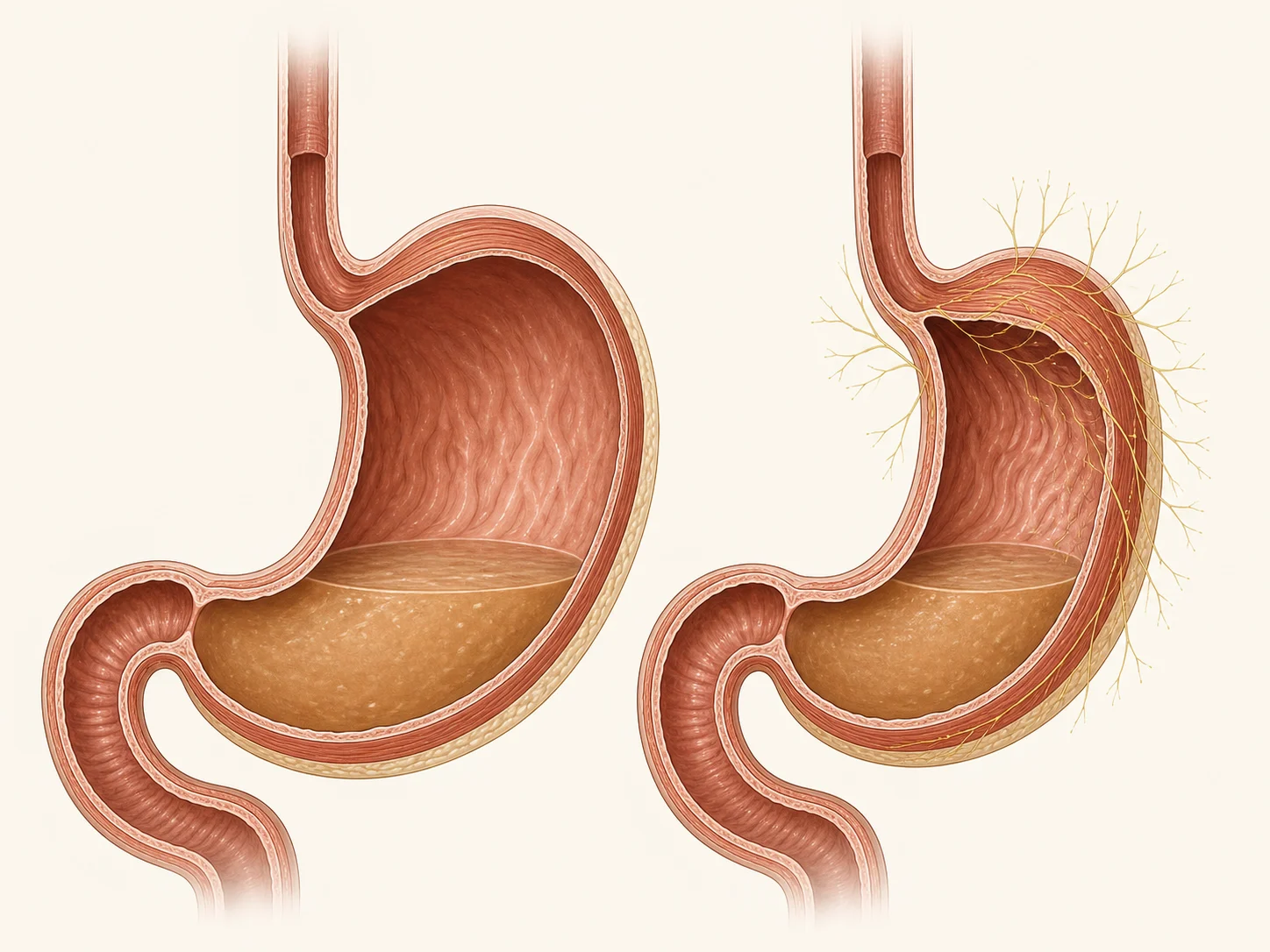
In functional dyspepsia, even without mucosal damage, differences in how the upper stomach adapts to and senses food after a meal can lead to early satiety and epigastric pressure.
There are several reasons why symptoms may not improve even after changing medication or reducing food intake
acid suppressantsCertain treatments may help with burning sensations but leave early satiety and post-meal pressure, and even with digestive aids, the stomach may feel blocked again on stressful days. Before concluding that a medication was not a match, we must distinguish which symptoms decreased and which remained to make the next treatment more specific.
Continuously reducing food intake can further lower the amount eaten per meal and overall physical strength, potentially solidifying a state where even a small amount of food feels overwhelming. While irritating foods should be managed, the focus should be on recovering the amount and speed of eating that the stomach can currently handle, rather than unconditional fasting.
Symptoms remaining after a normal endoscopy cannot be explained by gastric motility alone
Research on functional dyspepsia mentions not only delayed gastric emptying but also impaired accommodation (where the upper part of the stomach does not expand sufficiently during meals) and visceral hypersensitivity (where even small expansions are felt intensely), Visceral Hypersensitivityas well as duodenal irritation and changes in gut-brain signaling. This is why, even with the same feeling of bloating, some people feel full after a few spoonfuls, while others experience prolonged epigastric pressure and burping after finishing a meal.
Therefore, treatment responses are difficult to interpret simply as the success or failure of a single medication. By distinguishing whether acid-related burning decreased first, whether the amount of food eaten comfortably increased, or whether the time for post-meal discomfort to subside shortened, we can identify the remaining motility, sensory, or tension axes and adjust the goal of the next prescription.
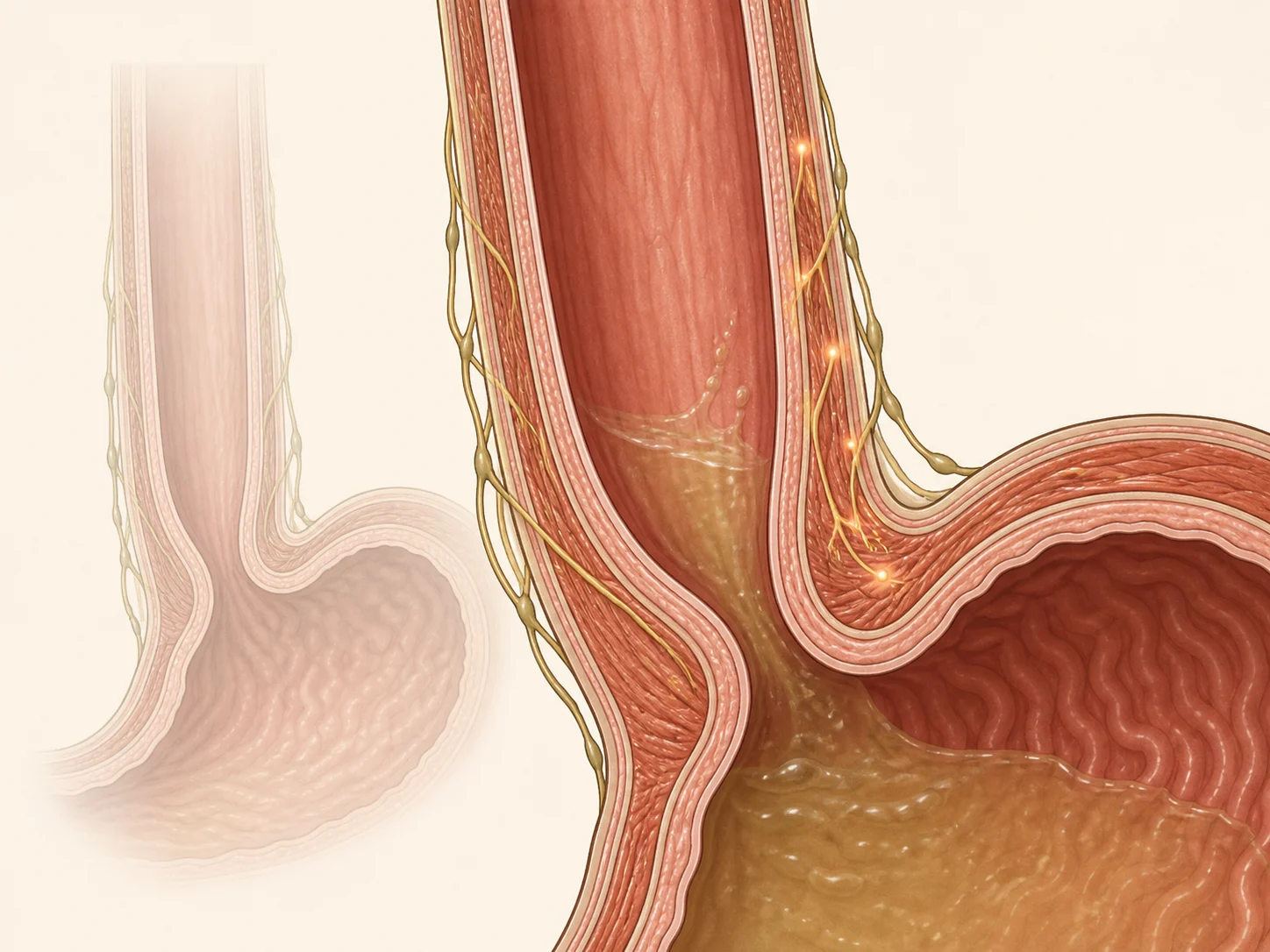
Even if no erosion is seen on an endoscopy, reflux events and esophageal hypersensitivity can lead to heartburn, chest tightness, and throat discomfort.
Korean medicine treatments categorize the stomach into those with a weak type and those with a blocked and sensitive type
If you experience a loss of energy even after eating a small amount, combined with loose stools and fatigue, we focus on herbal medicine treatment to reinforce the strength of the spleen and stomach. If burping and bloating persist long after overeating, we focus on resolving food stagnation and qi stagnation; if the solar plexus tightens when nervous, we address liver-stomach disharmony and Autonomic nervous system regulation together.
Patterns where nausea, dizziness, and throbbing overlap with upper abdominal discomfort Dameum (phlegm-fluid) may not be resolved by reinforcing the gastrointestinal tract alone. Acupuncture treatment is used alongside herbal medicine to reduce tension in the solar plexus and abdomen, allowing gastrointestinal motility and sleep to recover together.
Clinical studies on herbal medicine and acupuncture treatments also report a trend of improvement in overall symptoms and quality of life for functional dyspepsia. Rather than simply applying a single prescription from a study to a symptom name, Baekrokdam uses PDS·EPScategories and determines which axis, spleen-stomach deficiency, food stagnation, liver-stomach disharmony, or phlegm-fluid, is currently the biggest obstacle to eating, and then constructs the treatment.
The goal of treatment is not a test score, but returning to eating comfortably
Improvement means stuffy feeling more than just a decrease in scores. It must lead to real-life changes where the amount you can eat comfortably increases, the duration of post-meal discomfort shortens, and your sleep is no longer disturbed after dinner.
If difficulty swallowing, repeated vomitingblack stools, or unexplained weight loss occur, we re-evaluate regardless of previous normal test results. Other recurring discomforts are addressed through herbal medicine and acupuncture to treat stomach adaptation, motility, sensation, and the gut-brain axis, leading to the recovery of eating habits.
Some may find lunch more comfortable but still experience evening fullness and insomnia, or find that while the amount of food they can eat has increased, epigastric burningsome symptoms may remain. We first maintain the recovered functions and then shift the focus of the prescription to the remaining fullness, pain, or sleep axis, ensuring that the improvement in one meal extends to the entire day.
Even after a normal endoscopy, bloating can persist if the adaptation, motility, or sensation of the stomach is disrupted. Baekrokdam distinguishes between PDS·EPS categories and spleen-stomach deficiency, food stagnation, liver-stomach disharmony, and phlegm-fluid to restore the amount you can eat comfortably and the recovery time through herbal medicine and acupuncture.
Evidence and Update Information
This content was compiled by Korean medicine doctor Choi Yeon-seung and updated on 2026-08-31 based on the following materials.
- NIDDK: Treatment of Indigestion
- NIDDK: Treatment for GER & GERD
- NIDDK: Indigestion symptoms and causesSymptoms to check first: epigastric pain/burning, early satiety, postprandial fullness, bleeding, weight loss, and heart-related symptoms
- British Society of Gastroenterology guideline: functional dyspepsiaMechanisms and treatment flow of functional dyspepsia, including gastric accommodation/emptying, visceral hypersensitivity, and the gut-brain interaction
- Efficacy of herbal treatments for functional dyspepsia: systematic review and meta-analysisSymptom and quality of life outcomes from a synthesis of 49 randomized trials of Korean herbal medicine and botanical drugs in adults with functional dyspepsia
- Efficacy and safety of acupuncture for functional dyspepsia: updated meta-analysisLatest comprehensive analysis reviewing changes in symptoms and quality of life for functional dyspepsia, including sham acupuncture controlled studies