Reflux After Normal Endoscopy
When Endoscopy is Normal but Heartburn Persists: Non-erosive Reflux, Esophageal Hypersensitivity, and Functional Heartburn
To fill the gap between a 'normal' result and actual discomfort, it is necessary to distinguish between heartburn, acid regurgitation, chest pressure, and the sensation of a foreign body in the throat, while examining the connection between gastric acid, esophageal sensation, digestion, and tension.
You may continue to experience heartburn and a feeling of a lump in the throat even if there are no lesions on the endoscopy. The treatment direction varies depending on whether there is significant acid reflux, if the esophagus is sensitive to minor reflux, or if pain circuits unrelated to reflux remain.
| Category | Main Symptoms | Points to Review |
|---|---|---|
| Non-erosive reflux | Typical heartburn and acid regurgitation, no erosion on endoscopy | Relationship between acidity, impedance, and symptom timing |
| Reflux hypersensitivity | Significant discomfort even with minor reflux | Correlation between sensory sensitivity and symptoms |
| Functional heartburn | May have a low correlation with reflux | Other causes of chest pain and the gut-brain interaction |
| Laryngopharyngeal discomfort | Foreign body sensation in the throat, clearing the throat, coughing | Other causes such as laryngeal, allergic, or muscle tension issues |
A normal endoscopy does not mean there is no reflux or discomfort
An endoscopy clearly shows whether there are erosions or ulcers in the esophageal mucosa, but it does not show how often acid rose or whether symptoms occurred immediately after reflux at the moment of the exam. Therefore, even in cases without erosions, Non-Erosive Reflux Diseasetypical heartburn and acid regurgitation can recur.
Conversely, a feeling of heartburn alone cannot be diagnosed as gastric acid reflux. There is 'reflux hypersensitivity,' where acid exposure is within the normal range but the body reacts sensitively to small reflux events, and there are cases where functional heartburnthe temporal relationship between symptoms and reflux is not clear. This is why simply increasing the dose of the same medication does not solve the problem, even if the names of the conditions sound similar.
Whether the medication is working must also be analyzed by symptom
After taking acid suppressants, acid regurgitation and burning sensations may decrease, while the foreign body sensation in the throat and chest pressure may remain. Rather than grouping this as 'the medicine isn't working at all,' separating the improved symptoms from the remaining symptoms allows us to acid refluxre-evaluate the proportion of acid-related issues versus esophageal sensitivity.
If discomfort remains significant despite appropriate timing and duration of medication, as needed, pH and impedance monitoringis used to confirm the temporal relationship between actual reflux and symptoms. Feelings of difficulty swallowing or food frequently getting stuck require an examination of esophageal motility and other mucosal diseases, so these are not dismissed as simple reflux for a long period.
Tightening chest pain during exercise, cold sweats, shortness of breath, or pain radiating to the arms or jaw are not assumed to be digestive symptoms; cardiac evaluation is prioritized.
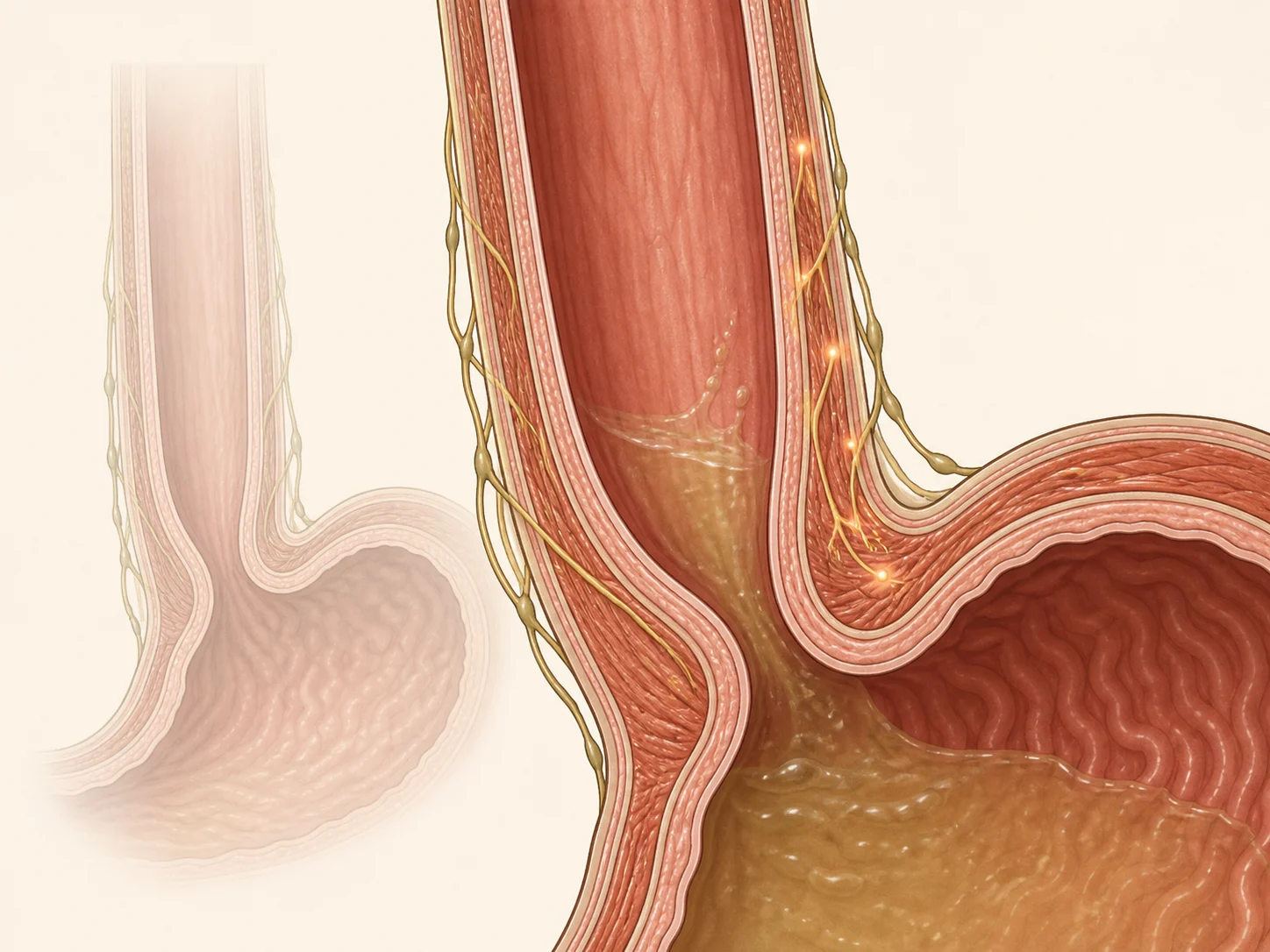
Even if no erosion is seen on an endoscopy, reflux events and esophageal hypersensitivity can lead to heartburn, chest tightness, and throat discomfort.
Esophageal hypersensitivity is not a psychological issue, but a state where the sensory threshold has lowered
When burning and tightening sensations are vivid despite no major damage found in tests, it is easy to be told that it is simply because you are 'sensitive.' However, esophageal hypersensitivitythis can be understood as a state where the same stimulus is actually felt more intensely, and tension, lack of sleep, and hyper-vigilance toward repeated discomfort amplify the sensation.
Therefore, a method of endlessly eliminating only irritating foods is not sufficient. While reducing clear reflux triggers, such as late-night overeating and the habit of lying down, an approach is needed to expand the esophagus's tolerance by breathing comfortably, releasing tension in the upper body and diaphragm, and recovering the experience of being okay after eating.
Herbal medicine treatment addresses the reactions of both the stomach and esophagus, rather than focusing on stomach acid alone.
Baekrokdam analyzes whether acid reflux actually occurs and if the solar plexus feels blocked, burpinghow frequent these occurrences are, whether the tightening increases as the throat and chest become tense, and how long symptoms persist after late-night snacks or lack of sleep. The focus of herbal medicine treatment varies depending on where gastric emptying, esophageal sensation, and autonomic nervous system tension overlap.
If postprandial stagnation and reflux are central, the treatment helps the flow of the stomach receiving and sending food down; if burning and dryness are prominent, it calms the overheated upper reactions caused by irritation; if tension and chest tightness are significant, it releases blocked energy and expands the breath. Acupuncture can be used in parallel as a pillar to lower tension in the solar plexus and thoracic cage and regulate hypersensitive reactions.
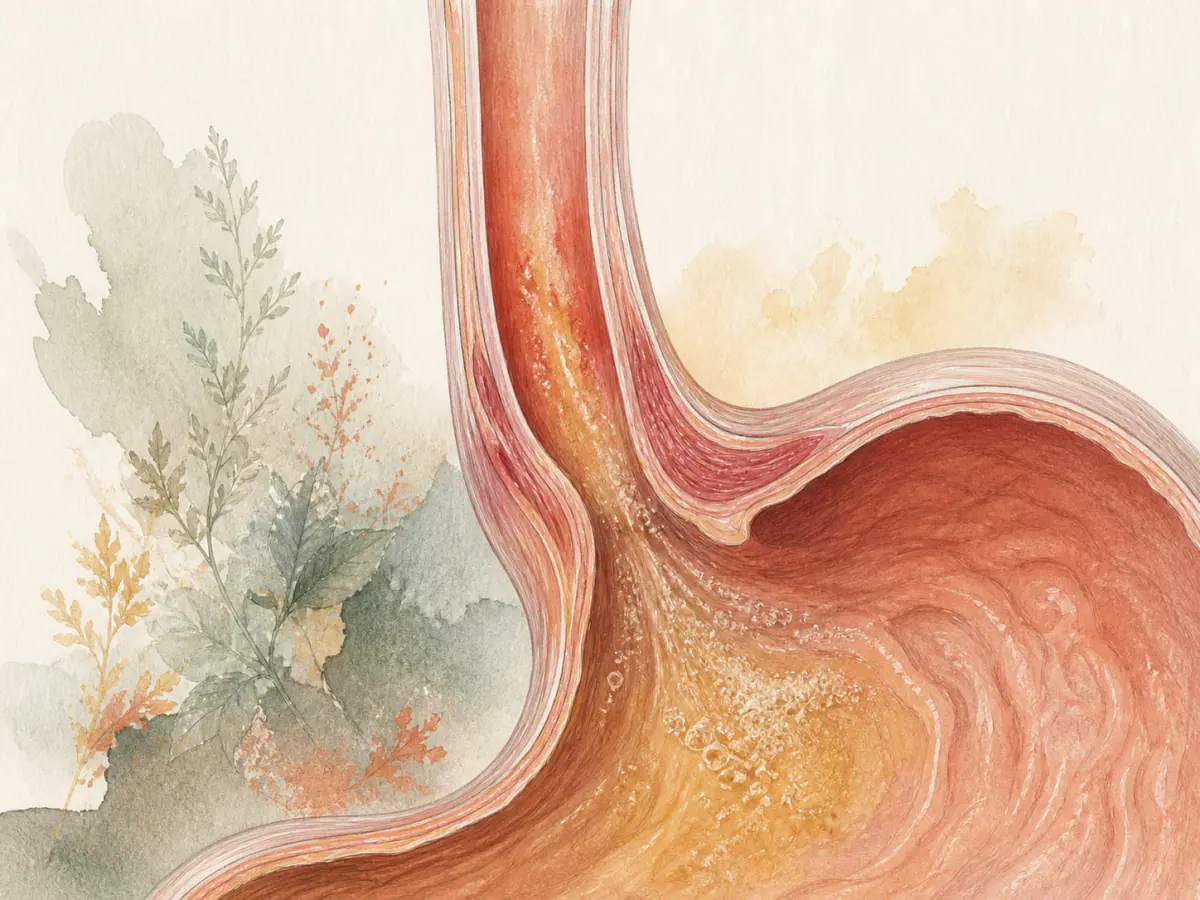
The evaluation of heartburn and acid reflux varies depending on the timing after meals, lying posture, and whether swallowing discomfort is present.
The goal of treatment is not to increase the list of forbidden foods.
Initially, it helps to reduce scenarios that clearly worsen symptoms, such as late-night snacks, excessive drinking, or eating a very large single meal. However, for chronic heartburn, a state where one only eats porridge and a few specific foods indefinitely cannot be viewed as recovery.
The goal is to ensure that discomfort in the chest and throat does not linger long after a moderate meal, that reflux when lying down is reduced, and that one returns to a comfortable state quickly even after a flare-up. By respecting test results and medication responses while using herbal medicine to address both gastric motility and esophageal sensation, this scope of recovery can be expanded.
Even if an endoscopy is normal, non-erosive reflux, reflux hypersensitivity, and functional heartburn are different. By distinguishing the remaining symptoms and treating the connection between gastric motility, esophageal sensation, and tension, the variety of foods and daily activities can expand again.
Evidence and Update Information
This content was compiled by Korean medicine doctor Choi Yeon-seung and updated on 2026-08-31 based on the following materials.
- NIDDK: GERD
- NIDDK: GERD symptoms and causesHeartburn, reflux, chest pain, swallowing difficulties, and cough; symptoms that should not be ignored, such as bleeding or weight loss
- American College of Gastroenterology: Acid reflux and GERDDifferentiating GERD symptoms and complications from cardiac chest pain; monitoring swallowing difficulties and bleeding
- AGA: Personalized approach to GERDAn approach to distinguish between pH monitoring, reflux hypersensitivity, and functional heartburn in cases of persistent reflux symptoms following a normal endoscopy