Symptoms that do not respond to medication
What should be re-evaluated when acid suppressants or digestive aids are not working?
By re-categorizing symptoms such as heartburn, acid reflux, early satiety, epigastric pain, and abdominal bloating, we can set specific goals for Korean medicine treatment instead of repeatedly changing medications.
acid suppressantsIf you do not improve even after taking acid suppressants or digestive aids, it may not be because the medication is too weak, but because the remaining discomfort is stemming from a different axis among acid, esophageal sensation, gastrointestinal motility, or bowel function.
| Remaining Discomfort | Direction for Re-evaluation | Details to Record |
|---|---|---|
| Acid reflux has decreased, but burning remains | Re-evaluate esophageal hypersensitivity, non-erosive reflux, or other thoracic causes | When acid reflux decreased, duration of burning, and relationship with posture or tension |
| Burning has decreased, but feeling full after eating very little | Re-organize categories of gastric accommodation, postprandial stasis, and functional dyspepsia | After how many spoonfuls the feeling of fullness occurs, and recovery time after meals |
| Upper abdominal symptoms have improved, but delayed bowel movements and bloating remain | Re-evaluation of intestinal transit, constipation, and intestinal sensation | Stool form, feeling of incomplete evacuation, and time of evening bloating |
| Burning sensation has decreased, but foreign body sensation in the throat and chest tightness remain | Non-erosive reflux, esophageal hypersensitivity, and non-reflux causes | Post-meal timing, posture, tension, and duration |
| Feeling of fullness even after eating a small amount, despite taking digestive medicine | Gastric accommodation, emptying, and functional dyspepsia | Amount and time from the first spoonful until feeling full |
| Bloating, diarrhea, and constipation recur even after changing probiotics | Bowel stasis, fermentation, intestinal sensation, and IBS subtypes | Abdominal pain before and after bowel movements, and stool form |
| Worsens with tension, insomnia, and palpitations before and after examinations | Gut-Brain Interaction and Autonomic Nervous System Response | During sleep, meetings, menstruation, or before and after meals |
Breaking down the statement 'the medicine didn't work' by symptom
If acid suppressants reduced the acid reflux but a foreign body sensation in the throat and chest tightness remain, it is not a complete lack of response. If after taking digestive medicine stuffy feelingthe symptoms improved but the feeling of being full after eating only a small amount remains, we must re-examine the stomach's motility and its ability to accept food. Separating improved symptoms from remaining symptoms makes the next step of treatment clearer.
Since the effectiveness of prescribed acid suppressants can vary depending on the timing of intake and its relationship to meals, we first verify the actual administration method. If discomfort persists after this process, it is better to ask whether the current symptoms are the same problem as the initial diagnosis rather than simply moving to a stronger medication.
The most helpful information in the consultation room is not 'no effect,' but the structure of a 'partial response.' Whether acid reflux decreased but burning remains, burning decreased but early satiety remains, or the upper abdomen feels lighter but constipation and bloating persist, the next questions change based on these differences. By identifying these branches on the same page, acid suppressants Functional Dyspepsia, and intestinal function problems will not be lumped together as one mass.
If burning persists even after reducing acid, we distinguish between actual reflux and esophageal sensitivity
Reflux where esophageal mucosal damage is visible on an endoscopy Reflux esophagitisand non-erosive reflux where the endoscopy is normal are not the same. Acid reflux can recur even without mucosal damage, and there are cases of reflux hypersensitivity or functional heartburn where acid exposure is normal but the esophagus perceives small stimuli as significant pain. In these cases, simply reducing acid further may not lead to the expected improvement.
heartburnIf new chest pain occurs, or if there is difficulty swallowing, a feeling of food getting stuck, repeated vomiting, bleeding, or distinct weight loss, a necessary re-evaluation must be conducted first. For discomfort that remains after testing, we change the treatment direction by examining whether the symptoms and reflux are actually linked, or if there is non-acid reflux or sensory hypersensitivity.
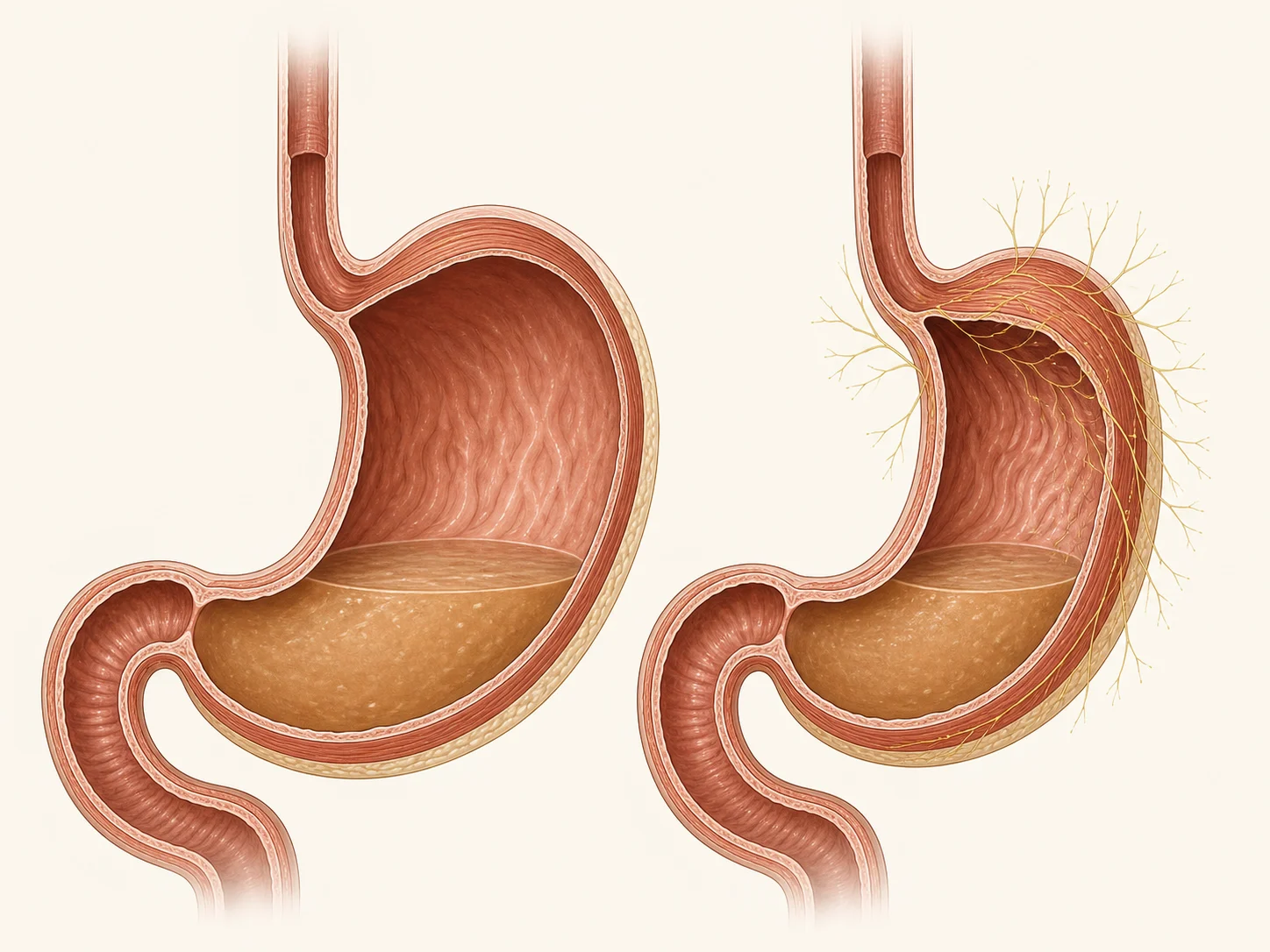
In functional dyspepsia, even without mucosal damage, differences in how the upper stomach adapts to and senses food after a meal can lead to early satiety and epigastric pressure.
Early satiety that does not respond to digestive medicine requires looking at the stomach's capacity to accept food
The phrase 'indigestion' encompasses several different symptoms. Early satiety (feeling full after a few spoonfuls), a sense of stagnation where food remains long after a meal, epigastric pain and burning, and burping and abdominal bloating do not all respond to the same medication in the same way. Even in functional dyspepsia, Postprandial Distress Syndromethe core of the condition and epigastric pain syndrome differ.
If early satiety is severe, food intake decreases, leading to a drop in energy, and skipping meals due to fear of discomfort can further weaken the gastrointestinal rhythm. Rather than advising to eat more at once, it is more important to restore meal intervals with manageable portions and treat the stomach's ability to accept and move food downward.
If only the upper abdominal medication was changed but the lower abdomen remains the same, we examine intestinal function together
If severe constipation accompanies post-meal bloating, the stagnation caused by the inability to pass waste downward can increase stomach fullness and reflux. If diarrhea and abdominal pain recur, Irritable Bowel Syndromewe must look at the subtypes, food fermentation, intestinal sensitivity, and whether pain decreases after bowel movements. This is why it is difficult to explain the remaining bloating in people who continuously change probiotics as a problem of a single strain of bacteria.
Cases where gastrointestinal symptoms worsen sharply after tension and lack of sleep are not simply dismissed as 'nervous.' The gut-brain interactionSince these factors can simultaneously disrupt gastric acid, motility, sensation, and bowel rhythms, our treatment scope includes the connection between digestive symptoms and pulsating sensations, heat sensations, and insomnia.
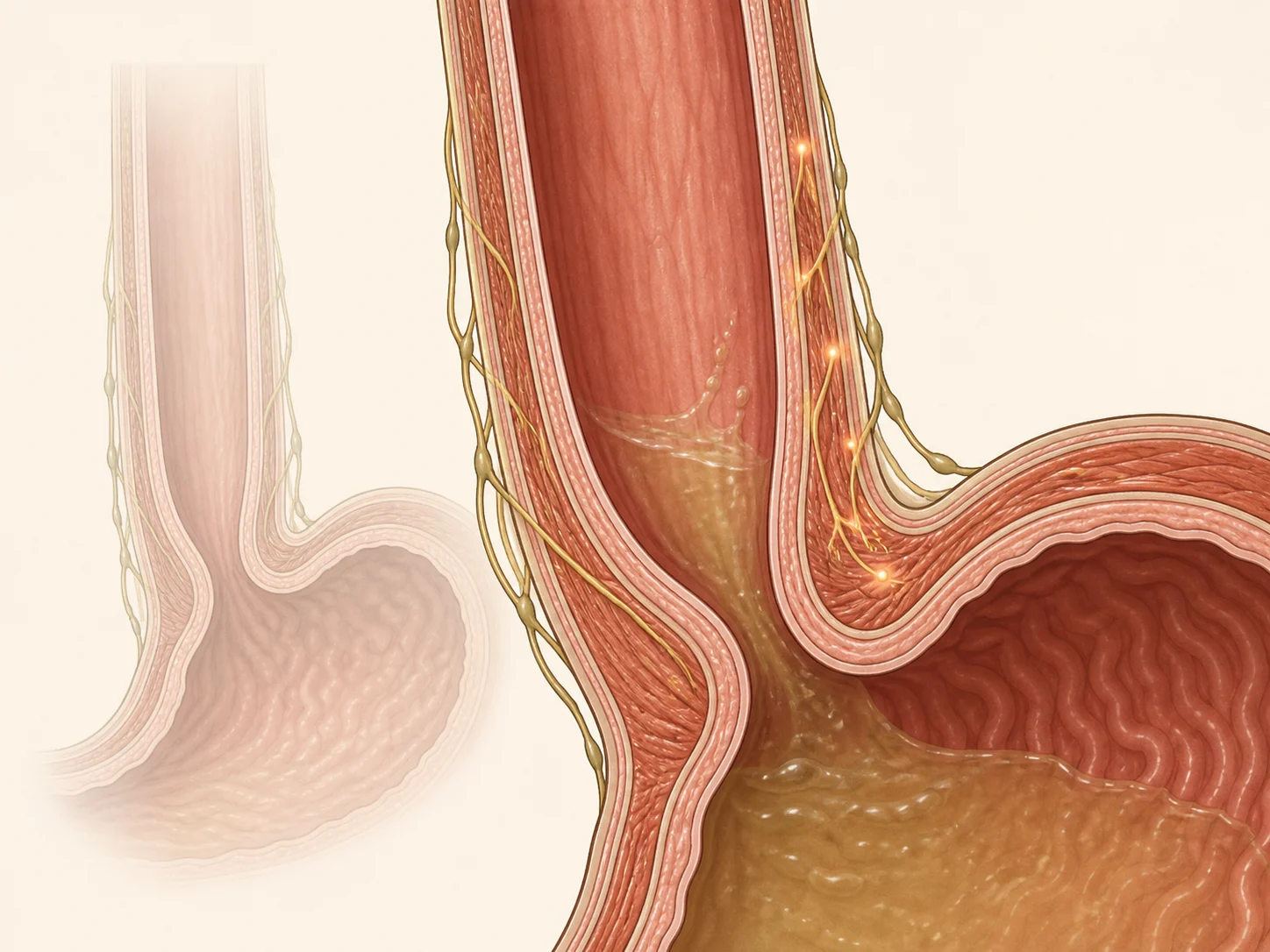
Even if no erosion is seen on an endoscopy, reflux events and esophageal hypersensitivity can lead to heartburn, chest tightness, and throat discomfort.
Korean medicine treatment redesigns prescriptions based on the remaining functions of the body
At Baekrokdam, we use what remains as the starting point for prescriptions, rather than the fact that a medication did not work. This includes Spleen and Stomach Deficiency (Bi-wi-heo-han), where the interior is cold, one tires easily even after eating a small amount, and loose stools are frequent; and Food Stagnation (Sik-jeok), where digestion takes a long time and is accompanied by significant belching and bloating,Qi stagnationStomach Heat (Wi-yeol), characterized by prominent burning sensations, thirst, and dry mouth; and Liver-Stomach Disharmony (Gan-wi-bul-hwa), where the solar plexus feels blocked and heat surges after stress, each requires a different direction of treatment.
Korean herbal medicine treatment gastrointestinal motilityis prescribed separately for those who need help reducing post-meal stagnation, those who need to soothe hypersensitive sensations in the esophagus and stomach, and those who must first recover their bowel rhythm. Acupuncture treatment reduces tension in the solar plexus and abdomen and lowers excessive autonomic nerve arousal, helping the body transition comfortably into the digestive process after a meal.
Recovery is seen not in the days you don't take medicine, but in your meals and daily life becoming more comfortable
When the treatment is effective, the feeling of fullness that used to occur after the first few spoonfuls is delayed, the heavy feeling after meals that made you want to lie down becomes shorter, and acid reflux and the sensation of a lump in the throat occur less frequently. Actual recovery is when abdominal pain and bloating that persisted after bowel movements lighten, and you no longer fear eating.
While habits such as late-night snacks, overeating, and lying down immediately after meals should be reduced as they increase reflux, there is no need to prohibit all foods. Do not arbitrarily stop current medications; continue necessary tests while managing remaining functional discomfort with Korean medicine treatment. Once the body stabilizes, we will re-evaluate the necessity of current medications and the next steps together.
When there is no response to acid suppressants or digestive aids, it is more important to identify which of the following remains, acid, esophageal sensation, gastrointestinal motility, or bowel movements, rather than using stronger medication. This distinction determines the goal of Korean herbal medicine treatment.
Evidence and Update Information
This content was organized by Korean medicine doctor Choi Yeon-seung based on the materials below and was updated on 2026-09-02.
- American College of Gastroenterology: Patient With Heartburn in Your ClinicAn approach to re-examining phenotypes such as endoscopy/reflux tests and esophageal hypersensitivity following an insufficient response to acid suppressants
- NIDDK: Indigestion
- NIDDK: GERD
- NIDDK: Irritable Bowel Syndrome