
Reflux esophagitis: Read in order of your curiosity
Before using the term 'functional' lightly
Reflux symptoms must be viewed alongside diet, posture, and nighttime sleep
Reflux esophagitis Representative symptoms include a burning sensation rising from the center of the chest toward the throat, and the feeling of sour or bitter gastric contents rising into the throat or mouth. These worsen after meals, when bending over, or after lying down, and may cause you to wake up at night due to acid reflux or coughing. Some may experience only chest pain, nausea, chronic cough, or a hoarse voice without heartburn, but these symptoms overlap with heart, respiratory, and laryngeal diseases. New oppressive chest pain, shortness of breath, and cold sweats require immediate cardiac emergency evaluation; food getting stuck, pain when swallowing, vomiting blood, black stools, persistent vomiting, or weight loss require prompt digestive evaluation.
Symptom Classification
Why we look at time, posture, and symptoms that should not be ignored rather than just a single sensation
Even for the same chest or throat discomfort, the priorities for evaluation differ.
| Observed Scenario | Points to Consider | Next action |
|---|---|---|
| Heartburn and acid reflux after meals | Typical reflux type | Medical evaluation after recording diet, posture, and frequency |
| Waking up from sleep due to acid reflux or coughing after lying down | Nighttime reflux/sleep disturbance type | Record the time of the last meal and bedtime |
| Persistent foreign body sensation in the throat, hoarseness, or cough only | Atypical symptoms and other causes | Evaluation including laryngeal and respiratory causes |
| Food getting stuck or pain when swallowing | Esophageal complications or other diseases | Prompt gastrointestinal evaluation |
| New oppressive chest pain, shortness of breath, or cold sweats | Possible cardiac emergency | Immediate emergency evaluation |
When to seek medical attention first
Symptoms You Shouldn’t Wait Out or Dismiss as Reflux
We first check for the possibility of cardiac emergencies, esophageal obstruction, or bleeding.
- If there is new oppressive or squeezing chest pain accompanied by shortness of breath, cold sweats, or radiating pain
- If food or water gets stuck, swallowing becomes difficult, or pain during swallowing progresses
- If you are vomiting blood or coffee-ground-like material, or have black, sticky stools
- If you experience persistent vomiting, loss of appetite, and unexplained weight loss
Reflux with no visible lesions on endoscopy or insufficient response to acid suppressants
Why we look at reflux timing, esophageal sensitivity, and gastrointestinal motility rather than just the amount of acid
Even if the endoscopy is normal, non-erosive reflux and reflux hypersensitivity heartburn·Chest tightness may recur. We design Korean herbal medicine treatment by distinguishing between acid reflux, heat sensations, post-meal stagnation, foreign body sensation in the throat, tension-induced reflux, and poor digestive capacity.
Endoscopic findings may differ from symptoms
Discomfort can be caused by reflux events and esophageal hypersensitivity even in the absence of erosions.
Distinguishing between symptoms that responded to PPIs and remaining symptoms
We examine the timing of medication intake along with whether heartburn has decreased or if acid reflux, throat discomfort, and nighttime awakening persist.
Why we examine both the reason for reflux from the stomach and the reason for heightened sensation in the esophagus
We perform pattern identification to see how post-meal stagnation, abdominal pressure, tension, sleep, and body heat overlap with reflux and sensation.
Treatment GoalsThe goal is to reduce the frequency and duration of heartburn and acid reflux, and to decrease the time spent worrying about reflux after meals, before sleep, or during conversation.
Consult regarding reflux esophagitis with meal and bowel movement records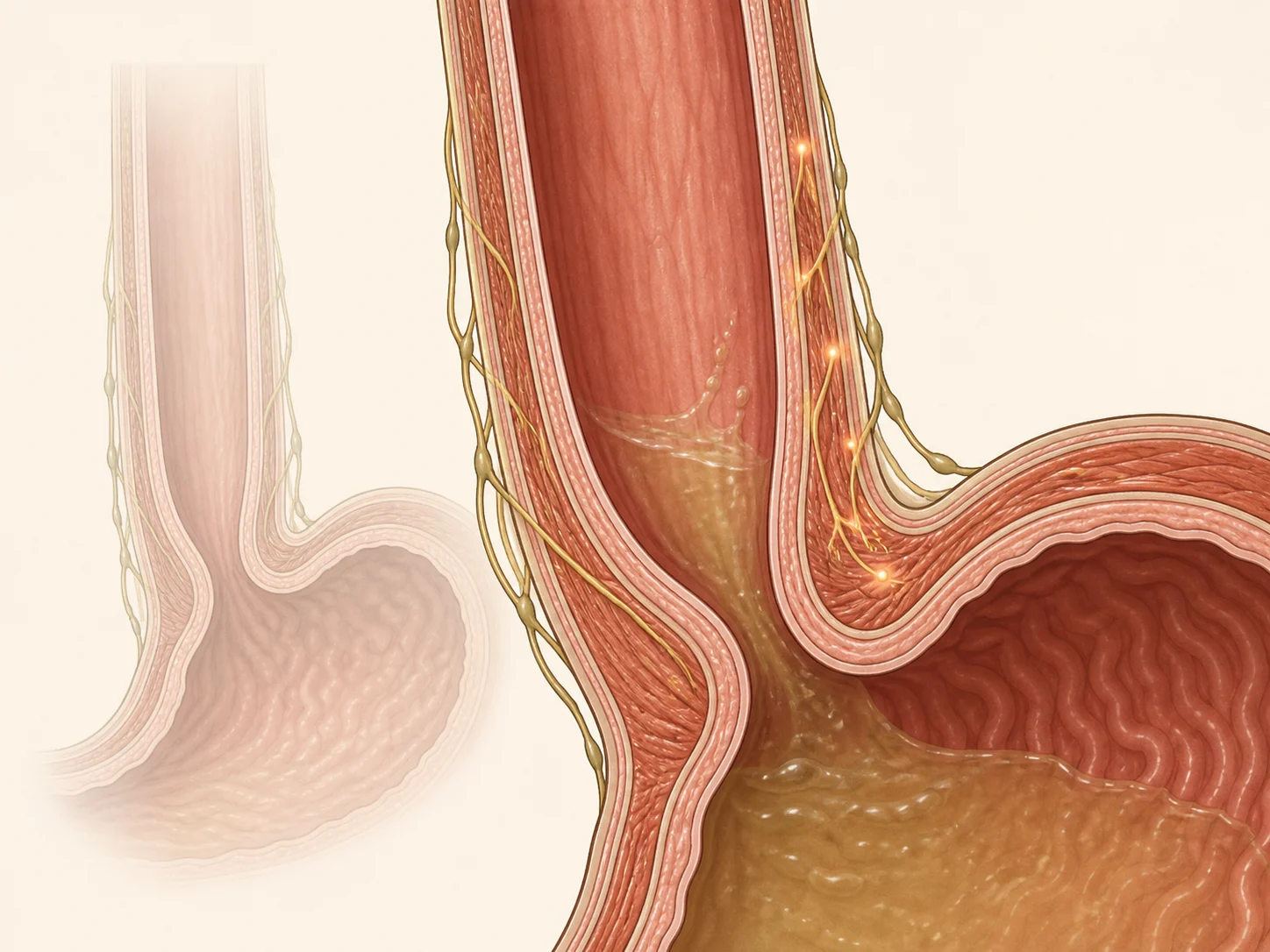
Even if no erosion is seen on an endoscopy, reflux events and esophageal hypersensitivity can lead to heartburn, chest tightness, and throat discomfort.
The illustrations showing the processes occurring in the body are simplified explanations to help understand the location and changes of symptoms; they do not represent an individual's test results or treatment outcomes.If you have had these experiences
For those who experience a burning sensation after lunch or wake up at dawn due to acid reflux and coughing
In non-erosive reflux and reflux hypersensitivity, chest tightness and heartburn may recur even if the endoscopy is normal. We design Korean herbal medicine treatment by distinguishing between acid reflux, heat sensations, post-meal stagnation, foreign body sensation in the throat, tension-induced reflux, and poor digestive capacity.
For those who feel a burning sensation in the chest and acid reflux after lunch and seek water during meetings
acid suppressantsWhen heartburn, acid reflux, and chest tightness are not sufficiently reduced even with treatment
For those who eat late after working overtime and wake up at dawn with acid reflux and coughing after lying down
When reflux sensations recur after meals, after lying down, or during tension despite a normal endoscopy
For those anxious about whether foreign body sensation in the throat, hoarseness, and chest pain are due to reflux or another disease
When foreign body sensation in the throat, coughing, insomnia, and indigestion occur together
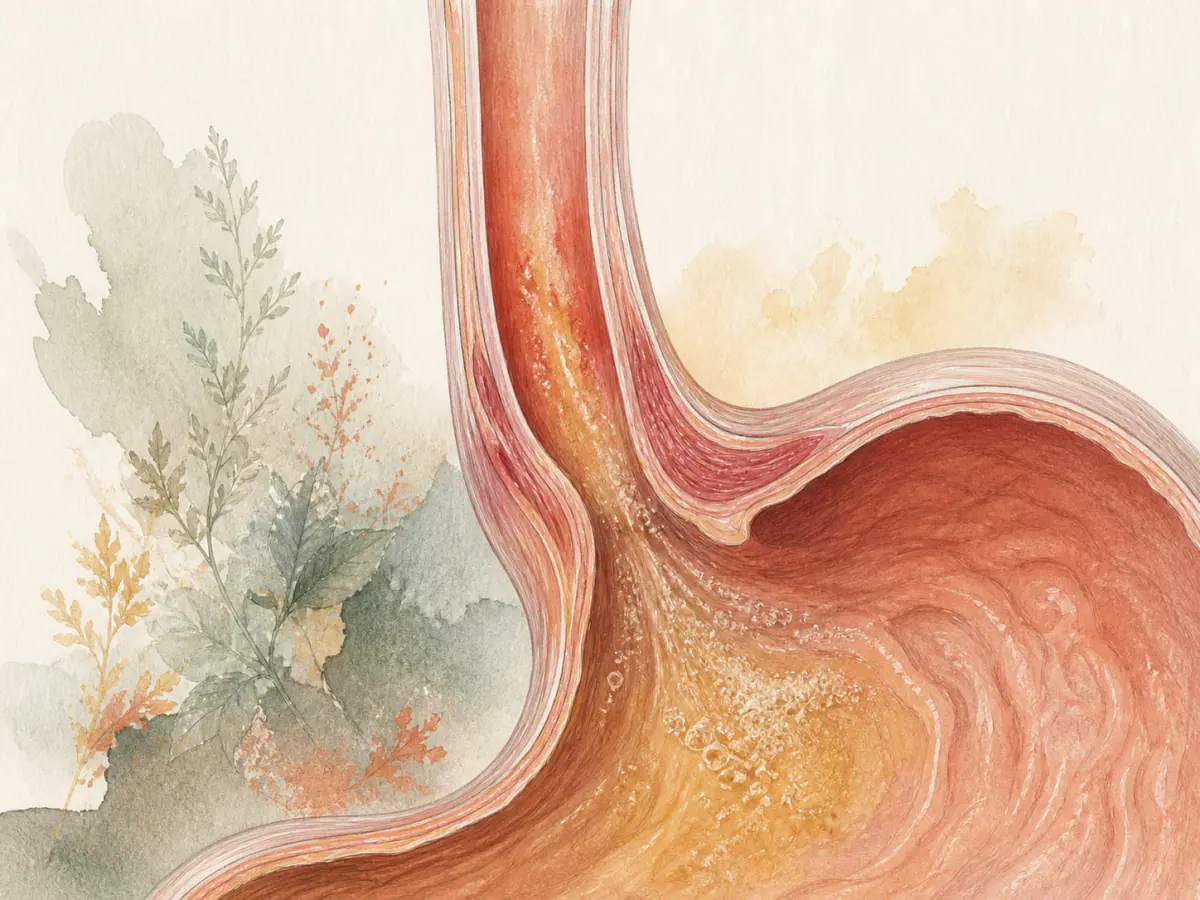
The evaluation of heartburn and acid reflux varies depending on the timing after meals, lying posture, and whether swallowing discomfort is present.
Conceptual reference · NIDDK: GERDThis is how we approach the medical evaluation
Why we examine both test results and meal-related discomfort for reflux esophagitis
Typical symptoms of reflux esophagitis include a burning sensation rising from the center of the chest toward the throat and the feeling of sour or bitter stomach contents rising into the throat or mouth. These worsen after meals, when bending over, or after lying down, and may cause nighttime awakening due to acid reflux or coughing. Chest pain, nausea, chronic cough, or hoarseness may appear without heartburn, but these symptoms overlap with cardiac, respiratory, or laryngeal diseases. New oppressive chest pain, dyspnea, and cold sweats require immediate cardiac emergency evaluation; food getting stuck, painful swallowing, vomiting blood, black stools, or persistent vomitingweight loss require prompt gastrointestinal evaluation.
First, we screen for cardiac chest pain, bleeding, and swallowing risks
We check the pattern of chest pain, shortness of breath, cold sweats, food getting stuck, vomiting blood, black stools, and weight changes.
Categorized into postprandial, nocturnal, and atypical types
We examine heartburn, acid reflux, the timing of lying down, nighttime awakenings, and other causes of foreign body sensation in the throat, hoarseness, or coughing.
Please record the timing of medication intake and functional responses during the day and night
We track the timing and response to antacids or PPIs, as well as the impact of sleep, meetings, and dining out, to re-evaluate and set goals for Korean herbal medicine treatment.
Reasons why it may not heal well
Reflux Esophagitis: Why meals may still feel uncomfortable even after tests
Non-erosive reflux and reflux hypersensitivity can cause recurring heartburn or chest tightness even if an endoscopy is normal. We design Korean herbal medicine treatments by distinguishing between acid reflux, heat sensations, post-meal stagnation, a foreign body sensation in the throat, tension-induced upward reflux, and cold digestive capacity.
Endoscopic findings may differ from symptoms
Even without erosions, reflux events and esophageal sensory hypersensitivity can cause discomfort.
Distinguishing symptoms that responded to PPIs from remaining symptoms
We examine whether heartburn has decreased and if acid reflux, throat discomfort, or nighttime awakening persist, along with the timing of medication intake.
Why we examine both the reason for the upward flow from the stomach and the reason it is felt strongly in the esophagus
How post-meal stagnation, abdominal pressure, tension, sleep, and body heat overlap with reflux and sensation Byeonjeung (pattern identification)to determine if the intestines are dry, if Qi is blocked, if the pushing force is weak, or if the body is cold and motility is slow.
How to keep a symptom timetable
Reflux Esophagitis: Meal schedules are more important than the names of foods
Please prepare the dates of heartburn and acid reflux, the intervals between meals and bedtime, nighttime awakenings or coughing, food getting stuck, bleeding, weight changes, and the timing and response to antacids or PPIs.
Burning pain in the center of the chest
A burning sensation that rises from the epigastrium along the sternum toward the throat may recur after meals.
Sour or bitter contents rise into the throat or mouth
Unlike vomiting, burpingplease describe specifically if stomach contents or a sour taste rise up as reflux.
Post-meal, bending over, or lying down can be clues
Checking whether symptoms worsen when bending over after a meeting or after going to bed clarifies the connection between time, posture, and symptoms.
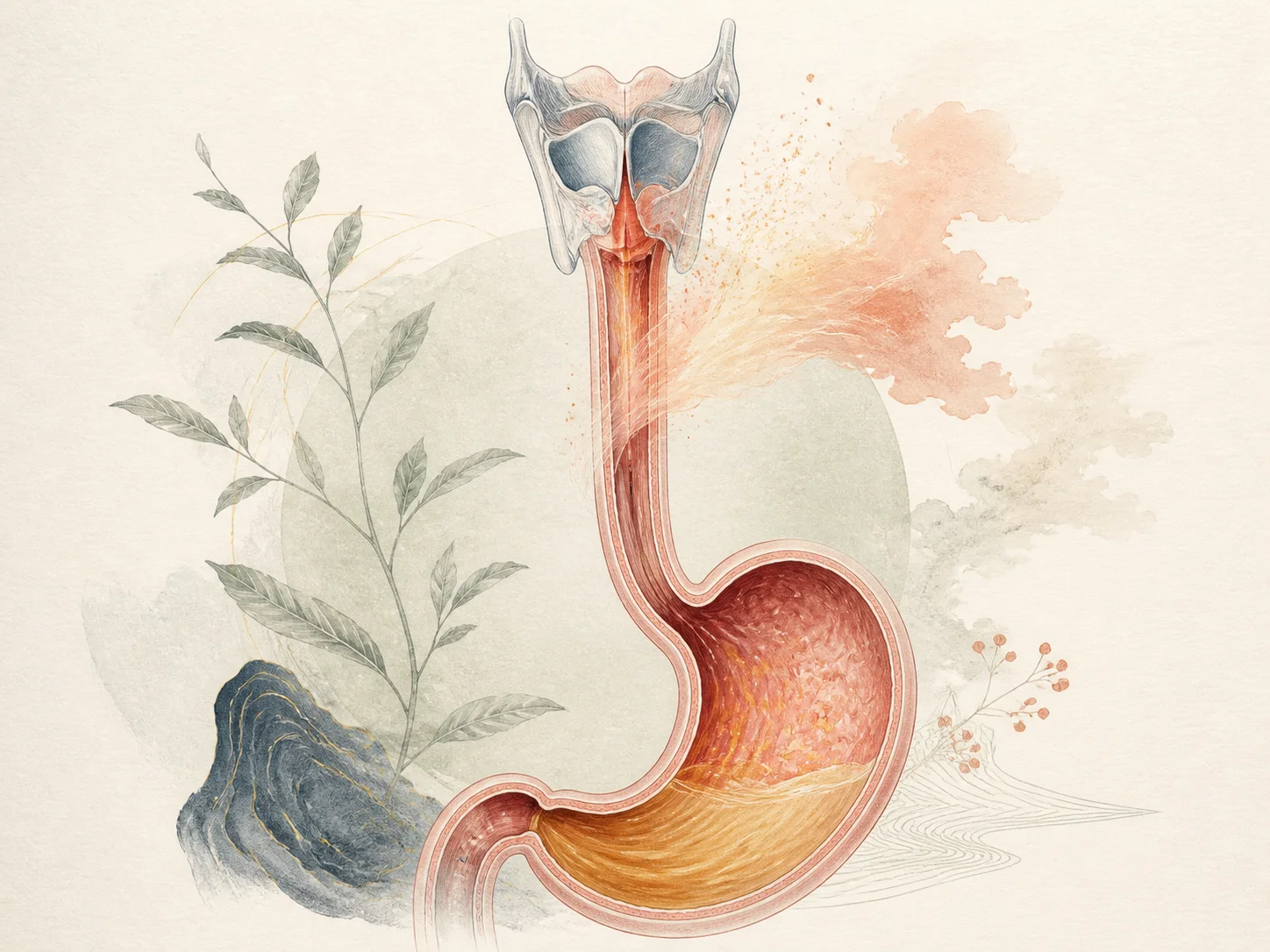
Since hoarseness and a feeling of something stuck in the throat can have various causes other than reflux, we also check the duration, voice usage, and changes in swallowing.
Conceptual reference · AAO-HNS: Laryngopharyngeal RefluxKorean herbal medicine pattern identification for reflux esophagitis
Why prescriptions for reflux esophagitis differ based on cold sensations, stagnation, heat, and tension
Under the name of reflux, we distinguish between burning acid reflux, post-meal stagnation and burping, phlegm and tension caught in the throat, and patterns arising from a cold and weak stomach.
When there is a burning sensation in the stomach with clear acid reflux or dry mouth
We look for fasting or nighttime heartburn, acid reflux, and a heat sensation rising to the throat. We ask about upper body heat, thirst, poor sleep, and worsening after alcohol or spicy foods. The treatment aims to lower stomach heat and upward-flowing energy while reducing esophageal irritation.
When the solar plexus feels full after meals and contents rise with burping
We check if feelings of fullness or bloating persist even without eating much, and if symptoms worsen before lying down. Fast eatingconstipationabdominal pressure, and decreased activity levels are reviewed. We lower the pressure that causes reflux by resolving gastric emptying issues and stagnation.
When there is a strong sensation of something caught in the throat, dry coughing, or chest tightness
We check if the primary symptoms are a foreign body sensation in the throat, frequent throat clearing, or a dry cough rather than acid reflux. We ask if symptoms increase during tension, accompanied by anxiety, sighing, or throbbing. We resolve the stagnation of phlegm and qi to regulate hypersensitive upward reflux reactions in the throat and chest.
Changes to monitor during treatment
Recovery to observe in the next meal
We aim to reduce the frequency and duration of heartburn and acid reflux, and decrease the time spent worrying about reflux after meals, before sleep, or during conversation.
Medications taken, improved symptoms, and remaining symptoms
By recording 'medications taken, improved symptoms, and remaining symptoms' along with the time before and after meals, we observe whether the amount eaten and the time it takes to feel comfortable actually change.
Start and duration by post-meal, sleep, and posture
By recording 'start and duration by post-meal, sleep, and posture' along with the time before and after meals, we observe whether the amount eaten and the time it takes to feel comfortable actually change.
Early satiety, burping, foreign body sensation in the throat, upper body heat, or coldness
By recording 'early satiety, burping, foreign body sensation in the throat, upper body heat, or coldness' along with the time before and after meals, we observe whether the amount eaten and the time it takes to feel comfortable actually change.
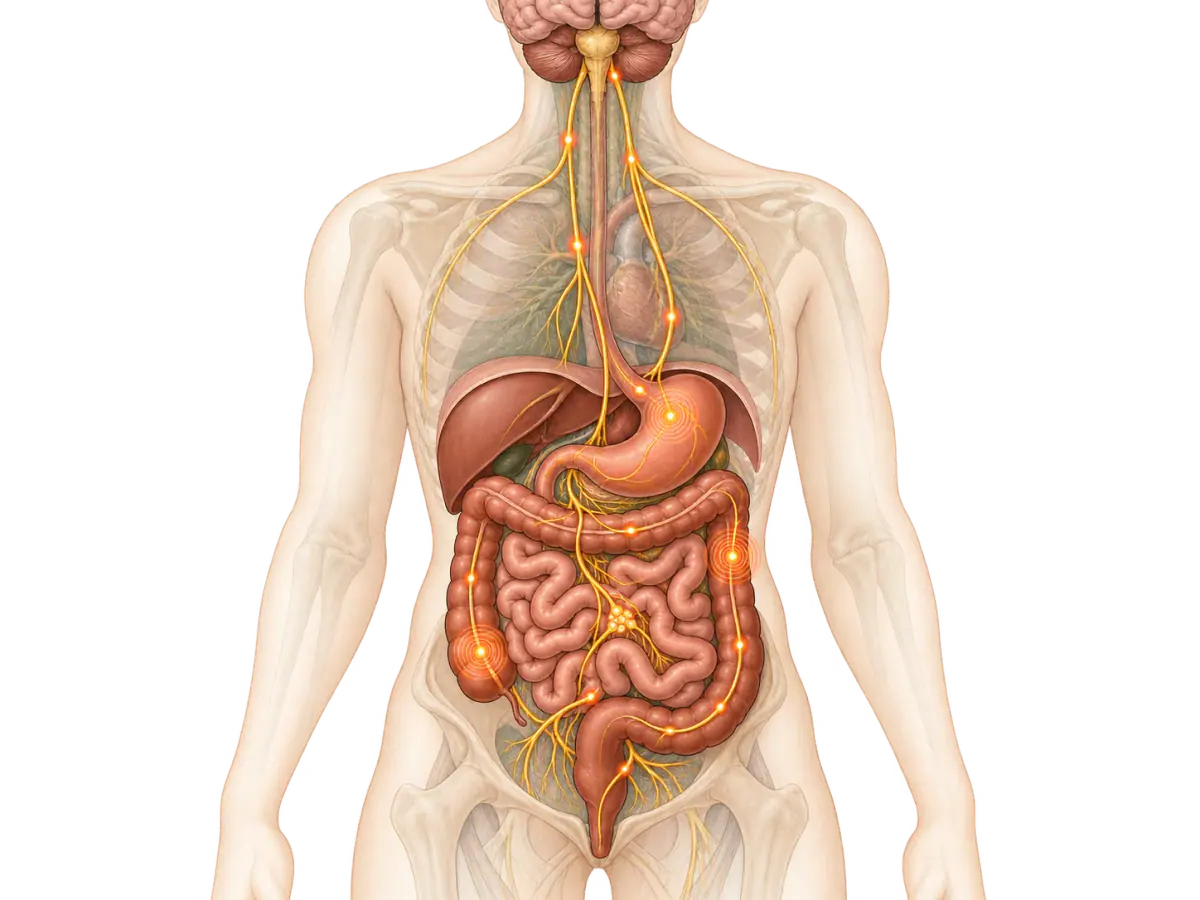
Even if tests show no significant structural abnormalities, the regulation of the autonomic and enteric nervous systems, sensory sensitivity, and motility rhythms can vary depending on meals, sleep, and stress.
Conceptual reference · NIDDK: Disorders of Gut-Brain InteractionAt the crossroads of gastrointestinal motility, sensation, and the gut-brain response
Reflux prescriptions vary based on stomach heat reflux, food stagnation and qi stagnation, phlegm-qi stagnation, or spleen and stomach deficiency-cold
Under the general term 'reflux,' we distinguish between burning acid reflux, post-meal stagnation and burping, phlegm and tension caught in the throat, and patterns arising from a cold and weak stomach.
Pattern identification is not about arbitrarily adding a disease name to test results. A single person may experience a combination of decreased gastric motility, hypersensitivity, body heat, cold sensations, and tension; if the primary symptoms change based on diet, bowel movements, or sleep, the proportions of the prescription are adjusted accordingly.
When there is a burning sensation in the stomach, clear acid reflux, or dry mouth
- Changes to observe in digestive symptoms
- We check for heartburn during fasting or at night, acid reflux, and a sensation of heat rising to the throat.
- Changes to observe in the rest of the body
- We ask about upper body heat, thirst, poor sleep, and worsening after alcohol or spicy food.
- Prescription priority
- We lower the heat in the stomach and the upward-surging energy to reduce esophageal irritation.
When the solar plexus feels full after meals and contents rise with burping
- Changes to observe in digestive symptoms
- We check if feelings of fullness or bloating persist even without eating much, and if symptoms worsen before lying down.
- Changes to observe in the rest of the body
- Fast eating, constipation, abdominal pressure, and decreased activity levels are reviewed.
- Prescription priority
- It promotes gastric emptying and resolves stagnation to reduce the pressure that causes reflux.
When there is a strong sensation of something stuck in the throat, frequent throat clearing, or chest tightness
- Changes to observe in digestive symptoms
- We check whether the primary symptoms are a foreign body sensation in the throat, frequent throat clearing, and dry cough, rather than acid reflux.
- Changes to observe in the rest of the body
- We ask if symptoms increase during tension, accompanied by anxiety, sighing, or palpitations.
- Prescription priority
- It resolves the stagnation of phlegm and Qi and regulates the hypersensitive upward reflux response in the throat and chest.
When the abdomen feels cold, digestion is slow, and watery burps occur
- Changes to observe in digestive symptoms
- We look for discomfort in the epigastric area that improves with warmth, decreased appetite, and loose stools.
- Changes to observe in the rest of the body
- We check for coldness in the hands and feet, fatigue, morning lethargy, and worsening of symptoms after consuming cold food.
- Prescription priority
- It warms the stomach and reinforces motility to restore the downward force of digestion.
Order of prescription adjustment
- Distinguish remaining symptoms among acidity, stagnation, and throat hypersensitivity
Separate which symptoms responded to the medication and which ones remain.
- Connect the timing after meals, posture, tension, and the direction of body heat
Only recurring patterns are reflected as the axis for the prescription.
- Adjust based on the frequency of daytime reflux and nighttime recovery
We monitor the frequency of acid reflux, heartburn, throat clearing, nighttime awakenings, and recovery time after meals.
Why consider Korean herbal medicine treatment now?
- When heartburn, acid reflux, or chest tightness is not sufficiently reduced even with the use of acid suppressants
- When endoscopy results are normal, but reflux sensations recur after meals, after lying down, or during tension
- When a foreign body sensation in the throat, cough, and insomnia occur alongside indigestion
What is evaluated in herbal medicine treatment for this condition
- Current medications, improved symptoms, and remaining symptoms
- Onset and duration based on after-meal, bedtime, and posture
- Early satiety, burping, foreign body sensation in the throat, upper body heat, or coldness
First, we screen for cardiac chest pain, bleeding, and swallowing risks
We check the pattern of chest pain, shortness of breath, cold sweats, food getting stuck, vomiting blood, black stools, and weight changes.
Categorized into postprandial, nocturnal, and atypical types
We examine heartburn, acid reflux, the timing of lying down, nighttime awakenings, and other causes of foreign body sensation in the throat, hoarseness, or coughing.
Please record the timing of medication intake and functional responses during the day and night
We track the timing and response to antacids or PPIs, as well as the impact of sleep, meetings, and dining out, to re-evaluate and set goals for Korean herbal medicine treatment.
Things to prepare before the consultationPlease prepare the dates of heartburn and acid reflux, the intervals between meals and bedtime, nighttime awakenings or coughing, food getting stuck, bleeding, weight changes, and the timing and response to antacids or PPIs.
If bleeding, anemia, worsening difficulty swallowing, persistent vomiting, unexplained weight loss, or nighttime diarrhea newly occur, they must be re-evaluated even if past tests were normal. After ruling out these cases, we focus on herbal medicine treatment for chronic or recurring functional digestive symptoms.
Consult about the progress of reflux esophagitisGastrointestinal Glossary
Additional information to know regarding reflux esophagitis
You can proceed to a detailed explanation after confirming the simple meaning.Frequently Asked Questions
Frequently asked questions about reflux esophagitis
Can it be reflux if I only have a cough or hoarseness without heartburn?
It is possible, but cannot be confirmed based on those symptoms alone. We evaluate other potential causes such as rhinitis, asthma, laryngeal diseases, and smoking, along with symptoms occurring after meals or at night.
When should I go to the emergency room for chest pain?
If you experience new oppressive pain, pain radiating to the arms, jaw, or back, shortness of breath, cold sweats, or nausea, seek immediate emergency cardiac evaluation.
Should I seek medical evaluation immediately if food gets stuck?
If food getting stuck is recurrent or progressing, ordysphagiaif there is pain during swallowing (odynophagia), do not wait and assume it is simple reflux; seek prompt gastrointestinal evaluation.
What should I record if acid regurgitation only occurs at night?
Please record the time of your last meal, the time you lay down, the time and frequency of waking up, coughing, next-day fatigue, and the timing and effect of any medication taken.
Is this a disease caused by excessive stomach acid production?
We do not explain this solely by excess stomach acid. We examine the reflux defense barrier that prevents stomach contents from rising into the esophagus, along with structural factors, abdominal pressure, and exposure factors.
Do I have to quit coffee and spicy foods for the rest of my life?
No. Rather than applying a blanket ban for everyone, we identify only the specific items that repeatedly worsen your condition through meal and symptom logs.
If I think it was caused by medication I am taking, can I stop taking it?
Do not stop medication on your own. Please inform your medical staff of the names and start dates of any prescription drugs, over-the-counter medicines, or supplements so they can review the necessity, alternatives, and dosage.
Evidence and Update Information
Dr. Choi Yeon-seung, a Korean medicine doctor, composed this based on the official professional materials and disease-specific clinical data below, and updated the content on 2026-08-26.
- NIDDK: GERD symptoms and causesHeartburn, reflux, chest pain, swallowing difficulties, and cough; symptoms that should not be ignored, such as bleeding or weight loss
- American College of Gastroenterology: Acid reflux and GERDDifferentiating GERD symptoms and complications from cardiac chest pain; monitoring swallowing difficulties and bleeding
- NHS: Heartburn and acid refluxHeartburn, acid reflux, cough, and hoarseness that worsen after meals or when lying down
- NIDDK: Diagnosis of GER & GERDDiagnosis based on symptoms and medical history; endoscopy, biopsy, or 24-hour esophageal pH monitoring selected if complications occur or treatment response is insufficient
- NIDDK: Upper GI EndoscopyEvaluating causes and complications of persistent heartburn, swallowing difficulties, or vomiting; test preparation, sharing medication history, and symptoms requiring prompt medical evaluation after testing
- NIDDK: Treatment for GER and GERDLifestyle adjustments, antacids, H2 blockers, PPIs, and selective surgery or endoscopic treatment
- NIDDK: Eating, diet and nutrition for GERDWeight management, the interval between the last meal and bedtime, and identifying individual trigger foods