Abdominal Pain Time Map
Pain in the Epigastrium, Around the Navel, and Lower Abdomen: How to Evaluate Symptoms Before and After Meals and Bowel Movements?
We categorize post-meal fullness and epigastric pain, lower abdominal pain linked to bowel movements, and pain that suddenly migrates and intensifies. Through acupuncture and herbal medicine tailored to Qi stagnation, food accumulation, cold response, or deficiency, we aim to increase the time you feel comfortable after eating and bowel movements.
The solar plexus, navel, and lower abdomen are starting points for finding the cause, but the location of pain alone cannot distinguish between stomach, intestinal, gallbladder, or pelvic issues. We must look at how many minutes after eating it begins, whether it changes before or after bowel movements, whether it wakes you up at night, and whether the pain migrates.
| Scenario | Related Questions | Records |
|---|---|---|
| Postprandial epigastric pain or bloating | Functional dyspepsia, gastritis, etc. | Amount consumed and duration |
| Lower abdominal pain before or after bowel movements | IBS, bowel dysfunction | Stool form and changes in pain |
| Pain that wakes you up at night | Not dismissed as merely functional | Time, intensity, and accompanying symptoms |
| Sudden and severe pain on one side | Evaluation of acute causes | prompt medical evaluation |
Indicate the area with the size of a palm, not a single finger
Pain in abdominal organs can spread or be felt in different locations, so we look at the center and the direction of the spread using the size of a palm rather than a single point. Whether the pain started suddenly or built up gradually, and whether it worsens with movement, is as important as the location.
Even for the same pain in the epigastric area (the pit of the stomach), the starting point for explanation and treatment differs depending on whether it begins feeling full after a few spoonfuls, whether it stings on an empty stomach and eases briefly after eating, or whether it feels like a tightening pain on stressful days.
Pain in the epigastric area, around the navel, and in the lower abdomen may overlap across different organs
Epigastric pain can be a combination of discomfort from the stomach and duodenum, as well as reflux, the gallbladder, the pancreas, and the chest. Pain around the navel may spread widely as the intestines stretch or move. For the lower abdomen, signals from the large intestine, bladder, and pelvic organs are close, so the relationship with bowel movements, urination, and menstruation must be considered together.
The movement of pain and accompanying symptoms are more important than a single point of location, for example, whether pain in the upper right abdomen worsens after a greasy meal and radiates to the back or shoulder, or whether pain around the navel moves to the lower right abdomen and intensifies. If the flow is abdominal paincompletely different from the usual recurring pattern, we re-evaluate without sticking to a previous diagnosis.
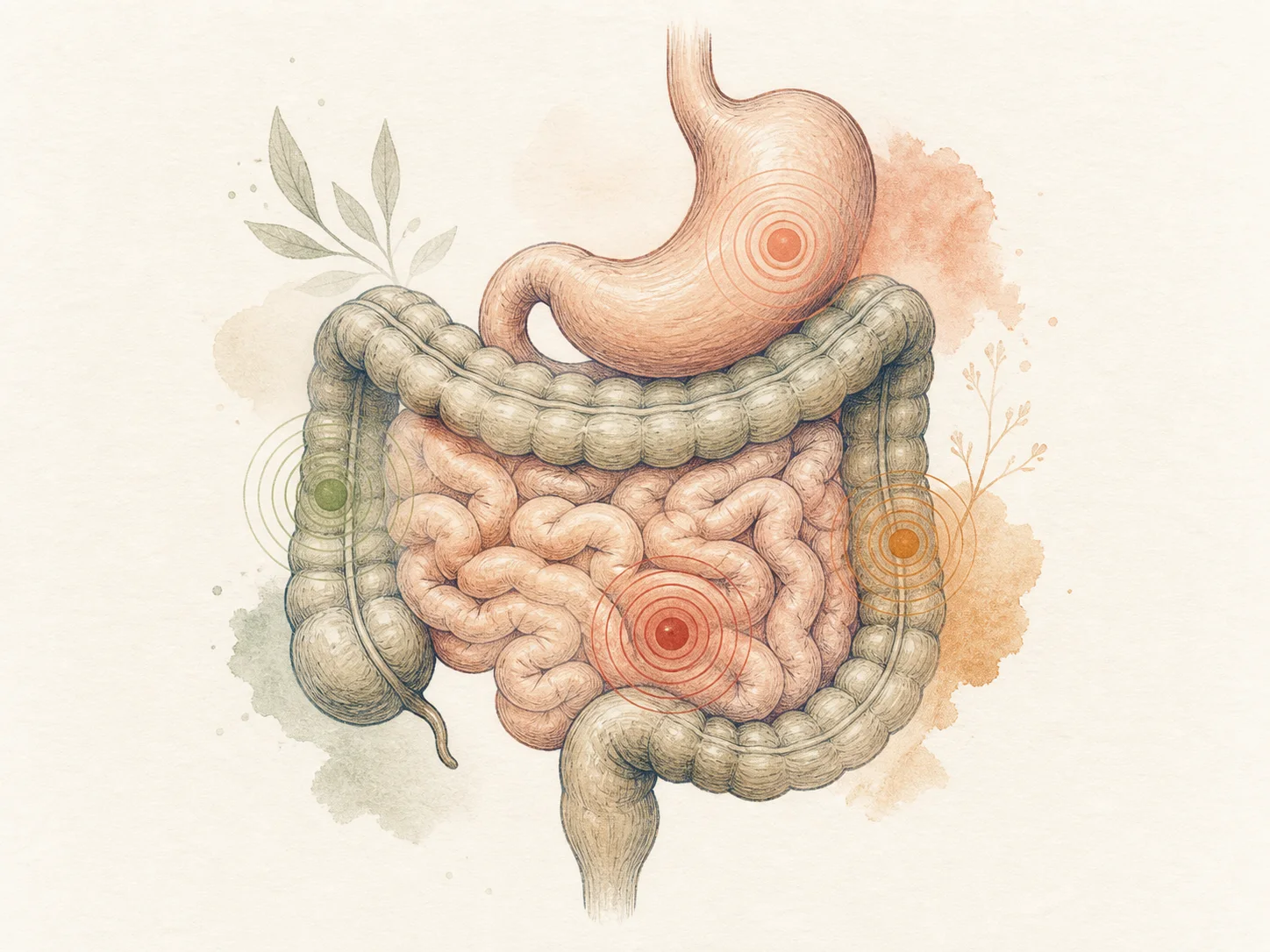
For abdominal pain, the starting location, movement, and the sequence before and after meals or bowel movements are clues to narrowing down the cause, as much as the intensity is.
Use meals and bowel movements as reference points
If epigastric pressure and early satiety occur together after eating, we examine the stomach's function in receiving and discharging food. If lower abdominal pain worsens immediately before a bowel movement and decreases afterward, we look at intestinal sensation and bowel rhythms together.
By observing whether the pain persists after a bowel movement, whether it only hurts when stools are hard or loose, or whether it worsens in conjunction with menstruation or lack of sleep, we can avoid grouping stomach and intestinal symptoms into a single category.
Herbal medicine treatment distinguishes between Qi stagnation, food stagnation, cold response, and deficiency
If the pain tightens with tension and eases after burping or sighing Qi stagnation, or if the epigastric area feels blocked and bloated for a long time after overeating, we first address food stagnation. We do not use the same prescription for 'cold response,' where pain feels like cramping after eating cold food and eases with warmth, or for deficiency-related pain accompanied by a decrease in food intake and overall energy.
Rather than simply suppressing pain, Baekrokdam looks at where the flow is blocked between eating and bowel movements. When combining herbal medicine and acupuncture, we determine whether to simply lower abdominal tension or to restore gastrointestinal movement, bowel rhythms, and sleep together.
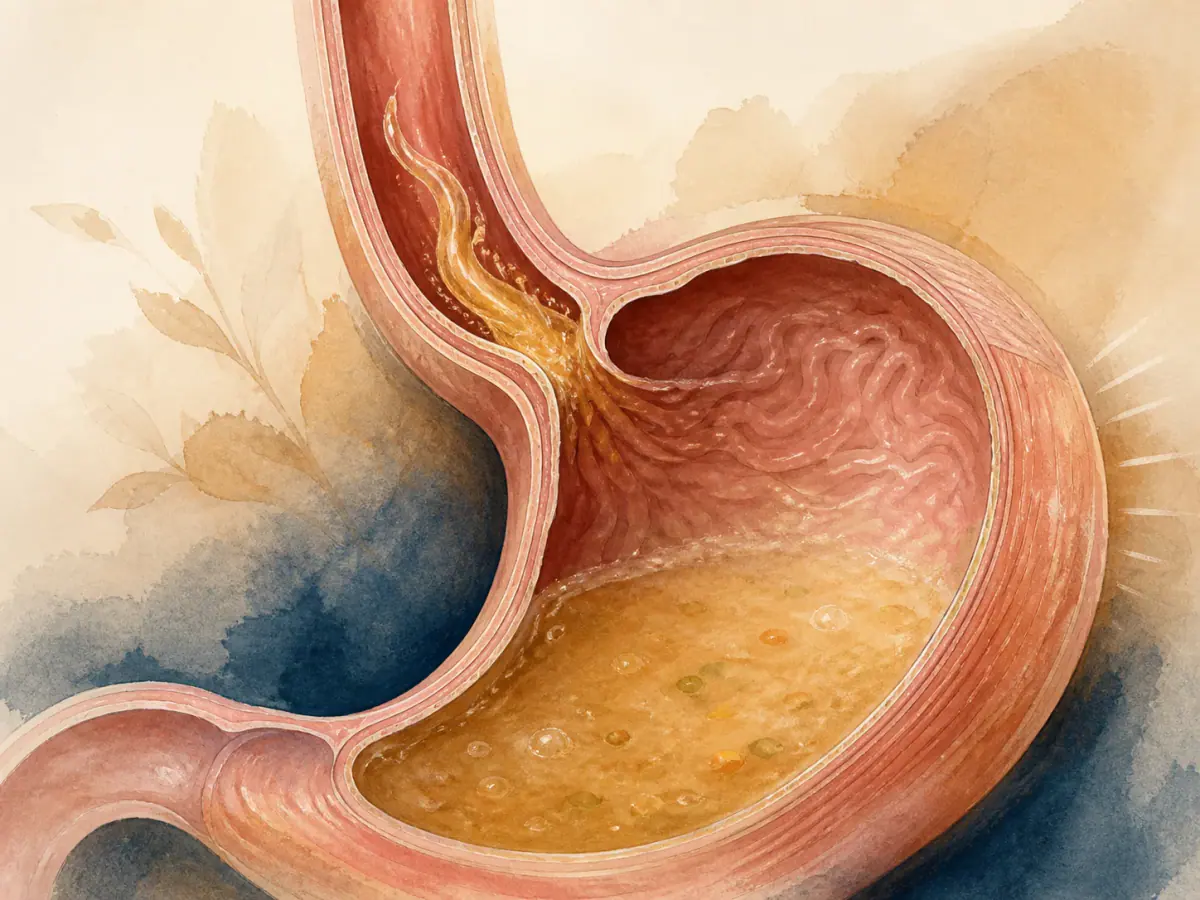
For early satiety and epigastric discomfort, we examine the amount eaten, the start time, and how long it lasted after the meal together.
Improvement is seen in the process of returning to daily life rather than the day the pain disappears
The process of improvement manifests as the time it takes for post-meal pain to start becoming later, the period of comfort after bowel movements becoming longer, and the ability to resume meals and outings that were avoided due to pain. We maintain the areas that have improved first and shift the focus of the prescription to the remaining epigastric or lower abdominal pain.
If sudden and very severe pain, pain moving to the lower right abdomen with fever,vomiting, black stools, bloody stools, or continuous weight loss occur, we re-evaluate. For other recurring pain, specific goals for Korean medicine treatment can be established with just two or three representative scenarios.
Connect test results with today's pain
Results showing that endoscopy, ultrasound, or blood tests were normal inform us of the scope of structural issues. If pain continues to recur before and after meals and bowel movements despite these results gastrointestinal motility, we can treat functions that are not immediately visible on test screens, such as sensation and abdominal tension.
Baekrokdam does not ignore or repeat tests already performed. We match new changes that occurred after the tests with the scenarios currently most hindering daily life, and adjust the next prescription based on the order in which eating and bowel movements become comfortable after herbal medicine and acupuncture treatment.
Abdominal pain should be read not as a single location, but as a flow before and after meals and bowel movements, and as the recovery of daily life following the pain. Baekrokdam distinguishes between Qi stagnation, food stagnation, cold response, and deficiency to set the goals for herbal medicine and acupuncture treatment.
Evidence and Update Information
This content was compiled by Korean medicine doctor Choi Yeon-seung and updated on 2026-08-31 based on the following materials.
- NIDDK: Abdominal Pain
- Rome Foundation: Rome IV Criteria
- NIDDK: Symptoms & Causes of AppendicitisCriteria for immediate evaluation when pain around the belly button moves to the lower right abdomen and worsens, accompanied by vomiting and fever
- NIDDK: Symptoms & Causes of IndigestionPostprandial fullness, early satiety, and epigastric pain: symptoms that require re-evaluating structural causes
- NIDDK: Symptoms & Causes of Irritable Bowel SyndromeThe symptom structure of IBS, where abdominal pain is followed by changes in bowel movement frequency and stool shape