Types of Functional Dyspepsia
What is the difference between PDS, where you feel full after eating very little, and EPS, where the solar plexus hurts?
We treat the adaptation, motility, and sensation of the stomach by observing whether fullness leads to a reduction in food intake first, whether eating is avoided due to pain, and in what order these two overlap.
Functional Dyspepsia Within functional dyspepsia, Postprandial Distress Syndrome (PDS), characterized by feeling full after eating very little, and Epigastric Pain Syndrome (EPS), centered on pain and burning in the solar plexus, differ in how the stomach is affected. By distinguishing between these two, it becomes clear whether herbal medicine treatment should focus on supplementation, digestion promotion, heat clearing, or qi circulation.
| Category | Postprandial Distress Syndrome (PDS) | Epigastric Pain Syndrome (EPS) |
|---|---|---|
| Core Symptoms | Postprandial fullness, early satiety | Epigastric pain, burning sensation |
| Meals and Timing | Symptoms become prominent during or after eating | Possible both during fasting and after eating |
| Differences in Daily Life | Reduced food intake and difficulty moving after meals | Avoiding fasting or meals due to pain |
| Accompanying symptoms | Burping, nausea, upper abdominal bloating | Reflux, nausea, fullness |
In PDS, the stomach's ability to accommodate a meal is impaired first
Postprandial Distress SyndromePDS is primarily characterized by feeling full before eating even half of the usual amount, and prolonged upper abdominal pressure and bloating after a meal. Some patients experience overlapping burping and nausea, making it difficult to work in the afternoon after lunch.
These discomforts can occur when the adaptation and emptying movements, where the upper stomach expands comfortably to accommodate food, and post-meal sensations are misaligned. Rather than simply reverting to a habit of eating less, the goal of treatment is to restore the amount one can eat and the recovery process after meals.
In EPS, pain and burning in the epigastric region lead to avoiding meals
Epigastric Pain SyndromeEPS is primarily characterized by recurring soreness, burning, or squeezing pain in the center of the epigastric region. Since some feel more pain while fasting and others feel it worsen after meals, it cannot be equated to reflux or gastritis based solely on the relationship with meals.
Skipping meals due to pain can lead to fasting-induced irritation and decreased energy, which may further sensitize the stomach. While checking for stomach acid issues, it is also necessary to treat hypersensitivity in the epigastric region, temperature imbalances (cold/heat), and the gut-brain response where pain increases following tension.
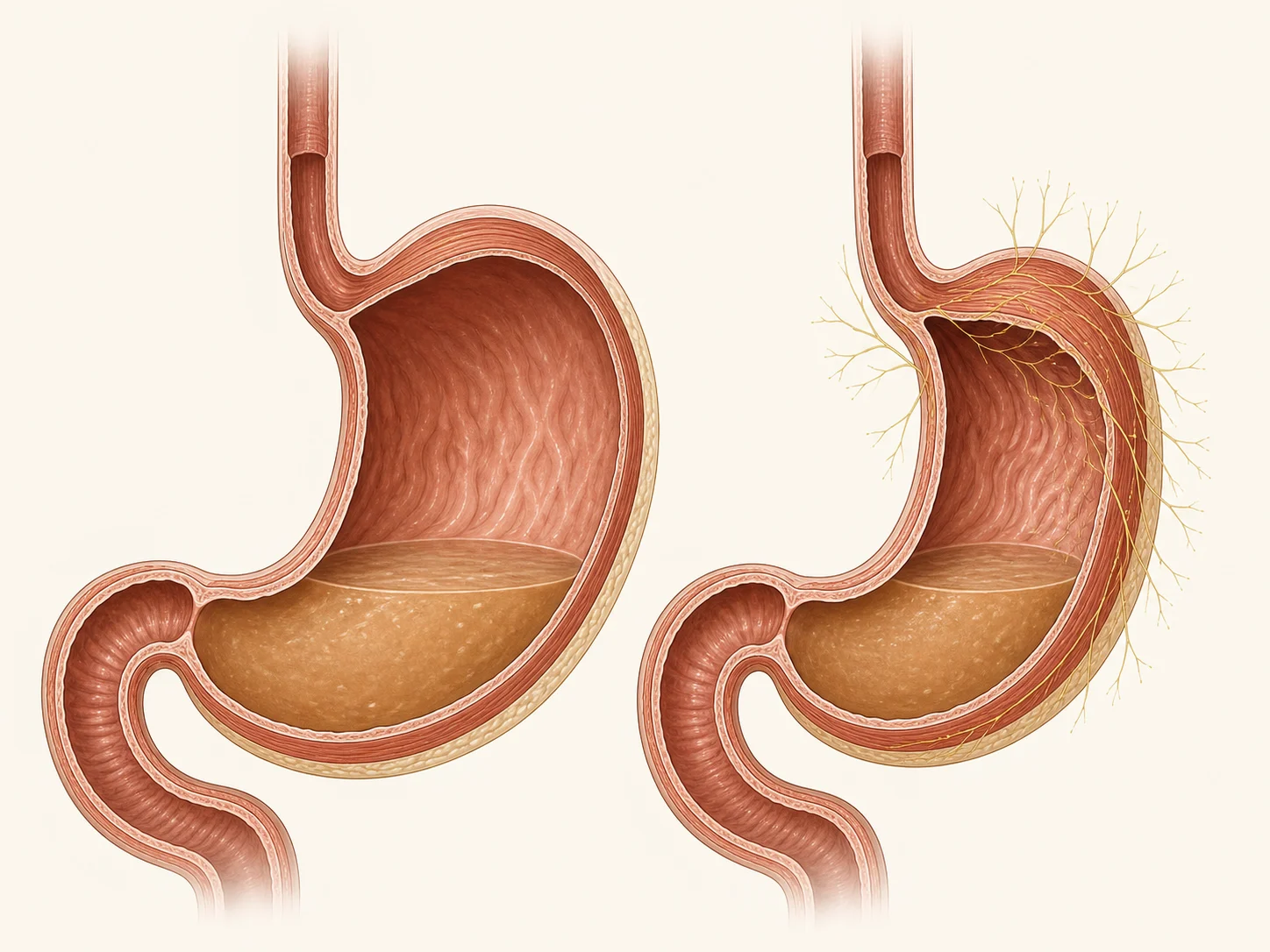
In functional dyspepsia, even without mucosal damage, differences in how the upper stomach adapts to and senses food after a meal can lead to early satiety and epigastric pressure.
When PDS and EPS overlap, the sequence of symptom onset determines the treatment
The primary focus differs depending on whether one feels full after just a few spoonfuls and then develops epigastric pain as time passes, or whether pain occurs first, causing the meal to stop, followed by prolonged fullness. If reflux, nausea,abdominal bloatingand changes in bowel movements are added, the movement of the entire gastrointestinal tract is also examined.
Symptoms can persist even if an endoscopy is normal. However, if difficulty swallowing, recurring vomitingblack stools, or unexplained weight loss newly occur, a cause evaluation is conducted before distinguishing between PDS and EPS.
Herbal medicine treatment distinguishes between Spleen-Stomach Deficiency, Food Stagnation, and Stomach Heat behind the fullness and pain
For PDS accompanied by loss of energy, loose stools, and fatigue even after eating a small amount, the strength of the Spleen and Stomach is reinforced. If burping and stagnation are prominent after overeating, treatment focuses on resolving food stagnation Qi stagnationand if the stomach stops functioning during tension, the prescription increases the proportion of treatment for Liver-Stomach Disharmony.
In EPS, if burning and dry mouth are prominent, Stomach Heat is addressed; if the epigastric region tightens after cold food and feels better when warmed, Spleen-Stomach Cold Deficiency is considered. Acupuncture treatment reduces tension in the epigastric and abdominal areas, helping herbal medicine restore both the adaptation and sensation of the stomach.
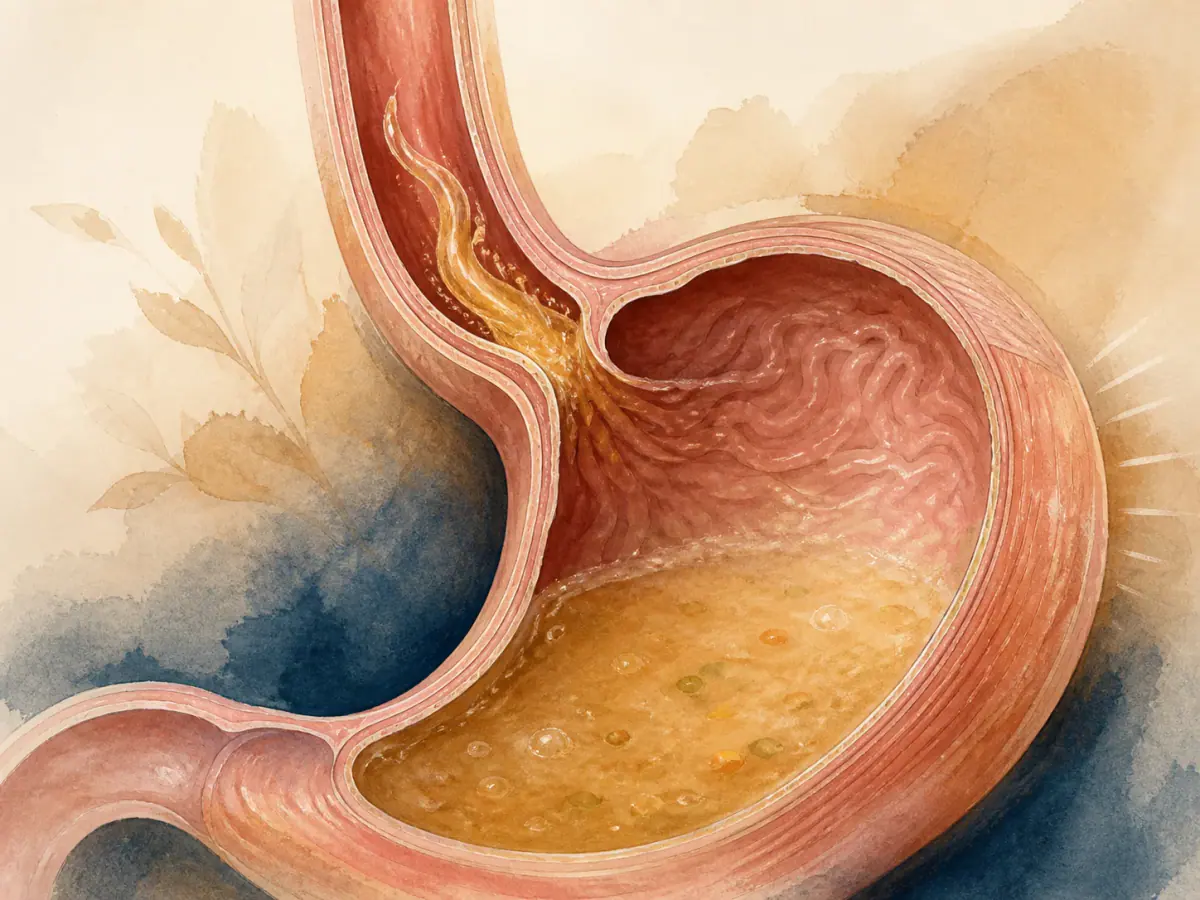
For early satiety and epigastric discomfort, we examine the amount eaten, the start time, and how long it lasted after the meal together.
The goal of treatment is the recovery of eating habits rather than the labels of PDS or EPS
For PDS, the priority is increasing the amount one can eat comfortably and shortening the time it takes for post-meal pressure to resolve; for EPS, it is starting meals without pain and not waking up at night. If both overlap, the improved aspect is maintained while the focus of the prescription shifts to the remaining symptoms.
Baekrokdam does not only ask about bloating and pain scores. We determine actual digestive recovery by observing whether you can continue working after lunch, whether you sleep comfortably after dinner, and whether you return to your normal state even after eating out or trying unfamiliar foods.
If the feeling of fullness resolves first and food intake increases, but pain in the epigastric region (the pit of the stomach) remains, we add treatment for EPS. If the pain has decreased but you feel full after only a few spoonfuls, we continue to address the gastric accommodation of PDS. Even within the same diagnosis, prescriptions vary according to the sequence of recovery.
PDS centers on postprandial fullness and early satiety, while EPS centers on epigastric pain and burning sensations. Baekrokdam categorizes these two paths and further divides them into Spleen-Stomach Deficiency, Food Stagnation, Liver-Stomach Disharmony, Stomach Heat, and Spleen-Stomach Cold-Deficiency to restore comfortable eating and sleep through Korean herbal medicine and acupuncture.
Evidence and Update Information
This content was compiled by Korean medicine doctor Choi Yeon-seung and updated on 2026-08-31 based on the following materials.
- Rome Foundation: Rome IV Criteria
- NIDDK: Indigestion
- NIDDK: Indigestion symptoms and causesSymptoms to check first: epigastric pain/burning, early satiety, postprandial fullness, bleeding, weight loss, and heart-related symptoms