
Abdominal pain: Read in the order of your curiosity
Before using the term 'functional' lightly
Abdominal pain is evaluated by looking at the location of pain and changes before and after eating or bowel movements
abdominal painWe first rule out dangerous symptoms that appear suddenly, such as pain that worsens abruptly, bleeding, fainting, or persistent vomiting. If these causes are absent and tests show no major abnormalities, but the same pain repeats over a long period depending on eating, bowel movements, sleep, or tension, it is time to look not only at the location of the pain but also at bowel motility, sensory hypersensitivity, and overall body temperature (cold/heat) and energy levels.
Symptom Classification
Urgency is categorized by location, speed, and accompanying symptoms
As much as the intensity of the pain, the way it starts and the accompanying symptoms are clues that determine the level of urgency.
| Presentation | Possibilities to check | Priority action |
|---|---|---|
| Pain moving from around the navel to the lower right and worsening | Acute abdominal diseases such as appendicitis | Immediate medical evaluation |
| Sudden, severe pain and abdominal rigidity | Possibility of abdominal diseases requiring immediate treatment | Emergency room evaluation |
| Vomiting, fever, loss of appetite, and abdominal bloating | Infection, inflammation, or intestinal transit issues | Prompt medical evaluation |
| Symptoms that change before or after bowel movements and recur over a long period | Possibility of intestinal motility or hypersensitivity issues | Consult Baekrokdam after ruling out dangerous causes |
When to seek medical attention first
Seek immediate evaluation for these abdominal pain symptoms
Emergency medical care takes priority over herbal medicine consultations or dietary adjustments.
- Pain that is suddenly very severe, or pain accompanied by abdominal rigidity and tenderness to touch
- Pain that starts around the navel, moves to the lower right abdomen, and worsens rapidly
- Cases accompanied by vomiting blood, bloody stools, black stools, fainting, or cold sweats
- Cases of high fever, persistent vomiting, severe dehydration, possibility of pregnancy, or vaginal bleeding
Abdominal pain that recurs in the same location and under the same circumstances even after examination
We look beyond just pressing the painful area to observe the sequence of meals, bowel movements, temperature sensitivity, and autonomic nerve responses
Once acute abdominal diseases are ruled out, recurring abdominal pain is categorized by the nature of the pain and systemic clues, such as food stagnation (sikjeok)Qi stagnation, cold coagulation, damp-heat, or deficiency of qi and blood. The timing of bowel movements, tension, and sleep helps refine the prescription.
We observe the onset and movement of pain rather than just the location
We observe where the pain starts and how it changes a few minutes after meals, before or after bowel movements, or immediately after experiencing tension.
We distinguish between an abdomen that is painful when pressed and one that tightens under tension
We check how sensations of coldness, bloating, urgent bowel movements, or decreased energy overlap with the pain.
Changes to monitor during treatment: pain-free days and the range of daily activities
We observe whether there is an increase in days when you do not avoid meals, going out, or sleeping.
Treatment GoalsThe goal is to reduce the frequency, intensity, and duration of abdominal pain and to alleviate anxiety regarding meals, bowel movements, going out, and sleep.
Consult using abdominal pain, meal, and bowel movement records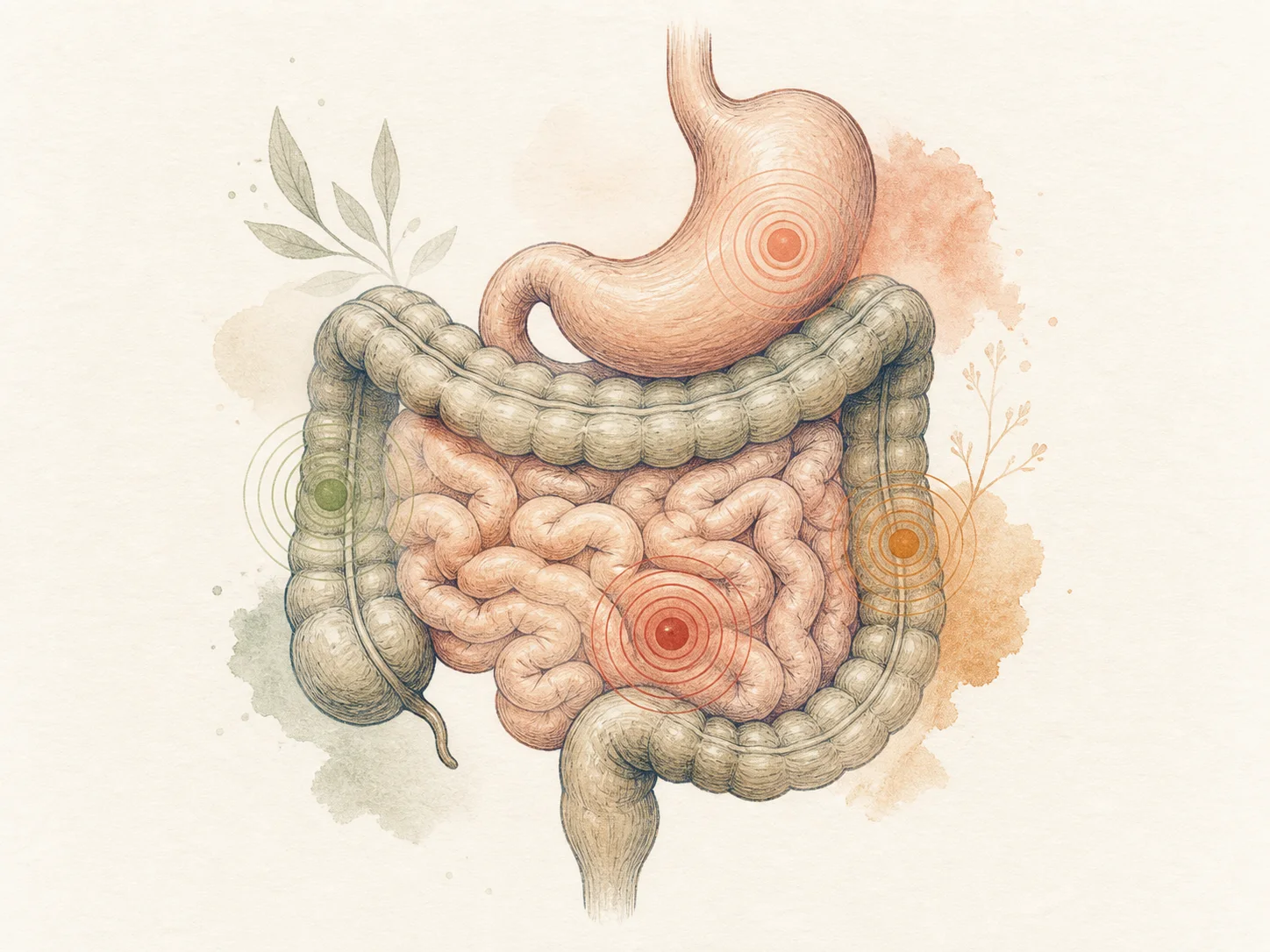
For abdominal pain, the starting location, movement, and the sequence before and after meals or bowel movements are clues to narrowing down the cause, as much as the intensity is.
The illustrations showing the processes occurring in the body are simplified explanations to help understand the location and changes of symptoms; they do not represent an individual's test results or treatment outcomes.If you have had these experiences
For those who are unsure where to start when explaining their abdominal pain
Once acute abdominal diseases are ruled out, recurring abdominal pain is Sik-jeokcategorized by the nature of the pain and systemic clues, such as qi stagnation, cold coagulation, damp-heat, or deficiency of qi and blood. The timing of bowel movements, tension, and sleep helps refine the prescription.
For those worried about sudden abdominal pain during the night or pain that shifts location
When abdominal pain recurs depending on meals or bowel movements, despite no urgent issues found in tests
Those who experience recurring abdominal pain, nausea, diarrhea, or constipation before or after meals and bowel movements
When pain and bloating recur even after using painkillers or gastrointestinal medication
Those who avoid going out or eating due to abdominal pain, even though tests show no urgent issues
When pain fluctuates in conjunction with tension, cold, fatigue, or menstruation
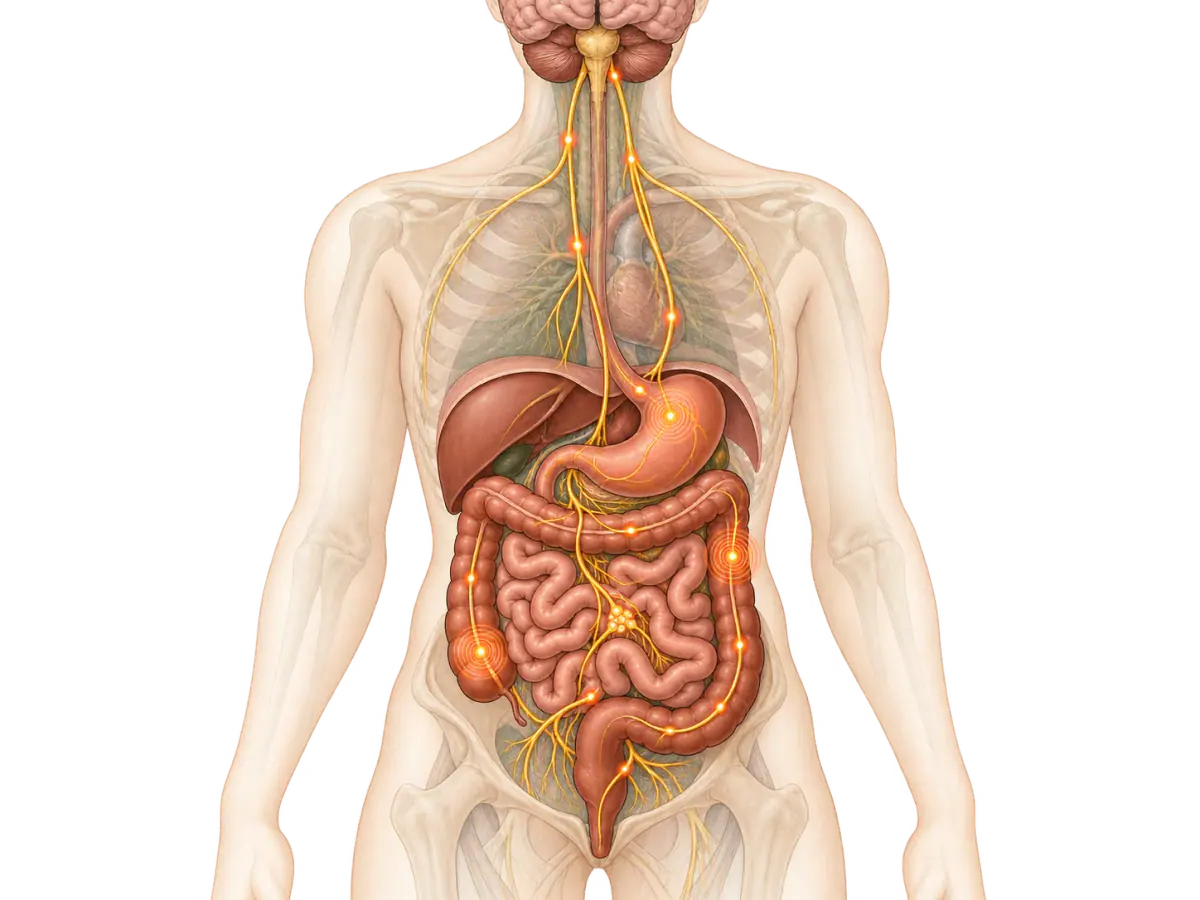
Even if tests show no significant structural abnormalities, the regulation of the autonomic and enteric nervous systems, sensory sensitivity, and motility rhythms can vary depending on meals, sleep, and stress.
Conceptual reference · NIDDK: Disorders of Gut-Brain InteractionThis is how we approach the medical evaluation
Why we examine abdominal pain alongside test results and dietary discomfort
For abdominal pain, we first rule out dangerous symptoms that appear suddenly, such as vomiting suddenly worsening pain, bleeding, fainting, or persistent vomiting. If these causes are absent and tests show no major abnormalities, but the same pain recurs for a long time depending on meals, bowel movements, sleep, or tension, it is time to look beyond the location of the pain to bowel motility, sensory hypersensitivity, and overall body temperature and energy levels.
First, rule out shifting pain, bleeding, and dehydration
Seek medical evaluation immediately if the pain worsens as it moves to the lower right abdomen, or if there is bleeding, fainting, or persistent vomiting.
Record the location and its relationship to meals and bowel movements
Specifically record the most painful area, any movement of the pain, and changes before or after meals, bowel movements, urination, or menstruation.
Restore daily life after chronic recurrence
When no urgent cause is found, prescriptions are based on foods that can be eaten and changes in pain related to going out and sleep.
Reasons why it may not heal well
Why meals may remain uncomfortable even after tests for abdominal pain
After ruling out acute abdominal diseases, recurring abdominal pain is categorized by the nature of the pain and systemic clues, such as food stagnation, qi stagnation, cold accumulation, damp-heat, or deficiency of qi and blood. The timeline of bowel movements, tension, and sleep helps refine the prescription.
Look at the onset and movement of pain rather than just the location
We observe where the pain starts and how it changes a few minutes after eating, before or after bowel movements, or immediately after feeling tense.
Distinguish between an abdomen that is painful when pressed and one that tightens under tension
Check how sensations of cold, bloating, urgent bowel movements, or decreased energy overlap with the pain.
Changes to monitor during treatment: pain-free days and the scope of daily activities
We monitor whether the number of days you can eat, go out, and sleep without avoidance increases.
How to keep a symptom timetable
Abdominal pain: Meal schedules are more important than the names of foods
It will be helpful for your Baekrokdam consultation if you prepare a diagram of the pain location, onset and duration, foods eaten, bowel movements, urination, menstruation, presence of fever, vomiting, or bleeding, and your test results.
Pain moves from around the belly button to the lower right side
In appendicitis, pain near the belly button may move to the lower right abdomen and can worsen with movement, deep breathing, or coughing.
Check if the pain is localized or across the entire abdomen
Point to the most painful spot with your finger and record if the area of pain expands. If the entire abdomen feels hard and is difficult to touch, immediate evaluation is required.
Check if the pain radiates to the back, shoulders, or flanks
If pain starting in the abdomen radiates to other areas, causes outside the gastrointestinal tract must also be examined. Please also provide information regarding any relationship with urination or menstruation.
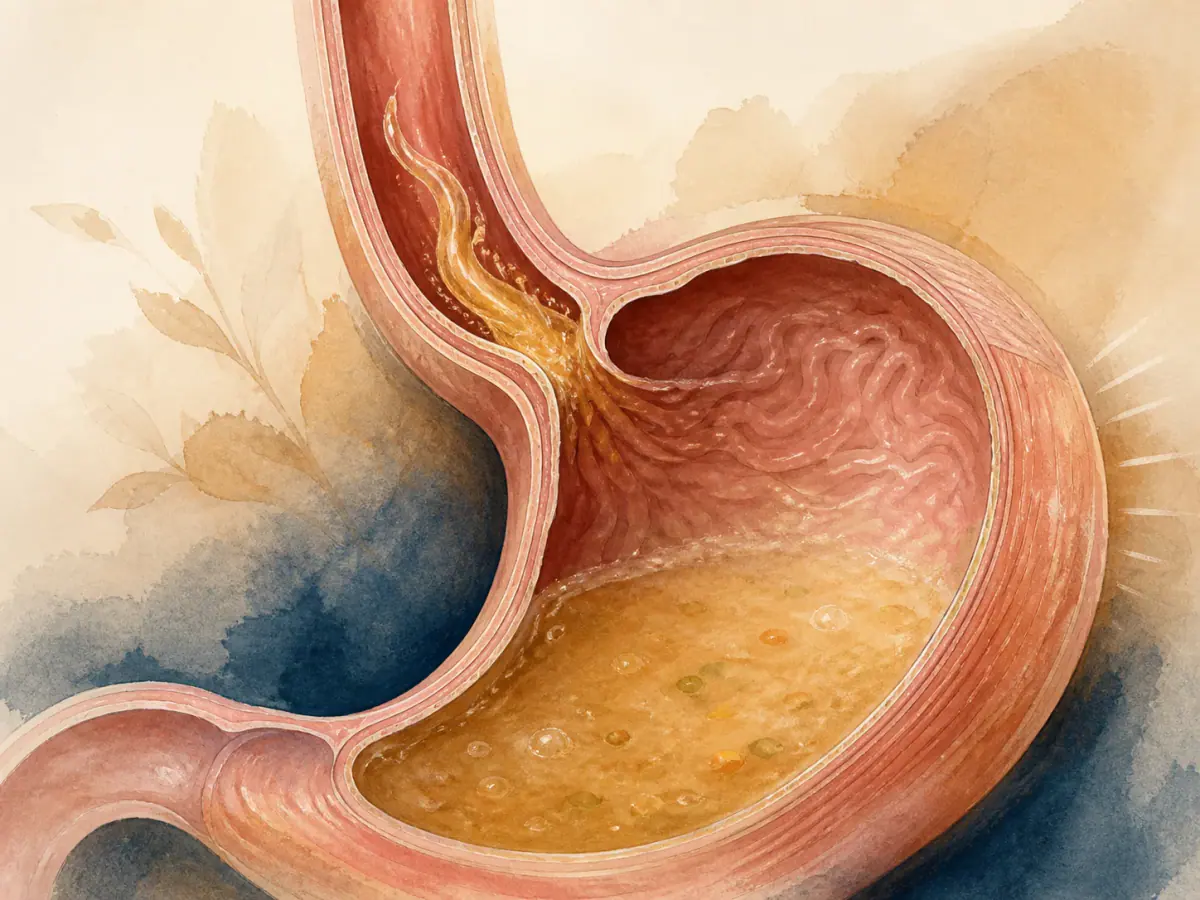
For early satiety and epigastric discomfort, we examine the amount eaten, the start time, and how long it lasted after the meal together.
Conceptual reference · NIDDK: IndigestionHerbal medicine pattern identification for abdominal pain
Why prescriptions for abdominal pain differ based on cold sensations, stagnation, heat, or tension
Within the single word 'pain,' we distinguish between pain caused by eating and blockage, cold and pulling sensations, pain accompanied by heat and urgent bowel movements, and dull, lingering pain that worsens with fatigue.
When the abdomen feels blocked after eating and improves after burping or passing gas
We look for pressure, bloating, and migrating abdominal pain after meals. We ask about irregular eating habitsconstipationand chest tightness. We help the movement of the stomach and intestines by resolving stagnated food and qi.
When pain occurs after eating cold foods or in cold weather, and improves with warmth
We look for cramping abdominal pain and rumbling sounds loose stoolsand other symptoms. We check for cold hands and feet, morning lethargy, and accompanying menstrual pain. We lower the pain by warming the abdomen and relaxing stiff intestinal movement and qi.
When abdominal heat is accompanied by urgent bowel movements or mucus
We look for urgent watery stools and anal heat following abdominal pain. We ask about thirst, heaviness of the body, and worsening after alcohol or greasy foods. After ruling out symptoms suspected of inflammation, we reduce damp-heat and hypersensitivity in the intestines.
Changes to monitor during treatment
Recovery to observe in the next meal
We aim to reduce the frequency, intensity, and duration of abdominal pain, and decrease anxiety regarding meals, bowel movements, outings, and sleep.
Diagram of abdominal pain location, onset, duration, and movement
By keeping a 'Diagram of abdominal pain location, onset, duration, and movement' along with the time before and after meals, we observe if the amount eaten and the time it takes to feel comfortable actually change.
Timing before and after meals/bowel movements and stool form
By keeping a record of 'Timing before and after meals/bowel movements and stool form' along with the time before and after meals, we observe if the amount eaten and the time it takes to feel comfortable actually change.
Cold sensations, heat, tension, sleep, menstruation, and medications
By keeping a record of 'Cold sensations, heat, tension, sleep, menstruation, and medications' along with the time before and after meals, we observe if the amount eaten and the time it takes to feel comfortable actually change.
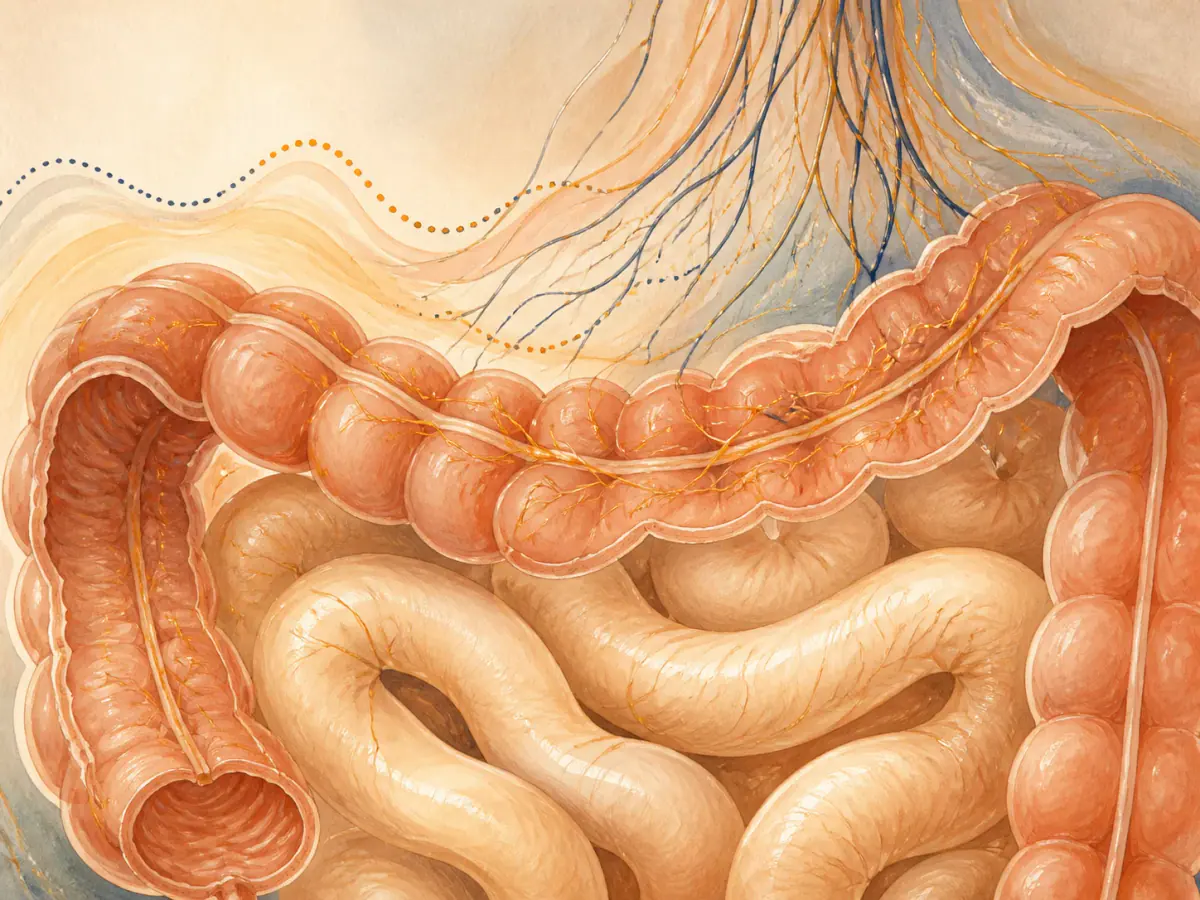
Even without structural damage, if the interaction between intestinal motility and sensation changes, abdominal pain, diarrhea, and constipation may recur.
Conceptual reference · NIDDK: Irritable Bowel SyndromeAt the crossroads of gastrointestinal motility, sensation, and the gut-brain response
Recurrent abdominal pain is categorized into food stagnation and qi stagnation, cold-induced abdominal pain, damp-heat intestinal pain, and deficiency of qi and blood.
Within the single word 'pain,' we distinguish between pain caused by indigestion and blockage, cold and pulling pain, pain accompanied by a heat sensation and urgent bowel movements, and dull, long-lasting pain that worsens with fatigue.
Pattern identification is not about arbitrarily adding a disease name to test results. A single person may experience a combination of decreased gastric motility, hypersensitivity, body heat, cold sensations, and tension; if the primary symptoms change based on diet, bowel movements, or sleep, the proportions of the prescription are adjusted accordingly.
When the abdomen feels blocked after eating and improves after burping or passing gas
- Changes to observe in digestive symptoms
- We look for pressure, bloating, and shifting abdominal pain after meals.
- Changes to observe in the rest of the body
- We ask about irregular eating habits, constipation, and chest tightness.
- Prescription priority
- We help the movement of the stomach and intestines by resolving stagnant food and qi.
When pain occurs after consuming cold food or in cold weather, and improves with warmth
- Changes to observe in digestive symptoms
- We look for cramping abdominal pain, borborygmus (stomach growling), and loose stools.
- Changes to observe in the rest of the body
- We check for coldness in the hands and feet, morning lethargy, and accompanying menstrual pain.
- Prescription priority
- We lower the pain by warming the abdomen and relaxing stiff intestinal movement and qi.
When abdominal heat sensation is accompanied by urgent bowel movements or mucus
- Changes to observe in digestive symptoms
- We look for urgent loose stools and a heat sensation in the anus following abdominal pain.
- Changes to observe in the rest of the body
- We ask about thirst, a feeling of heaviness in the body, and worsening after alcohol or greasy food.
- Prescription priority
- After ruling out symptoms suspected of being inflammatory, we reduce damp-heat and hypermotility in the intestines.
When there is a dull pain that worsens with fatigue and improves with pressure
- Changes to observe in digestive symptoms
- We check if the pain is not intense but persists for a long time, and if energy drops after eating or bowel movements.
- Changes to observe in the rest of the body
- We check for decreased appetite, paleness, lack of sleep, and delayed weight recovery.
- Prescription priority
- We increase the pain threshold and recovery power by supplementing the spleen, stomach, qi, and blood.
Order of prescription adjustment
- Distinguish between acute risks and recurring pain first
New and severe pain, bleeding, vomiting, or fainting require immediate re-evaluation.
- Identify the sequence of meals, bowel movements, temperature sensitivity, and tension
Prescriptions are based on the circumstances when pain begins and systemic clues.
- Adjust based on daily pain patterns and recovery of daily activities
We look for days when meals, outings, and sleep are comfortable, not just the intensity and duration of pain.
Why consider Korean herbal medicine treatment now?
- When there are no urgent issues found in tests, but abdominal pain recurs according to meals or bowel movements
- When pain and bloating recur despite using painkillers or gastrointestinal medication
- When pain fluctuates in conjunction with tension, cold, fatigue, or menstruation
What is evaluated in herbal medicine treatment for this condition
- Diagram of abdominal pain location, onset, duration, and movement
- Stool shape and changes before and after meals or bowel movements
- Feelings of cold or heat, tension, sleep, menstruation, and current medications
Distinguish pain movement, bleeding, and dehydration first
Seek medical evaluation immediately if pain worsens while moving to the lower right abdomen, or if there is bleeding, fainting, or persistent vomiting.
Record the location and the relationship with meals and bowel movements
Specifically record the area of most intense pain, its movement, and changes before and after meals, bowel movements, urination, or menstruation.
Restore daily life diminished by chronic recurrence
When no urgent cause is present, prescriptions are based on foods that can be eaten and changes in pain regarding outings and sleep.
Things to prepare before the consultationIt is helpful for the consultation to prepare a diagram of the abdominal pain location, onset and duration, foods eaten, bowel movements, urination, menstruation, presence of fever, vomiting, or bleeding, and test results.
If bleeding, anemia, worsening difficulty swallowing, persistent vomiting, unexplained weight loss, or nighttime diarrhea newly occur, they must be re-evaluated even if past tests were normal. After ruling out these cases, we focus on herbal medicine treatment for chronic or recurring functional digestive symptoms.
Consult about abdominal pain progressGastrointestinal Glossary
Additional information to know regarding abdominal pain
You can proceed to a detailed explanation after confirming the simple meaning.Frequently Asked Questions
Frequently Asked Questions About Abdominal Pain
If I have pain in the lower right abdomen, is it appendicitis?
There are other intestinal, urinary, or gynecological causes. However, if the pain moves from around the belly button to the lower right and worsens rapidly, or is accompanied by fever or vomiting, please seek medical attention immediately.
What should I record if abdominal pain alternates with diarrhea and constipation?
Please record the location of the pain, changes before and after meals or bowel movements, the shape and frequency of stools, fever, bloody stools, and weight changes, and show this to your provider during your visit.
If my test results are normal, can Korean herbal medicine treatment at Baekrokdam be helpful?
After sufficiently ruling out acute or structural causes, we provide consultations aimed at restoring daily life for chronic, recurring abdominal pain that varies according to diet, bowel movements, and sleep.
What should I record to find the cause of my abdominal pain?
Please record the location of the most severe pain and any movement of the pain, the start and duration, the relationship with meals, bowel movements, urination, or menstruation, the presence of fever, vomiting, or bleeding, and any medications you are taking.
Is pain in the lower right abdomen always appendicitis?
There are other intestinal, urinary, or gynecological causes. However, if the pain moves from around the belly button to the lower right and worsens within a few hours, or is accompanied by fever or vomiting, you must be evaluated immediately.
Can I take herbal medicine for abdominal pain even if my tests are normal?
Consultations are provided after the scope of testing and the symptoms that must be checked first have been sufficiently verified. If the pain is chronic and recurring based on diet, bowel movements, and sleep, we will review herbal medicine treatment at Baekrokdam with a goal of restoring daily life.
Is a blood test enough to examine abdominal pain?
Blood tests provide clues regarding inflammation or dehydration, but they cannot confirm all causes. We combine physical examinations with urine tests, pregnancy tests, and necessary imaging.
Evidence and Update Information
Dr. Choi Yeon-seung, a Korean medicine doctor, composed this based on the official professional materials and disease-specific clinical data below, and updated the content on 2026-08-26.
- NIDDK: Symptoms & Causes of AppendicitisCriteria for immediate evaluation when pain around the belly button moves to the lower right abdomen and worsens, accompanied by vomiting and fever
- UCLH NHS: Abdominal painCriteria for emergency re-evaluation of sudden or persistent severe abdominal pain, abdominal rigidity, gastrointestinal bleeding, or feeling of fainting
- NIDDK: Diagnosis of AppendicitisCriteria for differentiating between urinary and gynecological causes by asking about pain location and progression and performing urine and pregnancy tests
- Better Health: Abdominal Pain in AdultsBoundaries for IV fluids, medication, surgery, and anti-inflammatory analgesics by cause
- Healthdirect: Abdominal PainBoundaries for treatment, emergency surgery, pregnancy, and chest issues by cause