How to Read Treatment Progress
Treatment to Accelerate Digestive Recovery When Food Intake Increases but Post-Meal Discomfort Persists
While maintaining the improvement in the ability to eat, we narrow down the reasons why post-meal bloating, burping, and drowsiness persist to adjust the next Korean herbal medicine prescription and dietary habits.
The change in the increase of amount consumed per meal and Post-meal bloatingThe time it takes for these symptoms to resolve represents different axes of treatment. We will maintain the improved intake capacity first, and then narrow the focus of the next Korean herbal medicine treatment to the remaining delayed recovery.
| Remaining Discomfort | Lifestyle Adjustment | Next Treatment Focus |
|---|---|---|
| Feeling blocked immediately after eating | Divide portions instead of increasing the amount at once | Early satiety and the stomach's capacity to receive and store food |
| Pressure in the solar plexus and burping | Reduce rushed meals and carbonated drinks | Post-meal stagnation and Qi stagnation |
| Drowsiness and loss of energy | Avoid both overeating and prolonged fasting | Recovery of energy after digestion |
| Instability continuing until bowel movements | Avoid repeating diets that only exclude irritating foods | Coordinating the flow of the stomach and intestines together |
The ability to eat more is different from the ability to digest comfortably
If you previously stopped after a few spoonfuls but can now eat 70-80% of a meal, one aspect of how your stomach accepts food may have changed. After meals, stuffy feelingjust because some reactions remain, there is no need to act as if the progress made has disappeared.
However, as the amount of food increases, if the blockage in the solar plexus and burpingdrowsiness last longer, the next stage of recovery remains. The treatment goal must shift from 'how much you eat' to 'how comfortably you return to daily life after eating.'
The goal is to maintain the improvements while narrowing down the remaining discomfort, not to restart the prescription from the beginning.
The next treatment varies depending on the nature of the discomfort remaining after meals
If you feel full immediately after eating and find it difficult to eat more, early satiationwe look further into the stomach's capacity to accept food. If solar plexus pressure and burping persist after finishing a meal, the proportion of post-meal stagnation and tension is high; if drowsiness and loss of energy are central, we must examine the process of energy recovery after digestion.
If the entire abdomen bloats and bowel movements become irregular, it is not just a stomach issue, and the flow of the intestines must also be coordinated. Even within the same description of 'bloating,' the focus of herbal medicine and acupuncture treatment changes depending on where the remaining discomfort is concentrated.
The important thing here is not to undo the improved intake capacity. While maintaining the progress in eating more than before, if you can specifically identify whether the remaining task is solar plexus pressure, post-meal drowsiness, or delayed bowel movements, we can more clearly divide which parts of the prescription to maintain and which to adjust during the next visit.
- Whether blockage occurs after a few spoonfuls, or persists for a long time after finishing the meal
- Whether solar plexus pressure and burping are central, or whether overall abdominal bloating is central
- Whether post-meal drowsiness, fatigue, and changes in bowel movements remain together
- Whether the amount of food eaten is maintained, but only the remaining discomfort lasts a long time
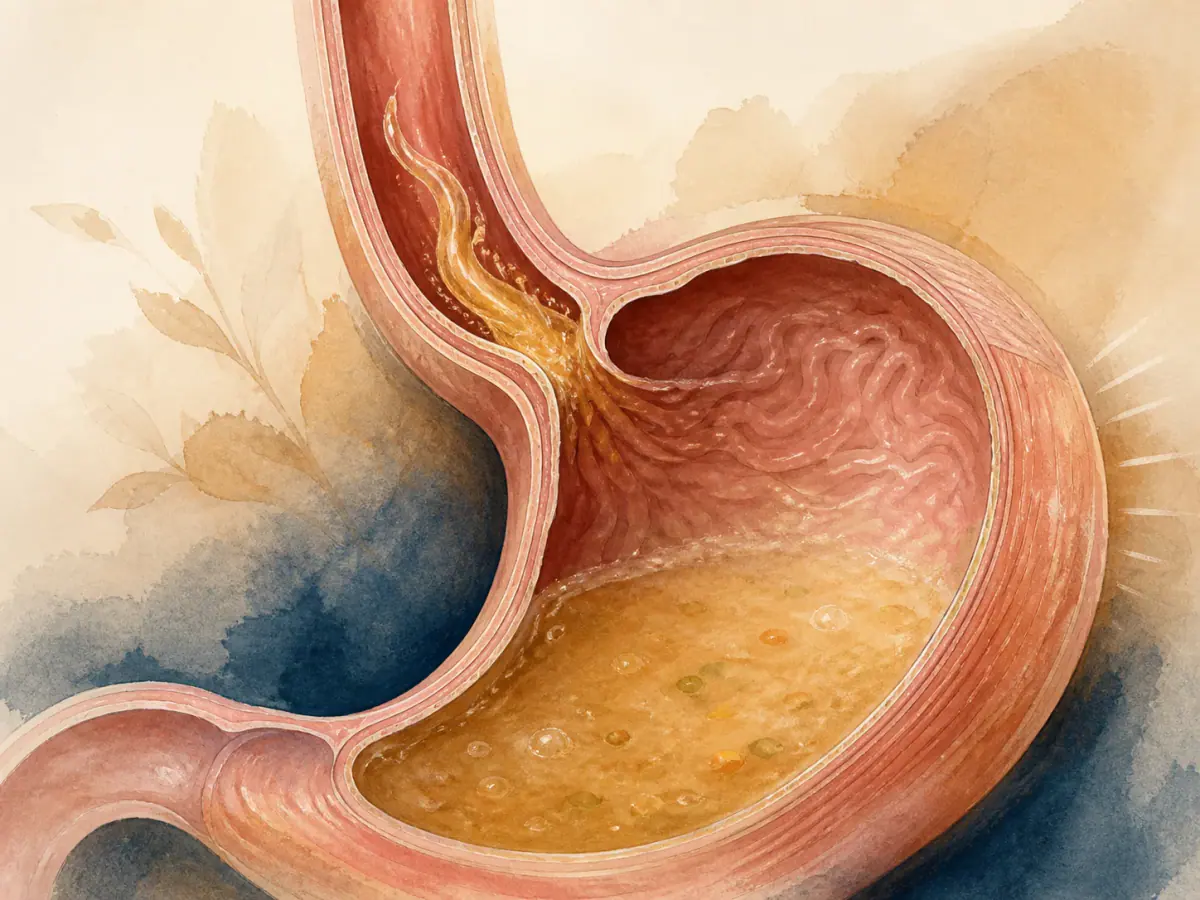
For early satiety and epigastric discomfort, we examine the amount eaten, the start time, and how long it lasted after the meal together.
Increase the amount of food slightly slower than the speed of recovery
If you immediately return to full meal portions just because you can eat more than before, it may burden the recovering digestion. Rather than increasing the amount significantly at once, gradually increase the portion with familiar foods, and avoid eating hastily or pushing food down with large amounts of liquids.
If you change the amount, menu, and meal times all at once, it is difficult to know what caused the blockage to return. It is better to expand the meal size according to the speed of post-meal comfort while maintaining intervals where you do not feel overly hungry.
Herbal medicine treatment can be adjusted from the stage of supporting energy to the stage of resolving stagnation
While the priority at first was the strength to eat even a small amount, once intake increases, we re-examine whether solar plexus blockage, tension, gas, or bowel movements are slowing recovery. Rather than mechanically continuing the same prescription, we change the focus of treatment according to the order of improvement.
Baekrokdam maintains the strength of the spleen and stomach while Qi stagnationadjusting herbal medicine by resolving post-meal stagnation and reflecting whether the flow of cold-heat balance and bowel movements are fluctuating together. Acupuncture treatment is performed in parallel as a pillar to reduce tension in the stiff upper abdomen and autonomic nervous system, and to aid post-meal recovery.
If you feel comfortable in the morning but feel blocked only after lunch, we look at the time slots where eating speed and work-related tension overlap, rather than blindly increasing the intensity of the prescription. Conversely, if the same pressure continues with every meal and bowel movements are delayed, we focus the treatment on the overall motility and recovery rhythm of the gastrointestinal tract rather than simply repeating eating tips.
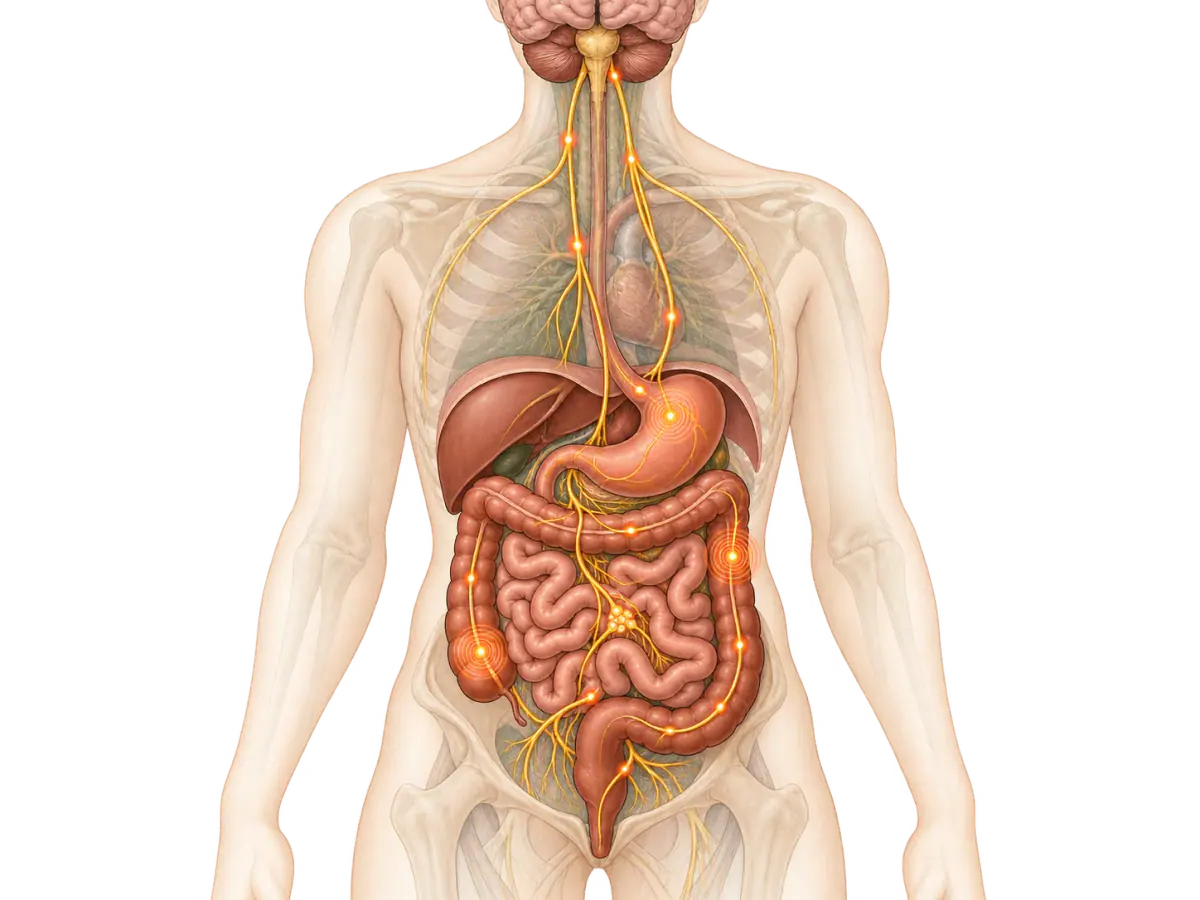
Even if tests show no significant structural abnormalities, the regulation of the autonomic and enteric nervous systems, sensory sensitivity, and motility rhythms can vary depending on meals, sleep, and stress.
The goal of treatment is not simply eating more, but reaching a state where you can function in the afternoon after eating
Even if the amount you eat per meal increases, if you must lie down or stop working for two hours after eating, the recovery of your daily life is not yet sufficient. Along with the capacity to eat, the time it takes for the solar plexus to relax and for burping and drowsiness to subside must shorten. Whether you can avoid giving up meetings, travel, or evening appointments due to meals is a more realistic criterion for recovery than the amount of intake.
The next prescription targets lingering blockage, tension, gas, and bowel issues while maintaining the strength of the spleen and stomach that has responded. The actual treatment goal is to transition naturally back into daily life after having a moderate meal without avoiding eating out or appointments.
Whether there are days when only lunch lingers particularly long, whether the same pressure follows every meal, and whether evening abdominal bloating tenesmusand bowel movements are also affected, distinguishing these factors changes the approach to treatment. Based on these differences, Baekrokdam maintains intake capacity and adjusts whether to center the next herbal medicine and acupuncture treatments on remaining upper abdominal stagnation, post-meal fatigue, or delayed intestinal rhythm.
The increase in the amount you eat is a change to be maintained, and the delay in post-meal recovery is the next goal. Do not increase the amount all at once; instead, adjust the herbal medicine prescription and acupuncture treatment according to the remaining blockage in the solar plexus, burping, and drowsiness.
Evidence and Update Information
Doctor of Korean Medicine Yeon-seung Choi composed this based on the materials below and updated the content on 2026-09-01.