Eating Habits and Digestion
When Your Stomach Feels Full Only After Lunch: Diet and Korean Medicine Treatments to Save Your Afternoon
Simply reducing the amount of lunch can leave you hungry and make digestion even more unstable. We adjust morning fasting, rushed eating, and post-meal posture, while treating recurring post-meal stagnation with Korean herbal medicine.
If you feel fine in the morning but experience a tight sensation in the solar plexus, drowsiness, or a loss of focus only after lunch, you should compare your food intake amount and speed, morning tension, post-meal posture, and recovery time rather than focusing on the names of the foods.
| Blockage Scenario | How to Change | Treatment Focus |
|---|---|---|
| Lunch after a long fast | Have a morning snack or move lunch to an earlier time | The impact of hunger and tension on digestion |
| Eating hurriedly within 10 minutes | Eat the first half slowly and divide the portion size | The difference between early satiety and post-meal fullness |
| Going straight into a meeting after eating | Walk for 10 minutes and avoid bending the waist | Pressure in the solar plexus, gas, and burping |
| Lasts more than 2 hours daily | Avoid repeating only dietary adjustments | Korean herbal medicine treatment tailored to spleen/stomach deficiency, qi stagnation, and cold/heat patterns |
If you only struggle after lunch, look at your morning routine rather than just the menu
If your solar plexus feels tight only after lunch while breakfast is fine, it is often not a problem with a single food item, but rather that your body's condition differs for that specific meal. If you endure a long fast with only morning meetings and coffee, and then sit down immediately after eating quickly in a short amount of time, the same amount of food can feel much heavier.
However, unconditionally reducing your lunch by half can lead to afternoon hunger and overeating at dinner. It is better to reduce the fasting period with a small breakfast or morning snack, and adjust the timing and speed of lunch to realign the 'amount you can eat' with the 'amount that feels comfortable'.
If you only struggle during weekday lunches and feel fine on holidays when you eat leisurely, it is a clue that tension, eating speed, and post-meal posture play a larger role in exacerbating symptoms than the type of food alone.
The feeling of 'fullness in the stomach' consists of different types of discomfort
Finding it difficult to eat more after just a few spoonfuls is early satiationclose to early satiety, and a prolonged feeling of blockage in the solar plexus after finishing a meal can be explained as postprandial fullness. If the entire abdomen bloats and flatulence increases, abdominal bloating is a major factor; if acid reflux and a burning sensation occur, reflux symptoms must also be considered.
This distinction is not just about refining terminology. If early satiety is central, we first look at the capacity to accept a meal and the composition of the diet; if solar plexus stagnation burpingis central, we focus on post-meal flow and tension; if bowel movements are also affected, we treat the stomach and intestines as a single flow.
Specifically, for those who only experience blockage after lunch, we must distinguish whether the discomfort occurs only at lunch, whether it is the starting point of delayed recovery across all meals, or if it leads to dinner abdominal bloatingand constipation. If it starts only at lunch and resolves within the afternoon, adjusting the eating environment is a priority. If it remains similarly long after every meal, the focus is more on delayed postprandial recovery. If it leads to belt pressure in the evening and a feeling of incomplete evacuation, the connection between the stomach and intestines must be treated together.
- Do you stop after a few spoonfuls, or do you finish the meal but feel stuffy for a long time afterward?
- Does the sensation concentrate in the solar plexus, or does the entire abdomen bloat?
- Are burping, acid reflux, or burning sensations accompanied, and does it change after a bowel movement?
- Does it resolve within a few hours after lunch, or does it lead to evening bloating and tenesmusfurther symptoms?
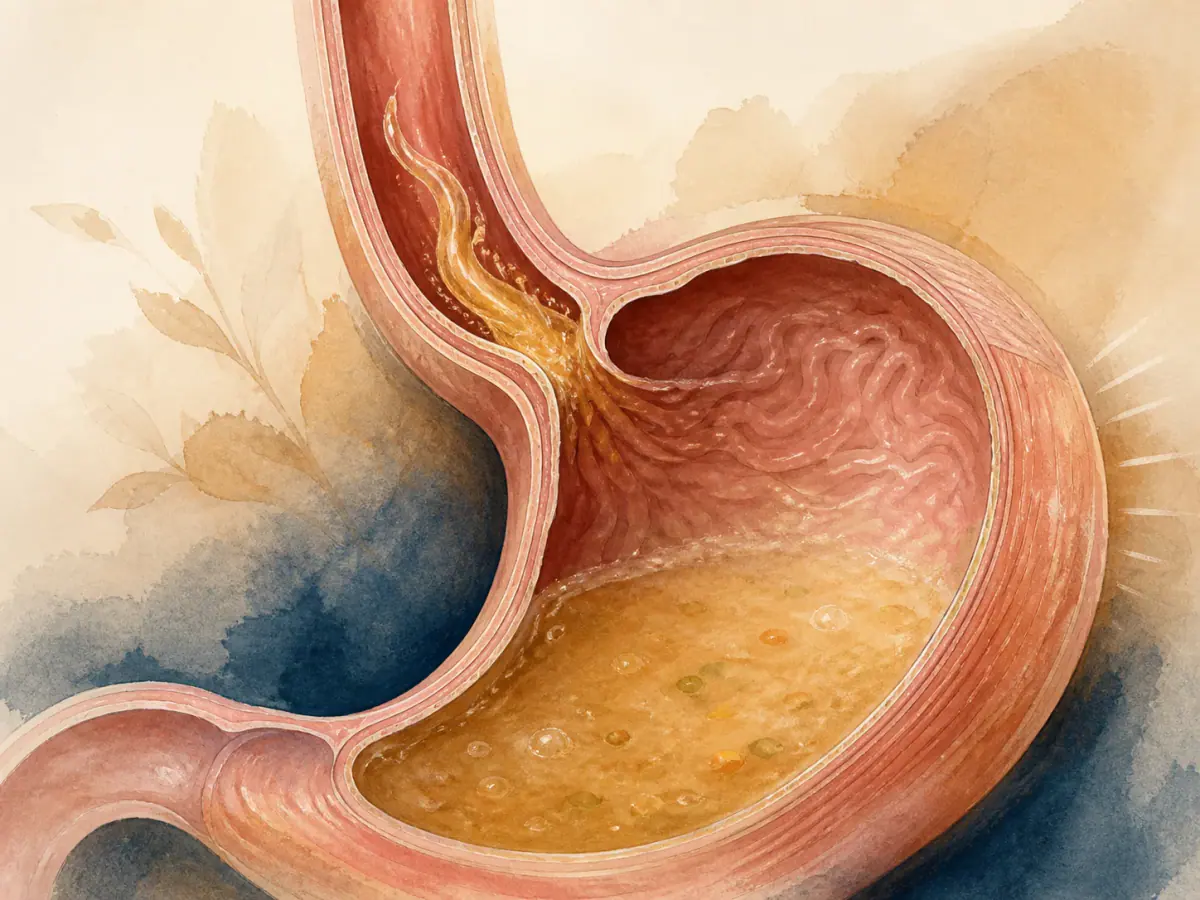
For early satiety and epigastric discomfort, we examine the amount eaten, the start time, and how long it lasted after the meal together.
A lunch that saves your afternoon is not about eating less, but about distributing the burden of the meal.
Eating the first half slowly and checking for fullness in the middle can reduce the burden more than rushing through a meal. If avoiding greasy and large portions is not enough, stick to a familiar composition of rice, protein, and cooked side dishes, and avoid combining them with cold drinks or high-carbonation beverages.
Instead of sitting with a bent waist or going straight into a meeting immediately after eating, walk lightly for 5 to 10 minutes and keep your upper body upright. Trying to force digestion with coffee and carbonation, or skipping the next meal to make up for it, can further disrupt your afternoon and evening rhythm.
Korean herbal medicine treatment examines both the pattern of digestive blockage and the body's overall response.
Treatment priorities differ even for the same feeling of bloating: for those whose solar plexus feels blocked for a long time relative to the amount eaten, those whose stomach tightens and burping increases with tension, or those whose lower abdomen and bowel movements are affected by cold foods.
Baekrokdam composes Korean herbal medicine by analyzing whether the spleen and stomach lack the strength to accept food, Qi stagnationThe Korean herbal medicine is formulated according to whether there is a blockage in the epigastric flow and whether the cold‑heat imbalance is stirring up post‑meal discomfort and bowel movements. Acupuncture can be combined to loosen the stiff upper abdomen and release tension, and to aid recovery after meals.
Being told that there are no major abnormalities in tests does not mean your discomfort is insignificant. Functional DyspepsiaSymptoms that actually force a reduction in food intake and work productivity are sufficient reasons to treat both the lifestyle context and digestive function.
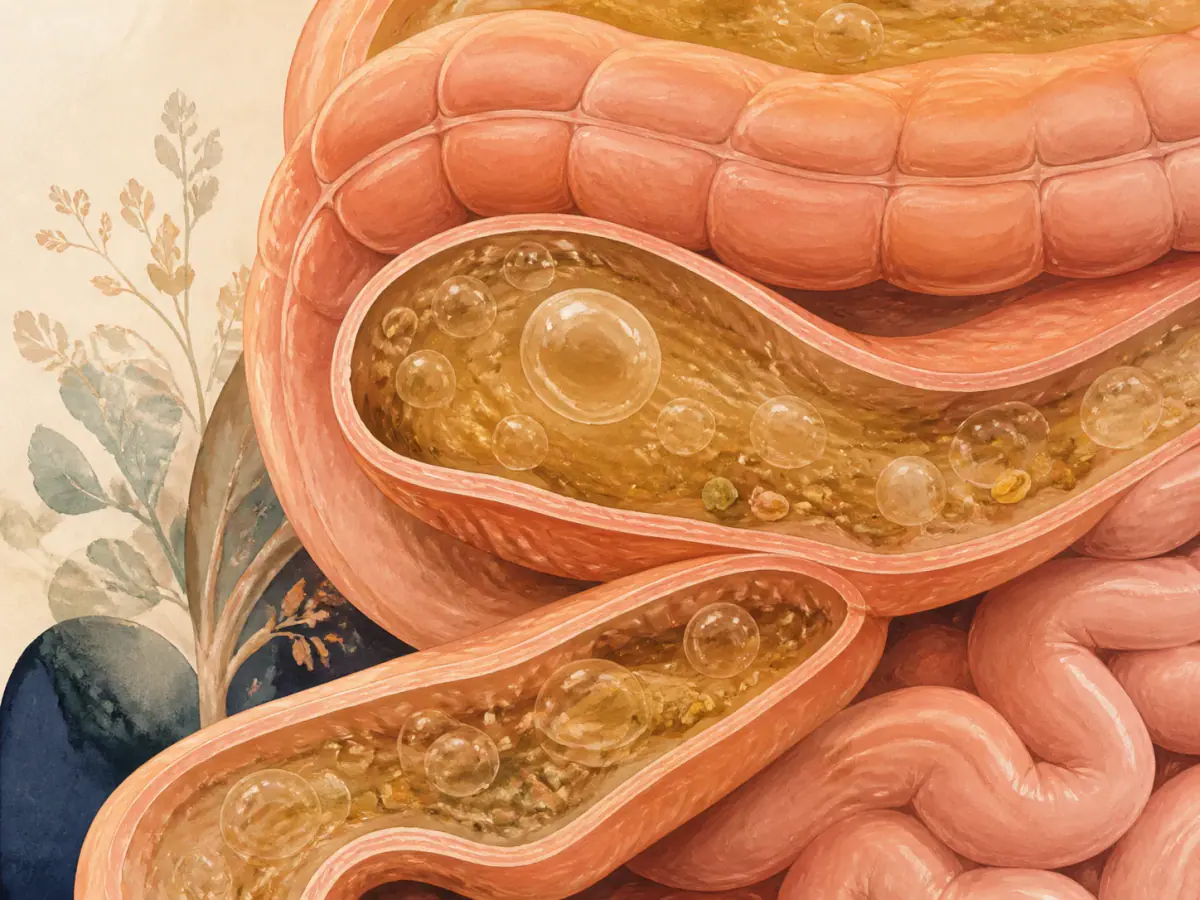
Not only the amount of gas, but also intestinal motility, constipation, food reactions, and sensory sensitivity can contribute to the perceived sensation of bloating.
The goal of treatment is not to avoid lunch, but to ensure a comfortable transition into the afternoon.
A state where you barely avoid discomfort by continuously removing items from your menu is not the end of recovery. You should reach a point where the solar plexus does not remain blocked after a moderate meal, and you do not have to give up on afternoon work due to post-meal drowsiness and burping.
If discomfort persists for more than two hours every day even after changing eating speed and posture, do not simply repeat the process of selecting different foods. Through Korean herbal medicine treatment, we address post-meal stagnation, tension, the connection between cold/heat and bowel movements, and simultaneously expand the range of foods you can eat and the speed of recovery in real life.
Records observing your lunch routine do not need to be long. If you consistently record only the length of morning fasting, the time lunch ended, the time the pressure in the solar plexus was released, and whether the abdomen bloats again in the evening, we can more clearly determine the next goal of Korean medicine treatment based on whether the discomfort occurs only at lunch, whether overall post-meal recovery is slow, or whether abdominal bloating continues into the evening.
Rather than identifying a single lunch menu item as the culprit, compare the amount, speed, tension, post-meal posture, and recovery time between breakfast and lunch. These differences become the starting point for Korean herbal medicine treatment and dietary adjustments.
Evidence and Update Information
Doctor of Korean Medicine Yeon-seung Choi composed this based on the materials below and updated the content on 2026-09-01.