Gut-Brain / Autonomic Nervous System
When Indigestion is Accompanied by Heart Palpitations, Dizziness, and Insomnia
By analyzing the sequence in which gastrointestinal discomfort, heart palpitations, dizziness, and insomnia occur, we categorize the condition into Gan-wi-bul-hwa (liver-stomach disharmony), Dam-eum (phlegm-fluid retention), or Bi-wi-heo (spleen-stomach deficiency) to treat the recovery of both eating and sleeping through Korean herbal medicine and acupuncture.
Some people experience heart palpitations when the solar plexus feels blocked, cold sweats and dizziness before bowel movements, or a more sensitive stomach the day after a poor night's sleep. These symptoms are not just 'in your head,' but are actual physical responses resulting from the mutual influence between the gastrointestinal tract, the brain, Autonomic nervous systemThese are actual physical reactions that influence each other.
| Scenario | Physical Flow | Focus of Korean Medicine Treatment |
|---|---|---|
| Blockage in the solar plexus before a meeting | Tension → Tightness in the solar plexus → Burping/Racing heart | Liver-Stomach disharmony and upper abdominal tension |
| Cold sweats and racing heart before bowel movements | Abdominal pain/Urgency → Cold sweats → Exhaustion after bowel movement | Intestinal hypersensitivity and recovery of vital energy |
| Feeling of fullness and nausea the day after insomnia | Lack of sleep → Decreased gastric adaptation → Reduced food intake | Spleen-stomach deficiency and autonomic nerve regulation |
| Worsening digestion and dizziness | Nausea/burping → Dizziness/chest tightness | Dam-eum (phlegm-fluid retention) and gastrointestinal motility |
The gastrointestinal system and the autonomic nervous system can amplify each other's symptoms if one becomes unstable
The stomach and intestines regulate their movement and sensation through the autonomic nervous system and gut-brain signals. On stressful days, it is a physical response for the stomach to not expand well, for the solar plexus to feel tight, or for the intestines to contract sensitively abdominal painand the development of a sense of urgency is an actual physical response.
Conversely, severe abdominal pain and nausea can trigger palpitations, cold sweats, and dizziness, and may leave you in a state of arousal that interferes with sleep. Rather than dismissing one side as being 'all in your head,' we integrate the cycle of the gastrointestinal system, sleep, and tension into a single treatment plan.
Tightness in the solar plexus after tension is different from palpitations after pain
If the solar plexus tightens before a presentation or meeting burpingand palpitations begin after this blockage, there is a high proportion of Gan-wi-bul-hwa (liver-stomach disharmony), where tension disrupts the gastrointestinal system. Conversely, if abdominal pain and urgency occur first after a meal, followed by cold sweats and dizziness in the restroom, it is closer to a flow where a strong intestinal reaction triggers autonomic nervous system symptoms.
In cases where fullness and nausea worsen the day after poor sleep, we consider the state of decreased recovery power due to lack of sleep. Rather than isolating a single symptom, knowing the sequence of onset allows us to determine in herbal medicine treatment gastrointestinal motilitywhether to address tension, energy, or vitality first.
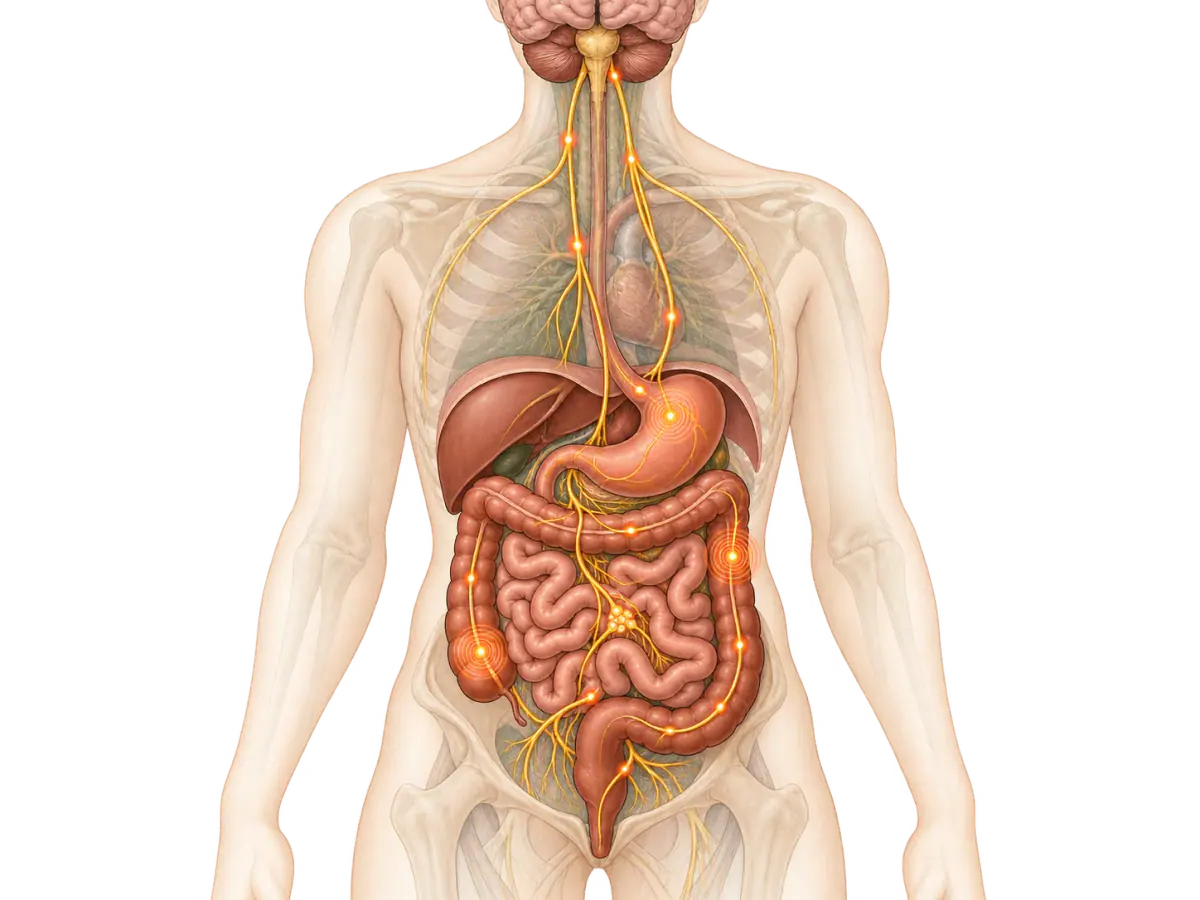
Even if tests show no significant structural abnormalities, the regulation of the autonomic and enteric nervous systems, sensory sensitivity, and motility rhythms can vary depending on meals, sleep, and stress.
Dam-eum, where dizziness and nausea overlap, cannot be resolved by strengthening the gastrointestinal system alone
In Korean medicine, if you feel a sloshing sensation in the stomach, blocked burping, a heavy head, dizziness, or chest tightness, Dameum (phlegm-fluid)we examine the pattern of these symptoms rising upward. This differs in prescription direction from Spleen-stomach deficiency, where low food intake and lack of energy are accompanied by palpitations.
stuffy feelingWe distinguish actual symptom combinations into Gan-wi-bul-hwa (where heat and tension overlap), Spleen-stomach deficiency (centered on cold, loose stools and fatigue), and Dam-eum (where nausea, dizziness, and chest tightness are linked). Even if the diagnosis is the same, the composition of the herbal medicine changes depending on the dominant axis.
Herbal medicine and acupuncture treatment address the recovery speed from eating to sleeping
Herbal medicine treatment regulates the connection between the gastrointestinal system and the autonomic nervous system based on whether solar plexus tightness, burping, abdominal pain/bowel movements, or palpitations and dizziness move first. If the spleen and stomach are weak, we reinforce digestive power; if Gan-wi-bul-hwa is prominent, Qi stagnationwhile releasing tension; if phlegm-fluid (Dameum) is the primary issue, we simultaneously examine fluid metabolism and gastrointestinal motility.
Acupuncture treatment is used in conjunction to reduce tension in the solar plexus, abdomen, neck, and chest, helping a hyper-aroused body return to normal eating and sleeping patterns. The goal is not merely to briefly reduce gastrointestinal symptoms, but to reach a state where you can eat even on stressful days and recover sleep after experiencing discomfort.
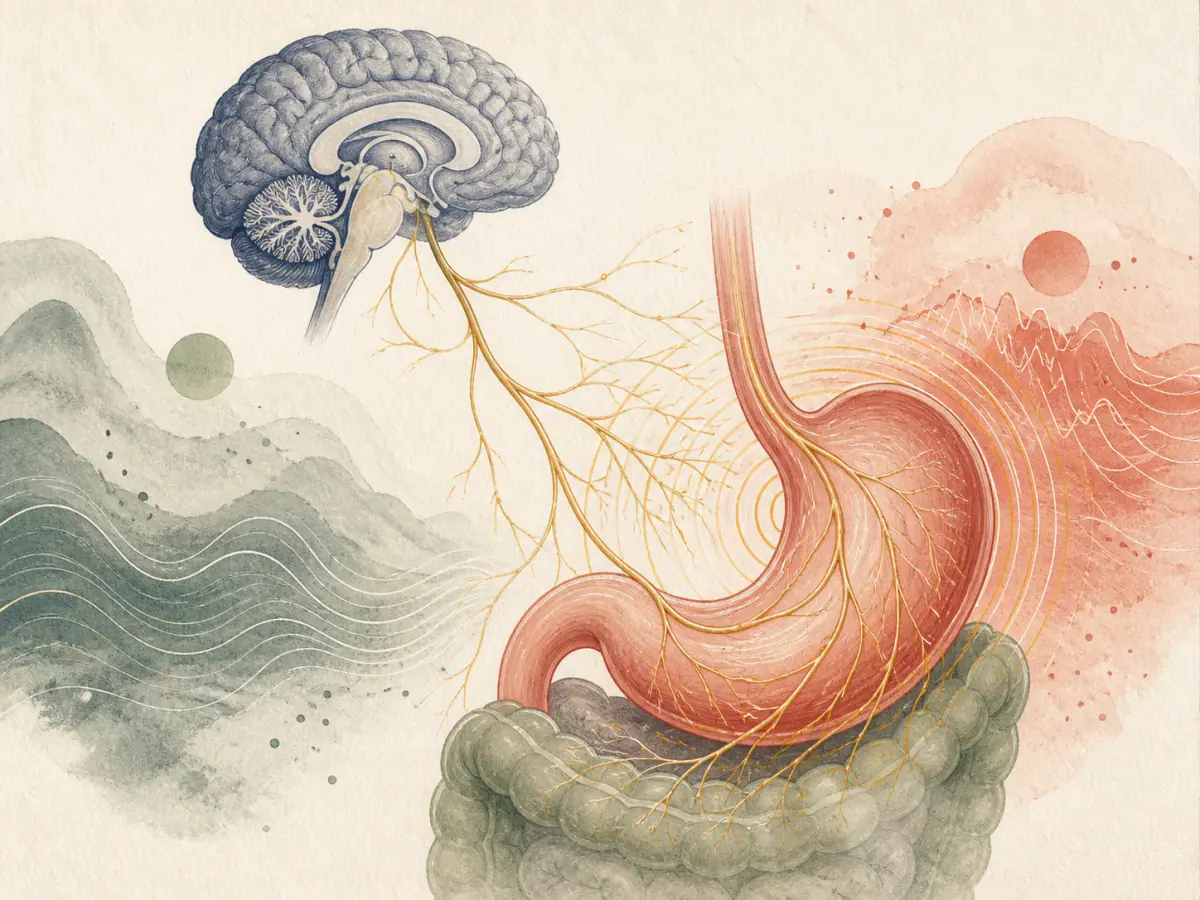
While stress can change symptoms, we do not attribute them solely to the mind; instead, we evaluate them alongside diet, sleep, and test results.
Recovery is evident when a single occurrence of symptoms no longer disrupts your entire day
Even before pulsating sensations completely disappear, recovery begins when the duration of solar plexus blockage shortens, exhaustion after bowel movements decreases, and the time it takes to fall back asleep at night is reduced. We maintain the improvements already achieved and tailor subsequent prescriptions to the remaining gastrointestinal and sleep symptoms.
If new chest pain, fainting, persistent rapid heart rate, neurological symptoms, bleeding, or weight loss occur, we do not categorize them as autonomic nervous system issues but first evaluate the specific cause. For recurring functional discomfort, we continue gastrointestinal and systemic recovery through Korean medicine treatment.
Gastrointestinal discomfort may improve while pulsating sensations before sleep remain, or sleep may improve while the solar plexus feels blocked again on stressful days. Rather than stopping after a change in only one area, we adjust the focus of the prescription until the fluctuations in eating, bowel movements, and sleep are minimized.
Indigestion, pulsating sensations, dizziness, and insomnia can be connected in a single flow through the gut-brain axis and the autonomic nervous system. Baekrokdam categorizes conditions into Liver-Stomach Disharmony (Ganwi-bulhwa), Spleen-Stomach Deficiency (Biwi-heo), and Phlegm-fluid (Dameum), using Korean herbal medicine and acupuncture to manage the speed of recovery for eating and sleep following gastrointestinal symptoms.
Evidence and Update Information
This content was compiled by Korean medicine doctor Choi Yeon-seung and updated on 2026-08-31 based on the following materials.
- NIDDK: Symptoms & Causes of Indigestion
- NIDDK: Irritable Bowel Syndrome
- National Institute of Diabetes and Digestive and Kidney Diseases (NIDDK): IndigestionDefinition and symptoms of indigestion, and the cause evaluation flow including medical history, physical examination, H. pylori testing, and endoscopy