
Damjeok-byeong: Read in the order of your curiosity
Before using the term 'functional' lightly
We focus on the actual recurring symptoms rather than the name 'Damjeok'
‘Damjeok-byeongThis is not a single diagnostic name in modern medicine, nor does it refer to a mass visible on an endoscopy. At Baekrokdam, we use it as a limited clinical category in Korean medicine to describe a group of patients who experience recurring solar plexus blockage, early satiety, bloating, belching, and changes in bowel movements, accompanied by headaches, fatigue, and sleep discomfort, after other causes have been ruled out through necessary tests. Abdominal tension and tenderness are used as supporting clues and are not used for diagnosis on their own.
Symptom patterns and next steps
Distinguishing between postprandial distress, epigastric pain, and symptoms that should not be ignored
The amount eaten, relationship to meals, location, and functional impairment, rather than the name of the symptom, determine the next evaluation.
| Current scenario | Clues for interpretation | Next action |
|---|---|---|
| Feeling full for a long time after eating a small amount and difficulty finishing a meal | PDS pattern centered on postprandial fullness or early satiety | Medical evaluation after recording the amount eaten and recovery time |
| Pain or burning sensation in the epigastric area (upper center of the abdomen) that varies in relation to meals | EPS pattern, may overlap with PDS | Record the location, intensity, and timing relative to meals |
| Centered on burning sensation behind the sternum or acid reflux | Accompanied by GERD or a separate condition | Evaluate by distinguishing the reflux scenarios |
| Pain in the upper right abdomen, jaundice, or persistent severe abdominal pain | Possible other causes such as biliary tract or pancreas | Prompt gastrointestinal evaluation |
| Hematemesis, melena, difficulty swallowing, weight loss, or chest pain spreading to the jaw or arms | Possible bleeding, obstruction, or cardiac emergency | Immediate emergency or gastroenterological evaluation |
When to seek medical attention first
Symptoms that should not be dismissed as functional dyspepsia
The following symptoms require a priority evaluation for acute bleeding, obstruction, biliary/pancreatic, or cardiac causes.
- Hematemesis, coffee-ground vomiting, or black and sticky stools
- Difficulty or pain when swallowing, or frequent or persistent vomiting
- Unintentional weight loss, loss of appetite, or jaundice
- New and persistent severe pain in the epigastrium or upper abdomen
- Chest pain spreading to the jaw, neck, or arms, or accompanied by shortness of breath
Converting Damjeok-byeong into a concrete treatment plan
Rather than the term 'Damjeok', we look at what is blocked and when recovery occurs
We do not group all digestive symptoms together under the name Damjeok-byeong. Sik-jeok·We prescribe by selecting the axis that moves in tandem with actual symptoms among Qi stagnation, phlegm-dampness, spleen and stomach deficiency, cold/heat, and the autonomic nervous system.
Specifying solar plexus blockage and food intake amount
We do not determine this by abdominal palpation alone, but by looking at the amount eaten comfortably and the duration of satiety.
Distinguishing between the stagnation type and the deficiency type
We differentiate between 'Sik-jeok-gi-che' (food stagnation and Qi stagnation), characterized by blockage and frequent belching after overeating, and 'Bi-wi-gi-heo' (spleen and stomach Qi deficiency), characterized by fatigue and loose stools even after eating small amounts.
Systemic symptoms are grouped only when there is a temporal correlation
We do not automatically attribute headaches, dizziness, or insomnia to Damjeok (phlegm accumulation); instead, we check if they recur on the same days as worsening digestion.
Treatment GoalsBy restoring the rhythm of eating, eliminating, and sleeping, we reduce the duration of blockage and bloating in the epigastric region and decrease the number of days when systemic discomfort spikes simultaneously.
Consult using Damjeok diet and bowel movement records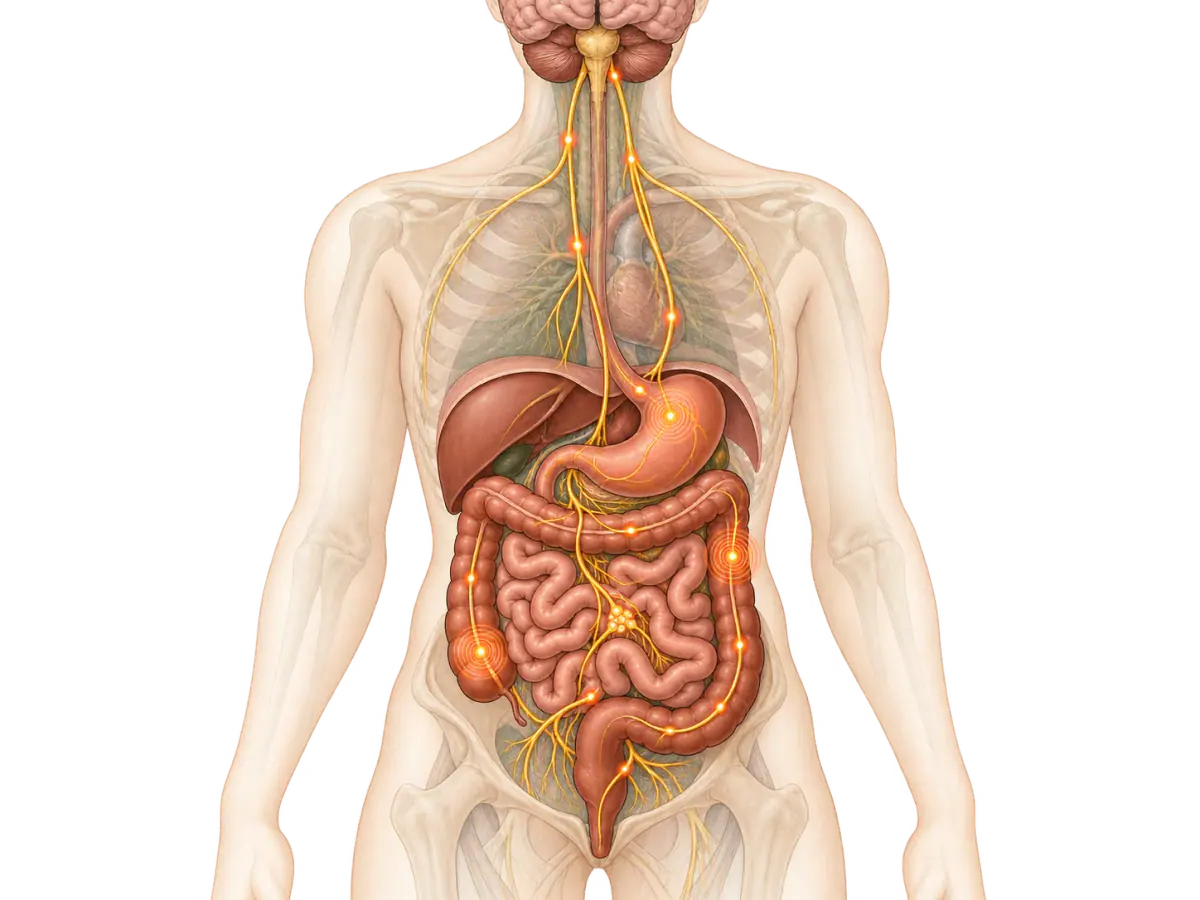
Even if tests show no significant structural abnormalities, the regulation of the autonomic and enteric nervous systems, sensory sensitivity, and motility rhythms can vary depending on meals, sleep, and stress.
The illustrations showing the processes occurring in the body are simplified explanations to help understand the location and changes of symptoms; they do not represent an individual's test results or treatment outcomes.If you have had these experiences
For those who continue to experience discomfort in the epigastric region and throughout the body despite normal test results
We do not group all digestive symptoms under the single name of Damjeok. Depending on whether it is food stagnation, Qi stagnation, Damsup (phlegm-dampness), weakness of the spleen and stomach, heat/cold imbalance, or the autonomic nervous system, we select the axis that aligns with the actual symptoms to provide a prescription.
For those with a feeling of tight blockage in the epigastric region, early satiety, bloating, or persistent belching
When epigastric blockage, satiety, and bloating recur persistently even after necessary tests
For those who experience headaches, fatigue, dizziness, or poor sleep on days when digestion is poor
When fatigue, headaches, and sleep disturbances fluctuate together on days when digestion is poor
For those who have heard the term 'Damjeok' but are curious about what it means and what needs to be differentiated
Digestive aids,acid suppressantsWhen you want to organize discomfort that cannot be explained by medical tests alone from a Korean medicine perspective
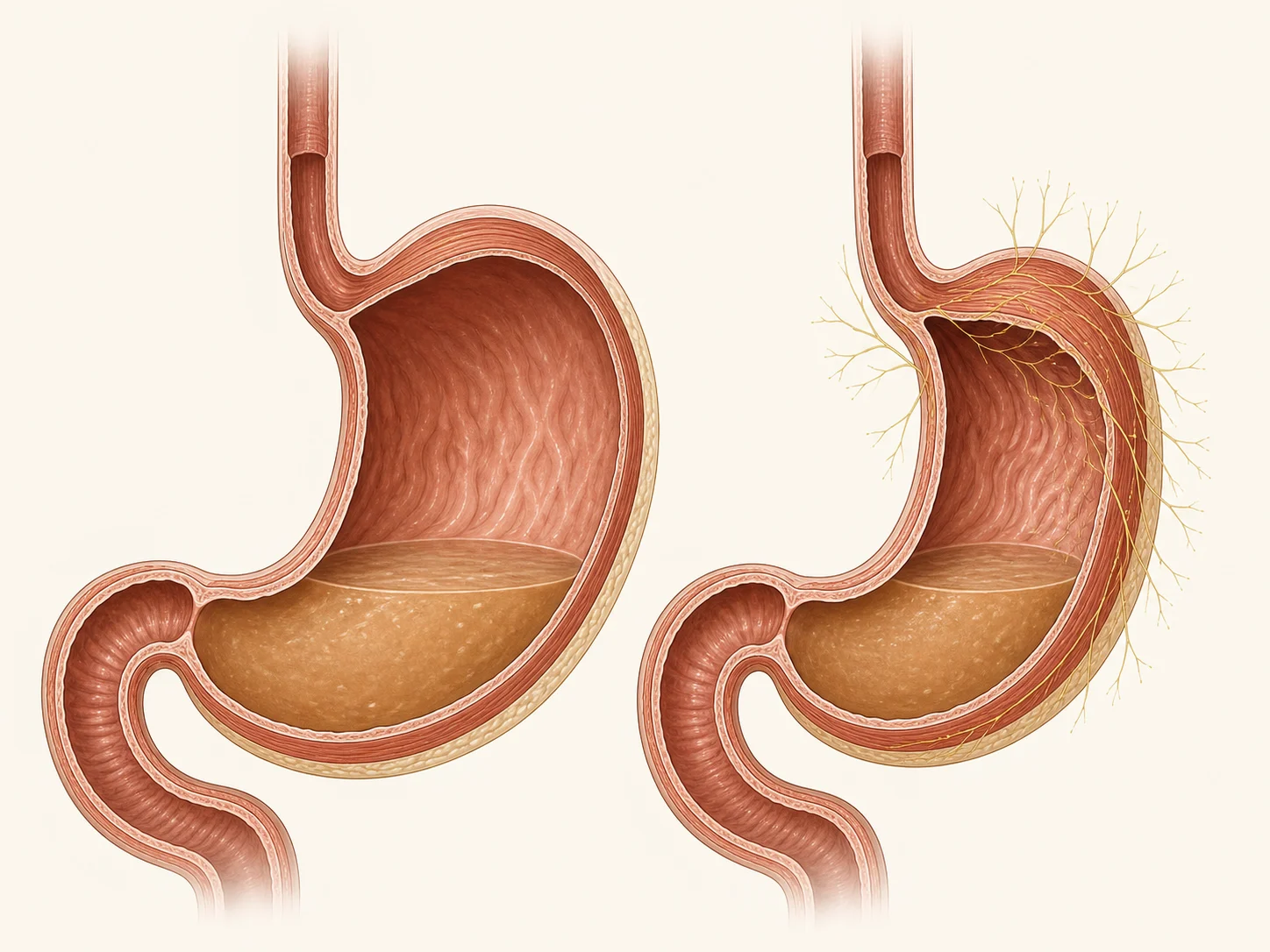
In functional dyspepsia, even without mucosal damage, differences in how the upper stomach adapts to and senses food after a meal can lead to early satiety and epigastric pressure.
Conceptual reference · NIDDK: IndigestionThis is how we approach the medical evaluation
Damjeok-byeong: Why we examine test results and dietary discomfort together
‘Damjeok-byeong’ is not a single diagnostic name in modern medicine, nor does it refer to a mass seen on an endoscopy. At Baekrokdam, after ruling out other causes through necessary tests, we use it as a limited Korean medicine clinical category to describe a group of patients who experience recurring symptoms such as a feeling of blockage in the solar plexus, early satiety, bloating,burpingchanges in bowel movements, along with headaches, fatigue, and sleep discomfort. Abdominal tension and tenderness are used as supporting clues and are not used for diagnosis on their own.
We first rule out risks of bleeding, obstruction, biliary/pancreatic, or cardiac issues
Black stools,vomitingswallowing difficulties, weight loss, jaundice, the location of pain, and chest symptoms are checked to prioritize necessary gastrointestinal or emergency evaluations.
Distinguishing between the post-meal discomfort type and the solar plexus pain type
early satiationWe analyze the amount of food consumed, the recovery time after meals, and the relationship between meals and solar plexus pain or burning sensations.
Checking how much easier eating, dining out, and working have become
Rather than looking only at pain scores, we track the actual recovery of meal portions, the interval between meals, and the ability to dine out or go to work.
Reasons why it may not heal well
Damjeok-byeong: Why eating may not become comfortable even after tests
We do not group all gastrointestinal symptoms under the single name of Damjeok-byeong. We prescribe by selecting the axis that moves with the actual symptoms among food stagnation (Sik-jeok),Qi stagnationphlegm-dampness (Dam-seup), spleen and stomach deficiency, cold-heat patterns, and the autonomic nervous system.
Specifying the feeling of blockage in the solar plexus and the amount of food intake
We do not determine this by abdominal palpation alone, but by looking at the amount of food eaten comfortably and the duration of satiety.
Distinguishing between the stagnation type and the deficiency type
We differentiate between 'Sik-jeok-gi-che' (food stagnation and qi stagnation), characterized by blockage and frequent burping after overeating, and Bi-wi-gi-heo (Spleen and Stomach Qi Deficiency)which is characterized by fatigue and loose stools even after eating very little.
Systemic symptoms are grouped only when there is a temporal relationship
We do not unconditionally attribute headaches, dizziness, or insomnia to Damjeok, but check if they recur on the same days as the worsening of digestion.
How to keep a symptom timetable
Damjeok-byeong: Meal schedules are more important than the names of foods
Please choose the most uncomfortable sensation among blockage, bloating, burping, or nausea, and note the start time and duration. Please also prepare information regarding your food intake, bowel movements, sleep changes, test results, and current medications.
Patient group with recurring multiple symptoms
We examine the combined progression of symptoms such as solar plexus discomfort, post-meal fullness, bloating, bowel movement changes, fatigue, and sleep disturbances.
It is not a mass visible on medical imaging
We do not view this simply as toxins or phlegm hardening on the stomach wall.
Evaluation for other causes is prioritized first
Bleeding, weight loss, persistent vomiting,dysphagiaand necessary endoscopies or tests are checked first.
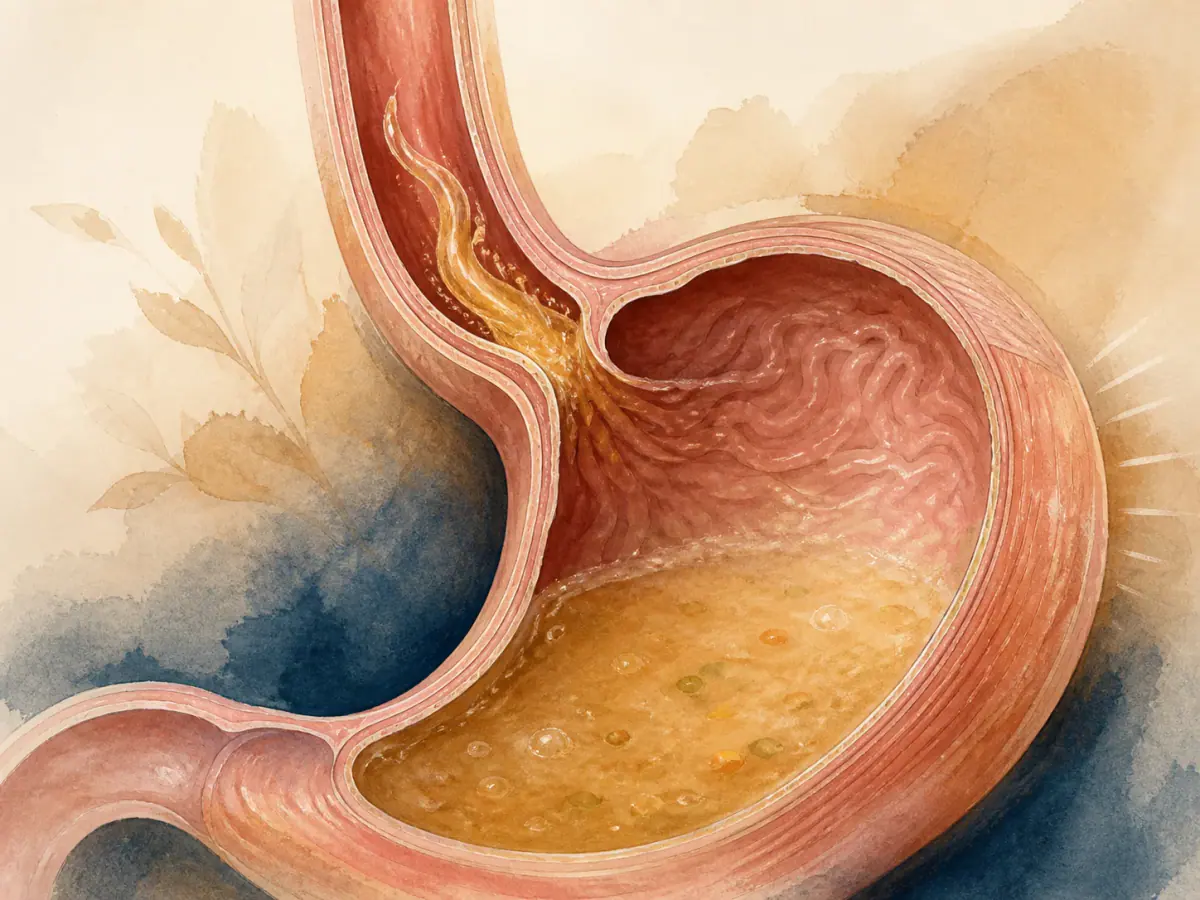
For early satiety and epigastric discomfort, we examine the amount eaten, the start time, and how long it lasted after the meal together.
Conceptual reference · NIDDK: IndigestionHerbal medicine pattern identification for Damjeok-byeong
Why prescriptions for Damjeok-byeong differ based on cold sensations, stagnation, heat, or tension
Rather than grouping symptoms under the explanation that a single substance has accumulated, we look at the core axis that drives the actual changes in symptoms among stagnation, damp-phlegm, or deficiency.
When the solar plexus feels blocked and burping is frequent after overeating
We look for hard fullness after meals, acid burping, and a feeling of blockage that lasts until the next meal. We check if late-night snacks or fast eatingconstipationoverlap. The focus is on small meals and light activity to reduce food stagnation and open the flow of energy.
When bloating and nausea overlap with a feeling of heaviness in the body
We check if there is a sloshing sensation in the solar plexus and abdomen, or if gas and nausea persist. We ask if there is dizziness, edema, heavy fatigue, and loose stoolsrelated symptoms. The focus is on resolving phlegm and eliminating dampness to reduce damp-phlegm and assist the downward movement of the stomach.
When you feel exhausted even after eating a small amount and recovery is slow
We look for early satiety, post-meal exhaustion, and a continuing decrease in food intake. We check for cold sensations, loose stools, decreased energy, and lack of recovery after sleep. The focus is on strengthening the spleen and supplementing energy to support digestion and systemic recovery.
Changes to monitor during treatment
Recovery to observe in the next meal
By restoring the rhythm of eating, eliminating, and sleeping, we reduce the duration of blockage and bloating in the solar plexus and decrease the number of days when general discomfort spikes.
Test Results and Medication List
By recording the 'Test Results and Medication List' along with the times before and after meals, we observe whether the amount eaten and the time it takes to feel comfortable actually change.
Daily Schedule of Food Intake, Satiety, and Bowel Movements
By recording the 'Daily Schedule of Food Intake, Satiety, and Bowel Movements' along with the times before and after meals, we observe whether the amount eaten and the time it takes to feel comfortable actually change.
Sleep, Fatigue, and Headaches that Fluctuate with Digestion
By recording 'Sleep, Fatigue, and Headaches that Fluctuate with Digestion' along with the times before and after meals, we observe whether the amount eaten and the time it takes to feel comfortable actually change.
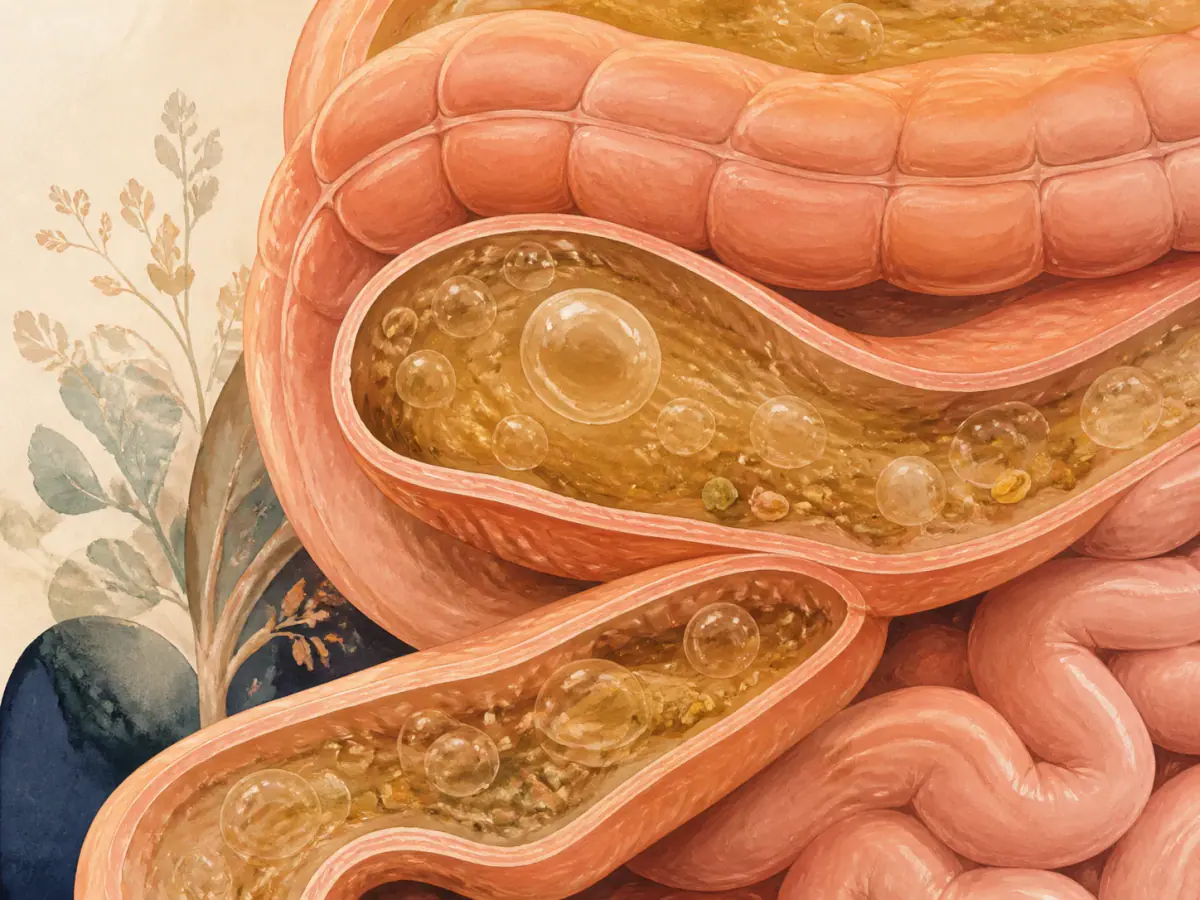
Not only the amount of gas, but also intestinal motility, constipation, food reactions, and sensory sensitivity can contribute to the perceived sensation of bloating.
Conceptual reference · NIDDK: Gas in the Digestive TractAt the crossroads of gastrointestinal motility, sensation, and the gut-brain response
Damjeok disease is categorized into Sikjeok-giche (food stagnation and qi stagnation), Damseup-jeongche (phlegm-dampness stagnation), and Biwi-giheo (spleen and stomach qi deficiency)
Rather than limiting the explanation to the accumulation of a single substance, we identify the primary axis among stagnation, phlegm-dampness, and deficiency that drives the actual process of symptom change.
Pattern identification is not about arbitrarily adding a disease name to test results. A single person may experience a combination of decreased gastric motility, hypersensitivity, body heat, cold sensations, and tension; if the primary symptoms change based on diet, bowel movements, or sleep, the proportions of the prescription are adjusted accordingly.
When the solar plexus feels blocked and burping is frequent after overeating
- Changes to observe in digestive symptoms
- We look for hard satiety after meals, acid burps, and blockage that lasts until the next meal.
- Changes to observe in the rest of the body
- We check for a combination of late-night snacks, eating too quickly, and constipation.
- Prescription priority
- Focus is placed on eating small portions and light walking to reduce food stagnation and open the flow of energy.
When bloating and nausea overlap with a feeling of heaviness in the body
- Changes to observe in digestive symptoms
- We observe if there is a sloshing sensation in the solar plexus and abdomen, or if gas and nausea persist.
- Changes to observe in the rest of the body
- We ask about dizziness, edema, fatigue accompanied by body heaviness, and loose stools.
- Prescription priority
- Focus is placed on resolving phlegm and eliminating dampness to reduce phlegm-dampness and assist the downward movement of the stomach.
When you feel exhausted even after eating a small amount and recovery is slow
- Changes to observe in digestive symptoms
- We look for early satiety, post-meal exhaustion, and a continuing decrease in food intake.
- Changes to observe in the rest of the body
- We check for a sensation of coldness, soft stools, decreased energy, and lack of recovery after sleep.
- Prescription priority
- Focus is placed on strengthening the spleen and supplementing energy (Geonbi-Ikgi) to support digestion and overall systemic recovery.
When you feel exhausted even after eating a small amount and recovery is slow until the next meal
- Changes to observe in digestive symptoms
- We evaluate not only the severity of Damjeok (phlegm accumulation in the stomach) but also the amount of food you can consume and the recovery time after meals.
- Changes to observe in the rest of the body
- We check if post-meal drowsiness, loss of energy, loose stools, and coldness in the hands and feet occur on the same day.
- Prescription priority
- We increase the proportion of treatment to strengthen the spleen and stomach's ability to receive and transport nutrients.
Order of prescription adjustment
- Modern medical diagnosis and red-flag symptoms are prioritized
Before explaining the condition as Damjeok, we check for bleeding, weight loss, persistent vomiting, difficulty swallowing, and determine if necessary medical tests are required.
- The temporal relationship between meals, bowel movements, and systemic symptoms is analyzed
Only clues that occur on the same day are reflected in the pattern identification (Byeonjeung).
- Adjustments are made by monitoring the recovery of daily life rhythms
We observe whether food intake, satiety duration, bowel movements, and sleep change together.
Why consider Korean herbal medicine treatment now?
- When blockage in the solar plexus, satiety, or bloating persists repeatedly even after necessary medical tests
- When fatigue, headaches, and sleep disturbances fluctuate together on days with poor digestion
- When you wish to organize discomfort that cannot be explained by digestive aids or acid suppressants alone from a Korean medicine perspective
What is evaluated in herbal medicine treatment for this condition
- Test results and list of current medications
- Daily schedule of food intake, satiety, and bowel movements
- Sleep, fatigue, and headaches that fluctuate on the same days as digestion
Identifying symptoms that should not be dismissed as Damjeok
Bleeding, the feeling of food getting stuck, persistent vomiting, unexplained weight loss, jaundice, and sudden severe pain require necessary medical tests first.
Analyzing blockage, bloating, belching, and nausea separately
Rather than using the single term 'Damjeok', we specifically identify what sensations start when and how they overlap with meals, bowel movements, and sleep.
Monitoring whether meals and daily activities become more comfortable
Compare the same items, such as the amount of food per meal, the time it takes for the feeling of tightness to resolve, and whether you can resume bowel movements, outings, or work.
Things to prepare before the consultationChoose the most uncomfortable sensation among blockage, bloating, belching, or nausea, and record the start time and duration. Please also prepare information on changes in food intake, bowel movements, and sleep, as well as test results and current medications.
If bleeding, anemia, worsening difficulty swallowing, persistent vomiting, unexplained weight loss, or nighttime diarrhea newly occur, they must be re-evaluated even if past tests were normal. After ruling out these cases, we focus on herbal medicine treatment for chronic or recurring functional digestive symptoms.
Consult about the progress of DamjeokGastrointestinal Glossary
Additional Information Regarding Damjeok
You can proceed to a detailed explanation after confirming the simple meaning.Frequently Asked Questions
Frequently Asked Questions About Damjeok
Is Damjeok a diagnosis confirmed by medical tests?
Damjeok is not a standard medical diagnostic name confirmed by a single test. At Baekrokdam, we first identify which conditions overlap with the post-meal blockage, bloating, belching, and nausea that patients refer to as Damjeok.
Why do I feel a blockage in my solar plexus even when test results are normal?
Even if there are no major structural abnormalities in the tests, discomfort related to Gut-brain interactiongastric motility and sensation may remain. This does not mean the symptoms are non-existent; we continue to examine the relationship between these symptoms, meals, and bowel movements.
Are Damjeok and functional dyspepsia the same thing?
They are not the same. Functional DyspepsiaFunctional dyspepsia is a condition with specific diagnostic criteria, while Damjeok is an expression used in Korean medicine to describe various digestive discomforts and overall bodily conditions. If there is bleeding, weight loss, persistent vomiting, difficulty swallowing, or if symptoms persist for a long time, necessary tests are checked first.
Are there symptoms that require other medical evaluations first, even if I suspect it is Damjeok?
If you experience vomiting blood, black stools, difficulty swallowing, persistent vomiting, unexplained weight loss, jaundice, or sudden severe pain or chest pain, do not wait for Damjeok treatment and seek the necessary medical evaluation first.
What should I write down before my appointment?
Please record the amount of food per meal, the time when discomfort starts and resolves, and days when belching, nausea, or changes in bowel movements occurred alongside poor sleep or fatigue. It is also helpful to bring endoscopy results and a list of medications you are taking.
Is it considered Damjeok if symptoms worsen when I am nervous?
While tension and lack of sleep can worsen gastrointestinal discomfort, we do not attribute the cause to stress alone. We examine the sequence in which symptoms began in relation to meals, bowel movements, and medications.
Is the herbal medicine prescription determined solely by the term Damjeok?
No. We determine the direction of the prescription by examining whether post-meal stagnation is the primary issue, whether bloating is severe during tension, or whether nausea, body heaviness, or lack of energy are prominent.
Evidence and Update Information
Dr. Choi Yeon-seung, a Korean medicine doctor, composed this based on the official professional materials and disease-specific clinical data below, and updated the content on 2026-08-26.
- NIDDK: Indigestion symptoms and causesSymptoms to check first: epigastric pain/burning, early satiety, postprandial fullness, bleeding, weight loss, and heart-related symptoms
- Rome Foundation: Rome IV functional dyspepsia criteriaOverlap of core symptoms of PDS and EPS; differentiation from GERD, biliary pain, and persistent vomiting
- British Society of Gastroenterology: Functional dyspepsia guidelineSymptom subtypes of disorder of gut-brain interaction, positive clinical diagnosis, and re-evaluation of symptoms that should not be overlooked
- NIDDK: Treatment of indigestionPriority treatment for H. pylori, other diseases, and medication-induced causes, and the role of gut-brain therapy
- NIDDK: Diagnosis of indigestionSelective diagnostic process for endoscopy and imaging based on medical history, medications, physical examination, H. pylori, and symptoms that should not be overlooked
- ACG and CAG: Clinical guideline for dyspepsiaH. pylori and endoscopy pathways based on age and risk, and non-recommendation of routine motility tests
- British Society of Gastroenterology: Functional dyspepsia guidelineEvidence for H. pylori eradication, lifestyle, medication, gut-brain behavioral therapy, and stepwise management of refractory symptoms
- UCLH: Dietary Management of Functional DyspepsiaRegular meals, individual tolerance, flexible texture adjustment, and reintroduction of food range